
 By Raul Delapena Setiawan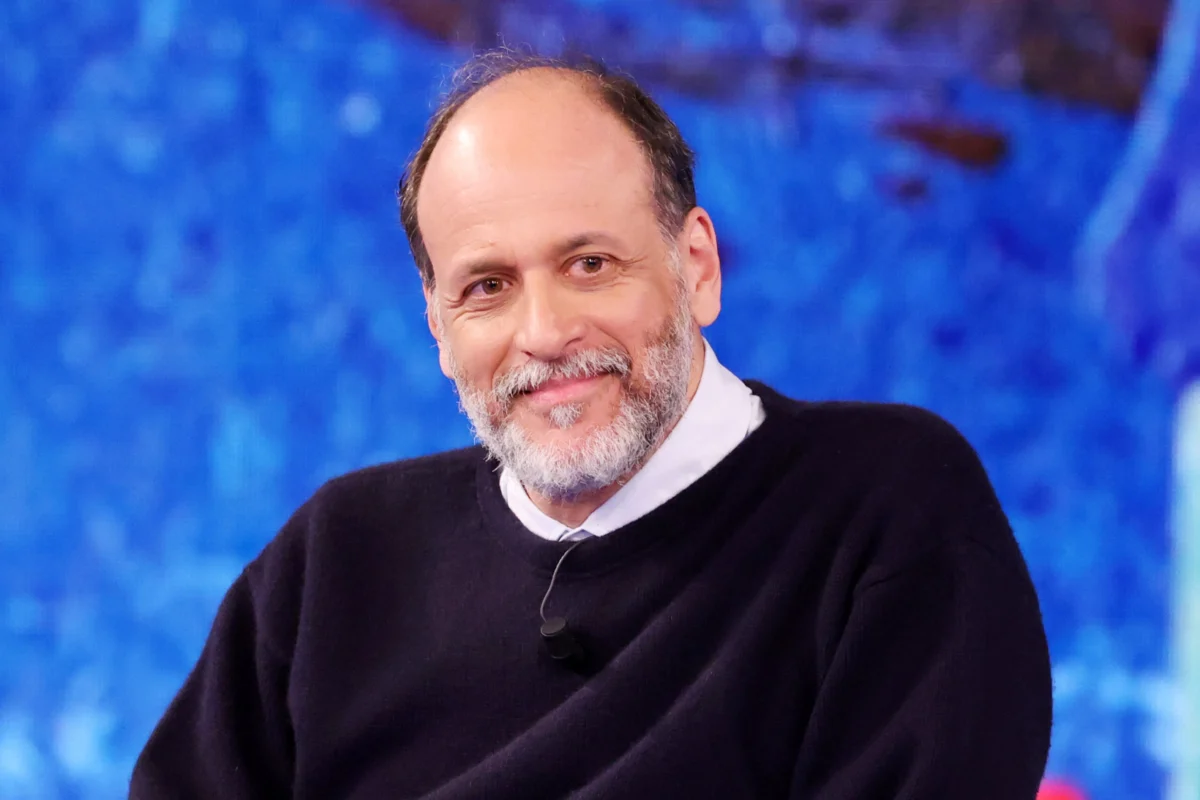
The intersection of high-concept cinema and the corridors of corporate power has rarely been as fraught as it is in the case of Artificial. The upcoming biographical drama, which centers on the meteoric rise of OpenAI CEO Sam Altman, has found itself at the heart of a complex, ongoing saga involving one of the world’s largest tech conglomerates and a visionary Italian filmmaker.
After Amazon MGM Studios made the surprise decision to drop the project—a move that sent shockwaves through Hollywood—director Luca Guadagnino has finally broken his silence. While he remains constrained by the delicate nature of the film’s current distribution limbo, his recent commentary offers a profound, haunting critique of the technological era that birthed the very story he set out to tell.
The Chronology of a Corporate Divorce
The tension surrounding Artificial did not materialize in a vacuum. The project, which stars Andrew Garfield as the controversial OpenAI co-founder and features Ike Barinholtz as Elon Musk, was initially poised to be a centerpiece of Amazon MGM’s prestige slate. With a production budget estimated at $40 million, the film was intended to capture the zeitgeist of the artificial intelligence revolution.
However, the ground shifted beneath the production when Amazon cemented a massive, multi-billion-dollar strategic partnership with OpenAI. The deal, designed to bolster OpenAI’s infrastructure through Amazon Web Services and facilitate the development of custom AI models, represented a $50 billion commitment from the retail and tech giant.
In the months following this announcement, the optics of producing a potentially critical or unauthorized biopic about the CEO of their primary business partner proved too complex for Amazon’s executive suite. The studio quietly moved to divest itself of the film, leaving the project in a state of high-profile abandonment. Despite early reports of interest from prestige distributors like Netflix, A24, and Focus Features, recent industry insights suggest these entities have largely passed on the film, leaving Mubi as one of the few remaining companies circling the title.
The "Otto e Mezzo" Revelation
The silence surrounding the film’s status was partially pierced on Friday during an appearance by Guadagnino on Lilli Gruber’s Italian talk show, Otto e Mezzo. When pressed by Gruber on the rumors that the film was deemed "too dangerous" for release by its former backers, the director maintained a diplomatic but pointed stance.
"Unfortunately, I can’t say much because we are right in the middle of this situation," Guadagnino remarked.
Rather than dwelling on the contractual intricacies of the fallout, the director drew a historical parallel to frame the corporate anxiety surrounding the project. He invoked the 2003 controversy involving CBS, which cancelled a planned drama series about the Reagan family following intense pressure from the Republican establishment. Like the Reagan project, which eventually found a home on a smaller network, Guadagnino’s Artificial appears to be a victim of the "chilling effect" that arises when commercial interests intersect with political and corporate narratives.
Deconstructing the AI Debate: Beyond the Algorithm
Guadagnino’s commentary extended far beyond the production woes of his latest film. He offered a philosophical dissection of artificial intelligence, stripping away the hype to focus on the human and societal costs.
For the director, the obsession with AI as an sentient, god-like entity is a distraction. "To me, the issue isn’t artificial intelligence itself," he stated. "I mean the application—or whatever we want to call it—the tool used to generate ‘products of knowledge’ or creative works, such as a research paper, a video, or an image."
He characterized current AI not as a revolutionary milestone of consciousness, but as a "technological gadget" that is "not particularly sophisticated" and "full of flaws." Yet, he acknowledged the hubris of the scientific community behind it: "Naturally, the scientists who developed artificial general intelligence believe that—even though right now it’s mostly a matter of processing data scraped from everywhere, consuming vast amounts of energy and water—perhaps one day it will become independently sentient."
The San Francisco Contrast: A Visual Manifesto
Perhaps the most compelling portion of Guadagnino’s commentary was his vivid description of the environment in which Artificial was filmed. The director painted a stark, dystopian portrait of San Francisco—a city that serves as both the cradle of the AI movement and a site of extreme socioeconomic disparity.
"We shot part of the film in San Francisco—a wonderful city, one of the great, distinguished U.S. cities, Alfred Hitchcock’s city," Guadagnino noted. "A place of great beauty but also great despair, with so many homeless people, so many people living under the influence of fentanyl, while these wonderful, silent, self-driving cars glided past them."
This imagery—the juxtaposition of cutting-edge, automated luxury against the backdrop of systemic human collapse—serves as the emotional and thematic core of his perspective. To Guadagnino, this is the "perfect image" to illustrate the theme of his film. It is an image that is, in his own words, "more than just disturbing."
Implications for Creative Autonomy and Big Tech
The fallout surrounding Artificial raises critical questions regarding the future of investigative and biographical storytelling in an age where the subjects of these films are often the same corporations funding the studios.
1. The Erosion of Critical Distance
When a studio enters a multi-billion dollar partnership with a tech entity, the ability for that studio to maintain editorial independence on projects critical of that entity is severely compromised. The Artificial case serves as a warning shot to creators that corporate synergy may increasingly prioritize brand protection over artistic integrity.
2. The Distribution Bottleneck
The fact that major players like A24 and Netflix have reportedly passed on the film suggests a broader industry hesitation. Whether this is due to fear of litigation, concerns over the film’s tone, or a reluctance to antagonize the players in the AI space, it signals a consolidation of what is deemed "acceptable" content in the current market.
3. AI as a Cultural Identity Shift
Beyond the economics, Guadagnino’s focus on the "identity of a place like the United States" suggests that he views AI as a fundamental, albeit destructive, force in the reshaping of national character. The film, in his view, is not merely a biography of Sam Altman, but a portrait of a civilization in the midst of a violent transition.
Looking Ahead
As the industry waits to see if Artificial will eventually find a home, the dialogue started by Luca Guadagnino has already shifted the conversation. By refusing to let the film be reduced to a simple "cancellation" story, he has elevated it into a meta-commentary on the very subject matter it portrays.
The film’s ultimate fate remains uncertain, but its existence as a lightning rod for debate is already guaranteed. Whether it arrives in theaters or is relegated to a footnote in the history of tech-censorship, Artificial has succeeded in doing what its subject matter often fails to do: it has forced a confrontation with the uncomfortable, human reality behind the glowing screens of the digital age.
As the world continues to grapple with the rapid, unchecked integration of AI into the fabric of daily life, the "disturbing" imagery that Guadagnino captured in the streets of San Francisco may prove to be the most accurate documentation of our current era yet produced.
 Asep Darmawan
  Azzam Bilal Chamdy