
 By Iffa Jayyana
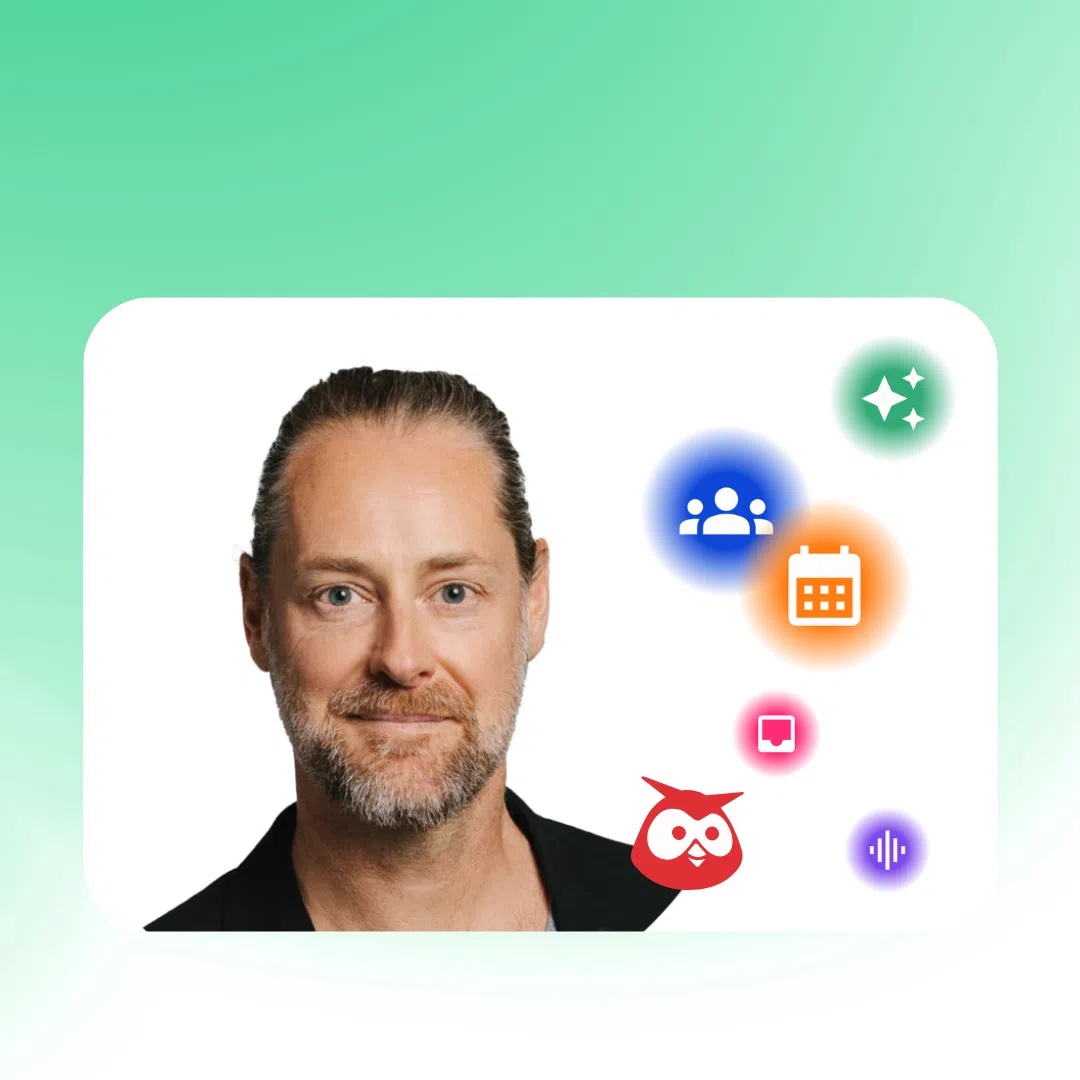
VANCOUVER — In a move that signals a radical departure from traditional SaaS (Software as a Service) models, Hootsuite has announced the launch of Hootsuite Social OS, an integrated AI-driven operating system designed to transform how global brands interact with real-time social data. The announcement, spearheaded by returning co-founder and CEO Ryan Holmes, marks a pivotal moment for the social media management industry, which has struggled to keep pace with the ephemeral nature of viral trends and the rapid evolution of generative artificial intelligence.
The core premise of the Social OS is a rejection of "last quarter’s data." While general-purpose AI models like ChatGPT and Claude have revolutionized content drafting, they remain fundamentally "blind" to what is happening in the immediate present. Hootsuite’s new architecture aims to close this gap by leveraging eighteen years of historical and real-time social signals to provide brands with actionable intelligence that exists in the "now."
Main Facts: A Paradigm Shift in Social Architecture
Hootsuite Social OS is not merely a feature update; it is a fundamental re-engineering of the platform’s core logic. The release is defined by three primary pillars:
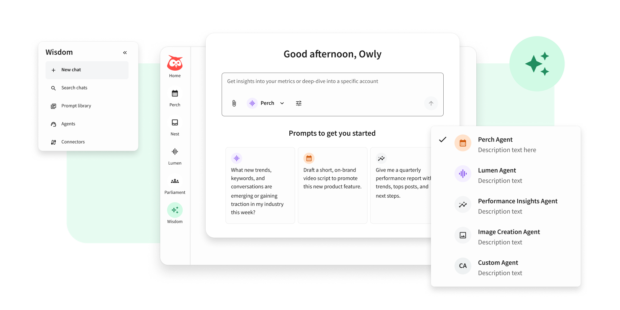
- Wisdom (The AI Agent): A social-first AI agent that replaces previous disparate tools (like OwlyGPT). Wisdom allows users to query their social environment in plain language, providing answers grounded in real-time market sentiment rather than static training data.
- The Integrated App Ecosystem: The platform has been consolidated into four specialized but interconnected applications: Lumen (Social Intelligence/Listening), Perch (Publishing and Content), Nest (Customer Care), and Parliament (Employee Advocacy).
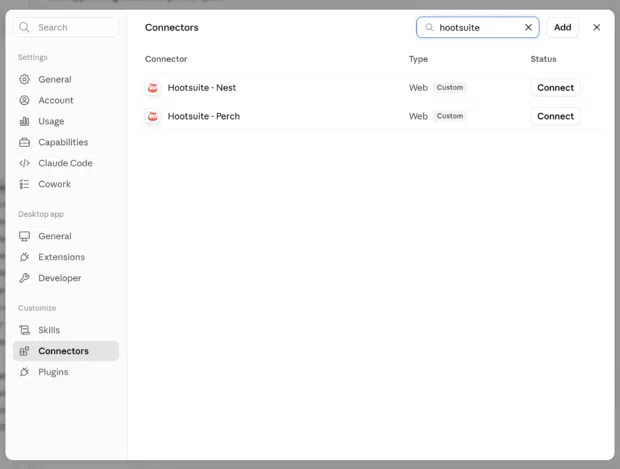
- Model Context Protocol (MCP) Connectors: In perhaps the most disruptive move, Hootsuite has gone "headless." Through MCP, Hootsuite’s real-time social data can now flow directly into third-party AI tools like Claude, Gemini, and Microsoft Copilot, allowing teams to access social intelligence without ever opening the Hootsuite dashboard.
At the heart of this launch is a massive data layer: a live signal feed built over nearly two decades, spanning 150 million sources and 187 languages. This "live signal layer" is what Hootsuite claims sets it apart from general AI vendors who rely on public datasets that are often weeks or months old.
Chronology: From Social Pioneer to AI Disruptor
To understand the gravity of this launch, one must look at the trajectory of Hootsuite and its founder.
- 2008 – The Birth of Social Management: Ryan Holmes co-founded Hootsuite during the first wave of the social media explosion. The goal was to help brands manage the chaos of multiple platforms like Twitter and Facebook from a single dashboard.
- The Growth Era: For over a decade, Hootsuite defined the category, expanding into enterprise-level analytics and customer service. Holmes eventually stepped down from the CEO role to focus on venture capital and supporting young entrepreneurs.
- 2026 – The Return of the Founder: A few months ago, Holmes returned to the helm of Hootsuite as CEO. He returned to an industry that was "working" but was increasingly threatened by the lag time of traditional analytics.
- The Rebuild Phase: Upon his return, Holmes made the controversial decision to dismantle existing product lines. "We took apart products that worked," Holmes stated. "Not because they were broken. Because ‘working’ wasn’t going to be enough for what’s coming."
- Today – The Launch of Social OS: After months of intensive development focused on AI integration and real-time data flow, the Social OS is released to the public, signaling the end of the "dashboard era" and the beginning of the "agentic era."
Supporting Data: The "Blind Spot" of General AI
The necessity for a "Social OS" is backed by a growing disparity between how AI is trained and how social media operates. Industry data suggests that the "half-life" of a social media trend has shrunk significantly over the last five years. A narrative can form, peak, and begin to damage a brand’s reputation within hours.
According to Hootsuite’s internal research, most general-purpose Large Language Models (LLMs) suffer from a "knowledge cutoff" or a reliance on scraped web data that does not reflect the current morning’s discourse.
The Signal Layer by the Numbers:
- 150 Million Sources: The breadth of the data pool Wisdom draws from.
- 187 Languages: Ensuring global sentiment is captured, not just English-centric trends.
- 18 Years of Context: Historical data that allows the AI to distinguish between a genuine shift in brand perception and a cyclical seasonal trend.
Hootsuite argues that while every AI vendor promises "intelligence," most are actually delivering "pattern recognition" based on historical archives. The Social OS aims to provide "contextual reasoning" based on live events.
Official Responses: A "Harder to Explain" Strategy
In his address to the industry, Ryan Holmes was candid about the risks associated with such a drastic overhaul. He acknowledged that "breaking" something that was already profitable is a counterintuitive move for a mature company.
"I’d rather risk confusion now than wake up irrelevant later," Holmes wrote in a statement accompanying the launch. He emphasized that the market did not give the company a choice. "The gap—between what the [AI] model knows and what’s actually happening in your market—is huge, and getting wider."
Regarding the new Wisdom agent, Holmes noted that it represents the unification of the company’s previous AI efforts. "The capabilities that used to live across OwlyGPT and Yeti are now one agent. You can now ask a question in plain language: ‘What’s shaping perception of us this week, and what should we do about it?’ and get an answer grounded in what’s happening on social right now."
Perhaps most importantly, Holmes addressed the "headless" nature of the new system through MCP connectors. "People are spending less time clicking through tabs and dashboards. Work is moving into AI assistants and agents… Any platform that still makes you log in to get value is fighting that current."
In a rare move for a CEO during a major product launch, Holmes ended his announcement with a request for criticism rather than just praise. "I’m going to ask instead of announce: If you use Hootsuite, what’s the one thing we can’t afford to lose in this? Tell me what we’d miss… Now I want to hear where we got it wrong."
Implications: The Death of the Dashboard?
The launch of Hootsuite Social OS carries significant implications for the broader marketing technology (MarTech) landscape.
1. The Shift from SaaS to "Headless" Intelligence
By adopting the Model Context Protocol (MCP), Hootsuite is acknowledging a future where the "app" is less important than the "data." If a social media manager can get a sentiment report or schedule a post directly through a ChatGPT interface using Hootsuite’s "pipes," the traditional SaaS dashboard becomes a secondary tool. This could force competitors like Sprout Social or Sprinklr to similarly open their ecosystems or risk being bypassed by AI-native workflows.

2. Real-Time Brand Safety
The integration of Lumen (intelligence) and Nest (care) via the Wisdom agent means that brand safety moves from a reactive to a proactive stance. If an AI agent can detect a "narrative forming before anyone on your team flags it," companies can intervene in crises before they reach a tipping point.
3. The Democratization of Social Strategy
Historically, deep social listening required specialized analysts to interpret complex Boolean queries and data visualizations. By allowing "plain language" queries through Wisdom, Hootsuite is democratizing social strategy. A CMO or a Product Manager can now gain direct insights into customer sentiment without needing an intermediary to "translate" the dashboard.
4. Organizational Silos
The Social OS is designed to break down the walls between marketing, customer service, and advocacy. By having Perch, Nest, and Parliament share the same data and AI layer, a customer complaint in the "care" app can immediately inform the content strategy in the "publishing" app. This creates a feedback loop that has been the "holy grail" of social media marketing for a decade but was often hindered by disconnected toolsets.
Conclusion
Hootsuite’s pivot to a "Social OS" represents a high-stakes bet on the future of the agentic web. By prioritizing real-time signal over historical data and "headless" integration over "walled garden" dashboards, the company is attempting to redefine what it means to be a social media management platform in the age of AI.
As Ryan Holmes noted, this is merely the "first wave." Whether users will embrace the "confusion" of a rebuilt platform in exchange for the power of real-time intelligence remains to be seen, but the message from Vancouver is clear: the era of the static social dashboard is over.
Hootsuite Social OS is currently available for trial, with the company actively seeking user feedback via LinkedIn and direct channels to refine the platform’s "judgment calls" on simplification and integration.
 Raul Delapena Setiawan
  Basiran
  Asro
Asro 