
 By Nila Kartika Wati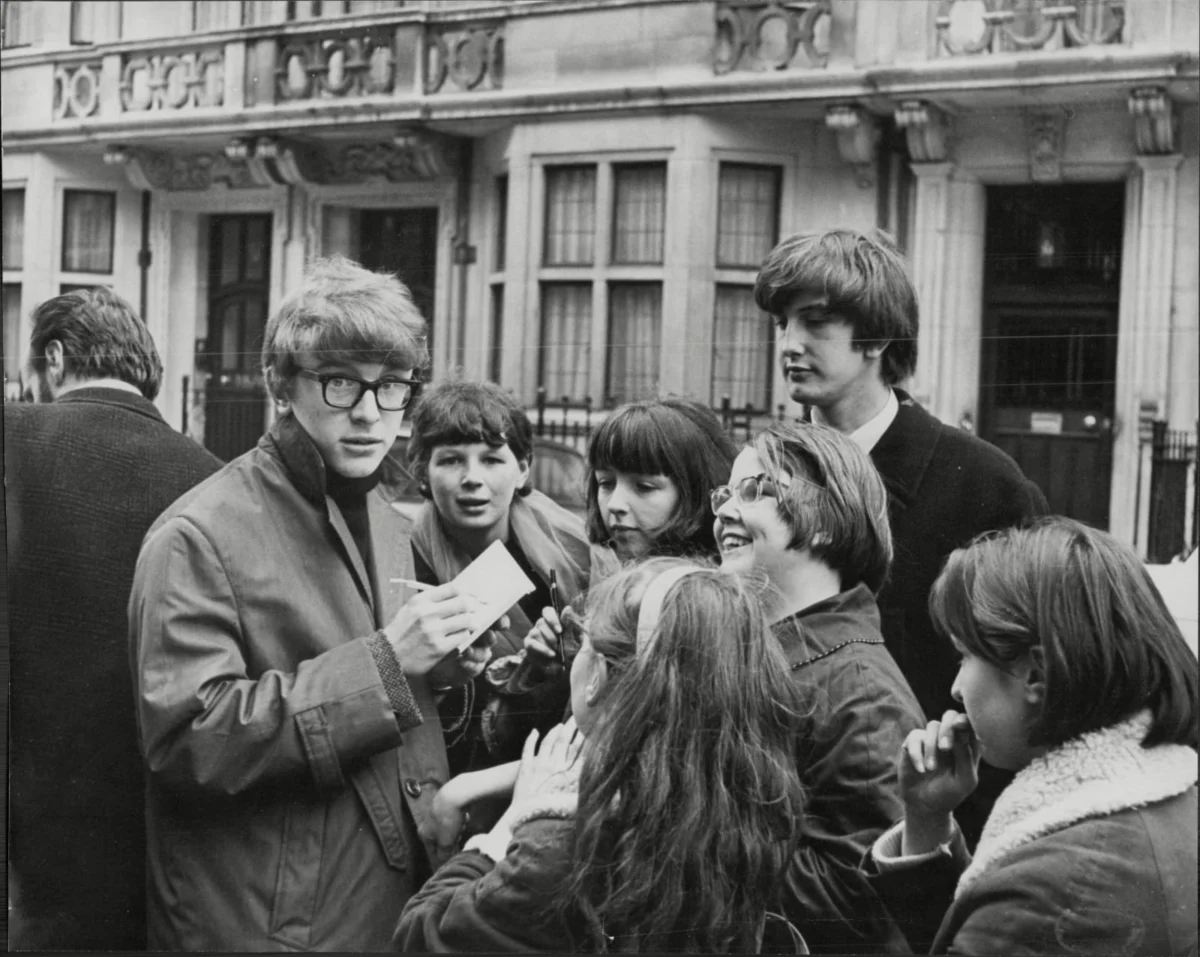
In the grand tapestry of 20th-century popular music, few threads are as colorful or as consistently interwoven as those pulled by Peter Asher. To discuss a figure who spent his early years as a chart-topping pop star and his later years as the architect of the singer-songwriter movement is to grapple with the very nature of “cool.” In the new documentary Peter Asher: Everywhere Man, directors Daniel Geller and Dayna Goldfine attempt to capture this mercurial force, presenting a portrait that is as much about the serendipity of the 1960s as it is about the quiet, calculated genius of a man who managed to be everywhere at once.
The Genesis of an Icon: From Westminster to the Charts
Born in 1944 to a household of high intellect—his father, Dr. Richard Asher, was the pioneering endocrinologist who identified Munchausen syndrome, and his mother was a classically trained oboist—Peter Asher’s upbringing was quintessentially British and decidedly intellectual. Yet, the halls of the posh Westminster School could not contain the budding cultural shift of the era.
It was here that Asher met Gordon Waller. The two shared a common denominator: an affinity for the guitar and a deep-seated admiration for Elvis Presley. Their voices, when combined, possessed a harmonic chiming quality that seemed tailor-made for the radio waves of the early 60s. Their rise was meteoric, fueled by a residency at the Pickwick Club, a haunt for the London glitterati, including luminaries like Michael Caine and Sammy Davis Jr. It was this visibility that caught the ear of EMI Records, setting the stage for one of pop music’s most serendipitous connections.
The Fairy Dust of the Fab Four
The narrative of Peter Asher is inextricably linked to the Beatles, not merely through industry proximity, but through familial ties. Asher’s sister, Jane, was a fixture of the youth-pop scene and a panelist on Jukebox Jury. In April 1963, she met Paul McCartney. The subsequent romance was the stuff of tabloid legend, but for Peter, it was a practical boon. McCartney essentially moved into the Asher family home, occupying a room adjacent to Peter’s.
This proximity led to the birth of the duo’s biggest hit, “A World Without Love.” While John Lennon famously dismissed the song as a “meh” composition, in the hands of Peter and Gordon, the track was transformed into an infectiously twee, irresistible British pop anthem. It was the quintessential "British Invasion" moment: two clean-cut boys with genteel accents channeling the Everly Brothers under the guidance of the world’s greatest songwriter. Between 1963 and 1965, McCartney’s generosity provided the duo with a steady stream of hits, including “I Don’t Want to See You Again” and “Nobody I Know,” cementing their status as teen idols.
The Cultural Polymath: Beyond the Pop Star
Asher was never truly meant for the life of a pop idol, a realization he reached with characteristic pragmatism. As the mid-60s counterculture bloomed, Asher pivoted toward the avant-garde. Alongside John Dunbar and Barry Miles, he helped establish Indica, a bookstore and gallery that became a nerve center for the London underground. It was at Indica that John Lennon famously met Yoko Ono, a moment that serves as a testament to Asher’s uncanny ability to exist at the nexus of history.
His transition to the studio was similarly serendipitous. After being tapped by McCartney to lead A&R for Apple Records, Asher took a chance on an unknown American folk singer named James Taylor. Their initial collaboration was an exercise in over-production, but the failure provided a vital lesson. Upon moving to Los Angeles, Asher refined his approach, stripping away the excess to foster the spare, intimate sound that would define Sweet Baby James. By crediting the session musicians on the album cover—a radical departure from industry norms—Asher effectively birthed the modern era of the session musician.
The Architect of the Singer-Songwriter Era
If the 60s were about the band, the 70s were about the soul of the songwriter, and Peter Asher was the primary curator of that shift. His work with Linda Ronstadt remains a masterclass in production precision. Tracks like “You’re No Good” and “Heat Wave” are sonic marvels, characterized by a clarity and emotional depth that defined the decade’s radio sound.
In 1977, Asher achieved a milestone of institutional recognition, appearing on the cover of Rolling Stone alongside Taylor and Ronstadt. To date, he remains one of the few record producers to receive such an honor, a status that solidified his mythology. However, the documentary does not shy away from the darker undercurrents of this success. The rise of the L.A. music scene was inextricably linked to the era’s rampant cocaine usage. While Asher managed to navigate these treacherous waters, his personal life—specifically the struggles of his wife, Betsy—suffered profound tolls, highlighting the human cost of the rock-and-roll lifestyle.
Chronology of Influence: Key Career Milestones
- 1964: "A World Without Love" reaches No. 1 on the UK and US charts, defining the Peter and Gordon sound.
- 1966: Opening of Indica Gallery; Asher becomes a pivotal figure in the London counterculture.
- 1968: Appointed head of A&R at Apple Records; signs James Taylor.
- 1970: Release of Sweet Baby James, revolutionizing the production of the singer-songwriter genre.
- 1974–1980: Production peak with Linda Ronstadt; multiple platinum records and Grammy nominations.
- 1987: Production of 10,000 Maniacs’ In My Tribe, showcasing Asher’s ability to adapt his sound to the college-rock era.
The "Everywhere Man" Legacy: Implications and Critique
Peter Asher: Everywhere Man functions as both a celebration and a cautionary tale regarding the "Boomer" gaze. The film is built around Asher’s autobiographical stage show, and while his anecdotes are captivating, they occasionally lean into a kind of solipsism—an infatuation with the "magic ecosphere" of the 60s. Asher himself is a "Zelig" figure, a man who drifted through the most transformative moments of the 20th century with a polite, nerdish detachment.
Critics have noted that the film’s biggest challenge is maintaining an objective distance from its subject. Asher is undeniably charismatic, yet he remains a "square" in a world of bohemians—an Englishman so polite and measured that one wonders if he ever truly lost his cool. Yet, this "squareness" is precisely what made him a brilliant producer. He brought an orderly, intellectual rigor to the chaotic creative impulses of artists like Taylor and Ronstadt.
Perhaps the most amusing takeaway from the documentary is the long-suspected revelation that Peter Asher—with his signature horn-rimmed glasses, floppy hair, and earnest grin—served as the primary inspiration for Mike Myers’ Austin Powers. Seeing footage of Asher in his ruffled shirts and paisley jackets makes the connection undeniable, transforming our perception of him from a serious music industry titan into a comedic icon.
Conclusion: A Mythic Glow
Whether one views Peter Asher as a visionary producer or a man who simply occupied the right place at the right time, his impact on the sonic landscape of the late 20th century is undeniable. His work on records like 10,000 Maniacs’ In My Tribe proves that his ear for production transcended the era that birthed him.
The documentary makes a compelling case for a broader study of the great producers—the George Martins and Giorgio Moroders of the world. However, as the film suggests, none of them carried the same mythic glow that Asher possesses. He is the bridge between the British Invasion and the California sound, a man who watched the world change from the front row of the most important concerts in history. Everywhere Man is a reminder that while nostalgia can be a trap, the stories of those who helped define our collective sound are worth documenting—even if, at times, they are told through the rose-colored lens of a generation that truly believed they were changing the world.
 Asep Darmawan
  Azzam Bilal Chamdy