
 By Evan Lee Salim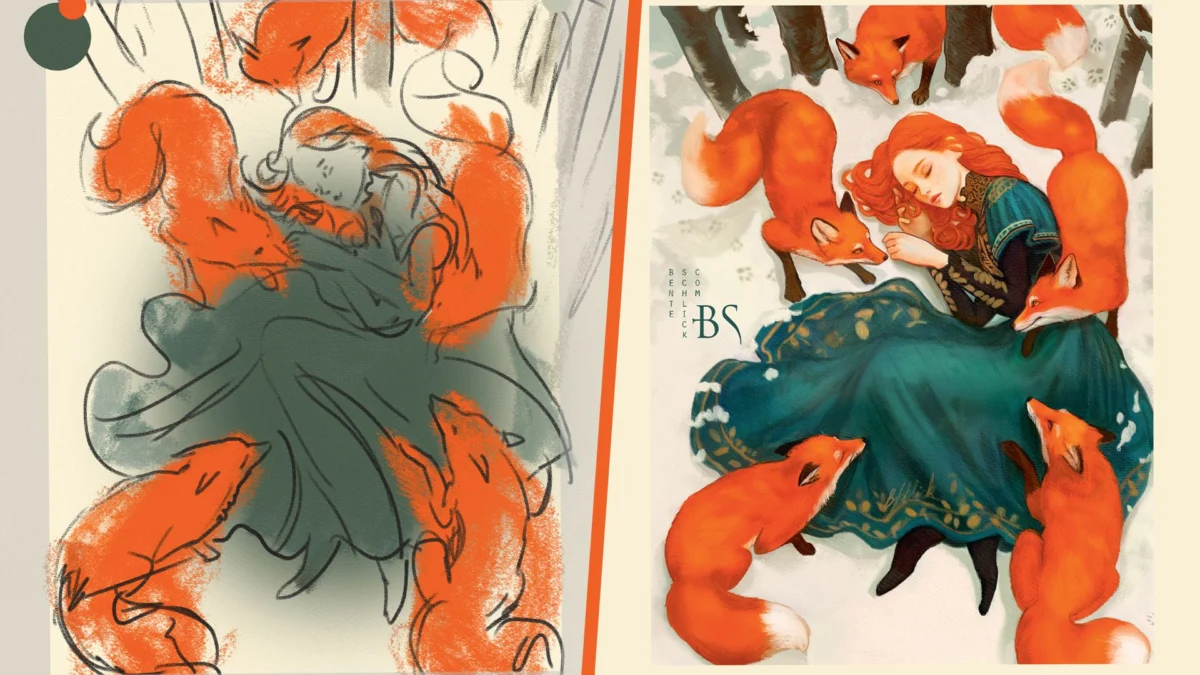
In the competitive and rapidly evolving world of digital fantasy illustration, few artists possess the distinctive ability to balance technical precision with raw, intuitive spontaneity. Bente Schlick, an internationally recognized fantasy illustrator and prolific book cover artist, has carved a niche for herself by eschewing rigid structural planning in favor of a fluid, emotion-led creative workflow. By blending the atmospheric depth of the Old Masters with the crisp, modern sensibilities of contemporary digital design, Schlick has become a beacon for aspiring illustrators looking to move beyond "paint-by-numbers" techniques.
The Foundations of a Fantasy Visionary
To understand Schlick’s work, one must first look at the lineage of her aesthetic. Her artistic DNA is heavily indebted to the 19th-century masters. She frequently cites J.M.W. Turner for his mastery of light and atmosphere, and John William Waterhouse for his unparalleled ability to capture narrative tension in portraiture. Furthermore, the dark, dramatic chiaroscuro of Rembrandt remains a cornerstone of her lighting setups.
However, Schlick is not a traditionalist in the conventional sense. She seamlessly integrates these historical influences with the graphic sensibilities of Art Nouveau pioneer Alphonse Mucha. This synthesis—the fusion of deep, realistic tonal values with structured, stylized graphic elements—is what defines the "Schlick style."
In our recent conversation, Schlick emphasized that her career trajectory was largely self-taught. This autodidactic background has gifted her a unique perspective on commissions: she treats every book cover or concept art project not as a rigid assignment, but as a narrative opportunity. When approaching a new commission, she prioritizes the "feeling" of the piece over technical perfection, a philosophy that has made her a favorite among fantasy publishers seeking emotive, high-concept cover art.
The Art of Unplanned Creation: A Chronology of the Canvas
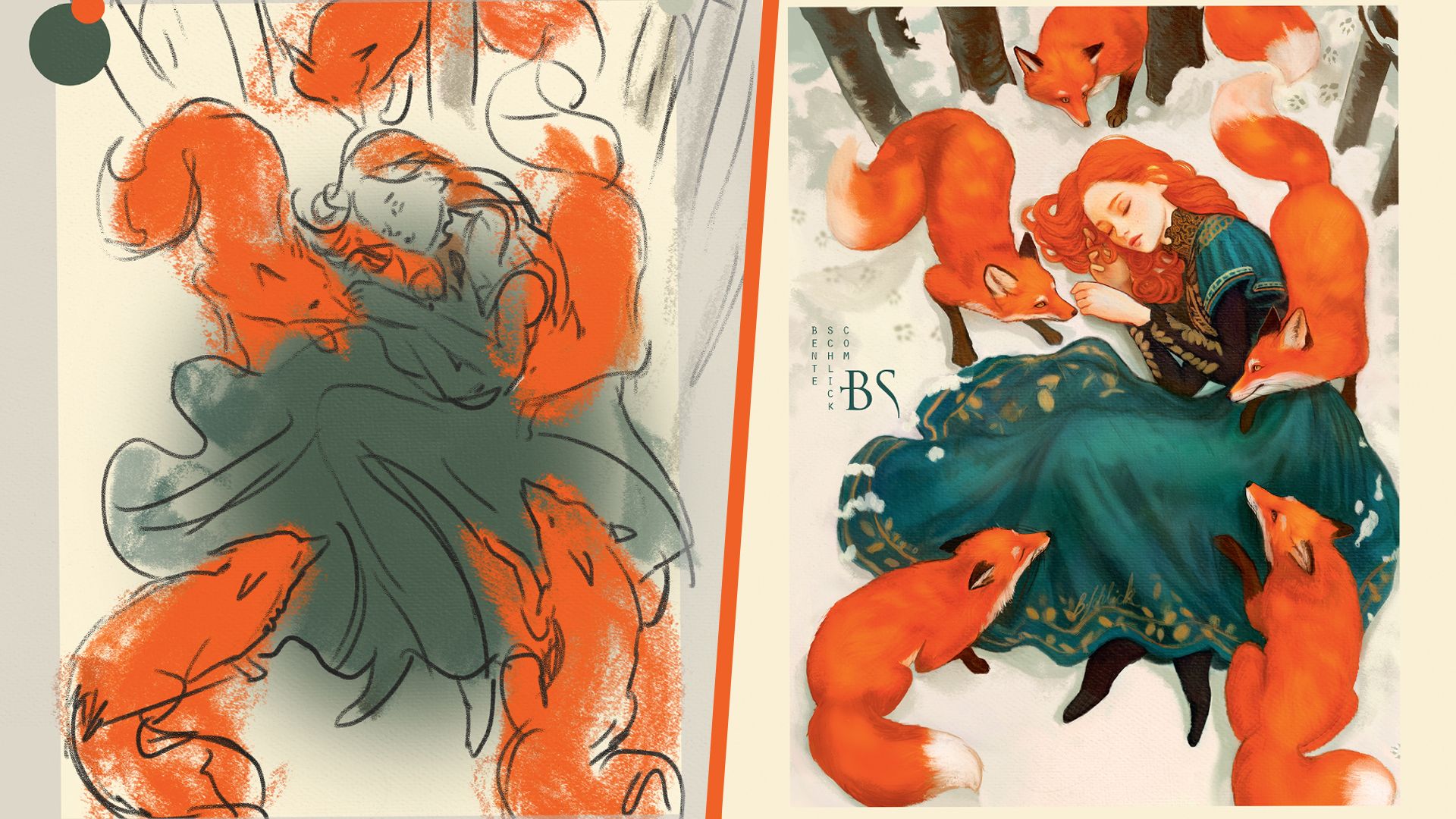
Perhaps the most striking aspect of Schlick’s process is her rejection of the "master plan." While many digital artists rely on exhaustive mood boards, thumbnail sketches, and detailed greyscale value studies before laying down a single pixel of color, Schlick prefers a more organic, iterative approach.
1. The Genesis: Idea over Blueprint
"I don’t have a plan in my head for what I want to create," Schlick explains. "I have ideas. At some point, I just start. I look at references, do a little sketch, and then I jump straight into the colors."
This lack of a rigid blueprint is intentional. Schlick finds that over-thinking a composition during the initial stages kills the kinetic energy of the work. She describes her mental state during the act of painting as an "escape"—a dissociative, meditative zone where her focus shifts entirely to the fantasy world she is constructing. It is a process of discovery rather than assembly.
2. Chromatic Selection and Contrast
The second stage of her process involves strict, deliberate color limitation. Schlick typically selects two primary colors for her central subjects—be they human figures or fantasy beasts—and two distinct, complementary colors for the environment. By restricting her palette, she ensures a cohesive visual language that prevents the image from becoming chaotic.
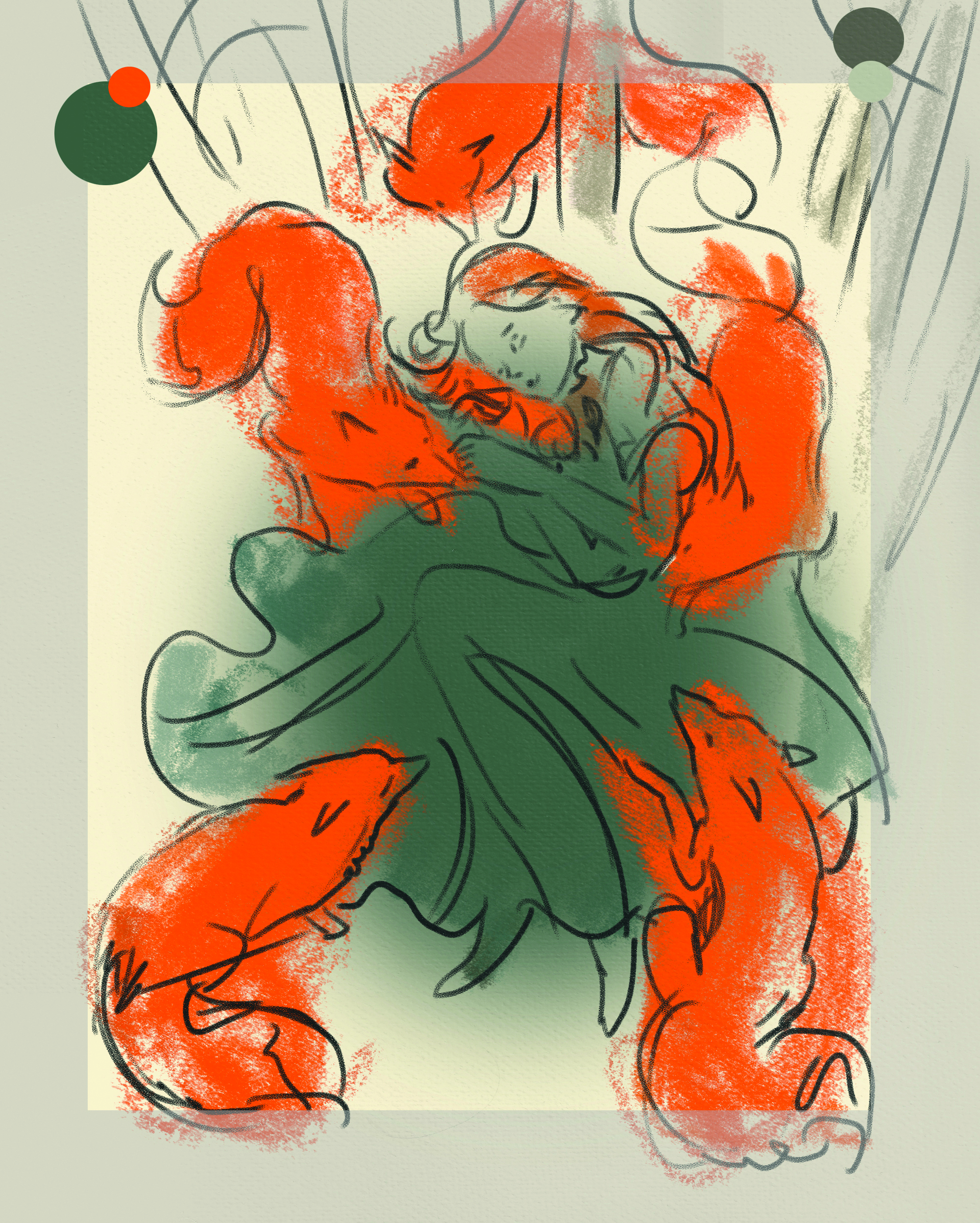
She then begins to mix shades within these limited parameters, carefully balancing warm and cool tones to drive the viewer’s eye through the composition. This interplay of temperature creates the "lively combination" that characterizes her most successful pieces.
3. Dynamics and Interaction
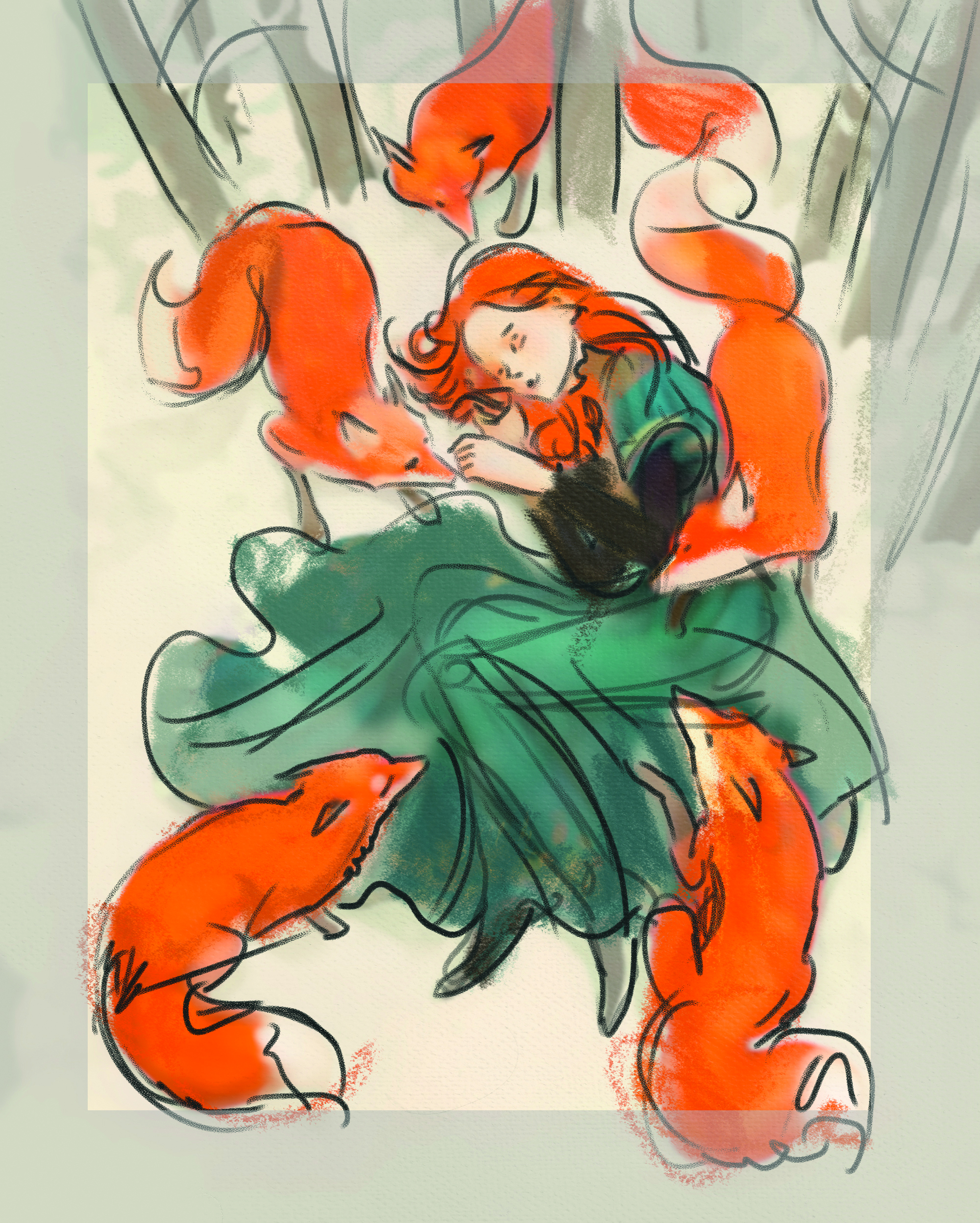
Once the color palette is established, Schlick turns her attention to the narrative dynamic. She focuses on the "gaze"—where the characters are looking, the tension in their posture, and how they interact with the space around them. At this stage, the environment begins to solidify from abstract color fields into concrete narrative structures.
4. Fine-Tuning: The Role of Line Art
Unlike many digital illustrators who establish a rigid "inking" phase at the beginning of their workflow, Schlick often leaves the line art for the final stages. She uses it as a finishing touch, or a scaffolding, to add clarity to the painting. As the piece approaches completion, she often reduces the opacity of the line art, allowing the painterly, rendered elements to take precedence. This final reduction ensures that the image retains a "hand-painted" quality, effectively bridging the gap between digital efficiency and traditional media.
5. Texture and Materiality
In the final stages, Schlick employs digital overlays, such as high-resolution scans of watercolor paper. This is a crucial step for achieving a traditional, tactile feel in a purely digital environment. By integrating these organic textures, she strips away the "clinical" look often associated with digital painting, giving her work the grit and warmth of physical media.
Supporting Data: The Tools of the Trade
Schlick’s workflow is powered by the industry-standard combination of Adobe Photoshop and Wacom hardware. This synergy of software and hardware is common among high-end professionals, yet Schlick’s application of them is distinct.
- Software: Adobe Photoshop remains her primary workspace. Its versatility in brush engines and layer blending modes allows her to shift from the rough, experimental color blocking of the early stages to the fine-tuned, textured finishing of the final output.
- Hardware: She relies on Wacom drawing tablets, which provide the pressure sensitivity and precision required to mimic the nuance of physical brushes.
For readers looking to replicate this workflow, the current market offers a wide array of options. The transition from amateur to professional-grade equipment has never been more accessible, with tablets like the Wacom Cintiq or the more portable Intuos Pro series serving as the standard-bearers for professional illustrators.
Implications for the Industry
Bente Schlick’s methodology offers a profound lesson for the modern digital artist: The tool does not dictate the process. In an era where AI-generated imagery and rigid, formulaic tutorials dominate the discourse, Schlick’s focus on intuition and the "feeling" of the image serves as a necessary corrective.
Her process highlights several key industry shifts:
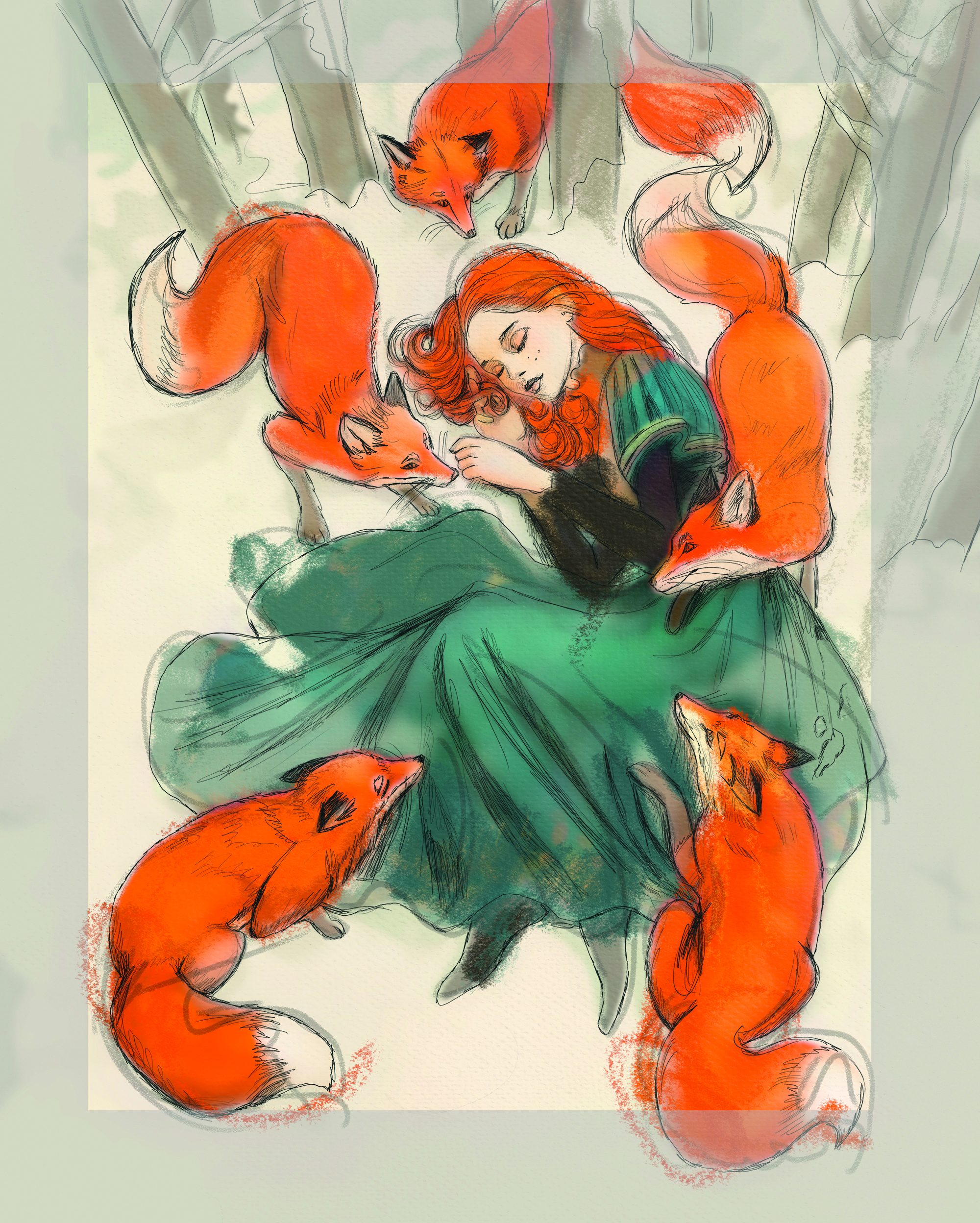
- The Return to "Analog" Feel: There is an increasing demand for digital art that doesn’t look digital. Schlick’s use of paper textures and reduced, intentional line work represents a broader movement toward human-centric, tactile aesthetics.
- The Anti-Perfectionism Movement: Schlick admits, "I don’t think I ever like my work when it’s finished." This sentiment reflects a healthy, iterative approach to professional art. By releasing the need for a "perfect" final product, she maintains the ability to experiment and, ultimately, to grow as an artist.
- The Value of Autodidacticism: Her success story reinforces that creative mastery is often found through unconventional paths. Her ability to synthesize disparate influences—from 17th-century Dutch masters to Art Nouveau graphic design—was made possible precisely because she was not constrained by a traditional art-school curriculum.
Conclusion: Lessons for the Aspiring Illustrator
For those inspired by Schlick’s journey, the path forward is clear: start by mastering your tools, then seek to break the rules you’ve learned. Her process is a testament to the fact that technical skill is merely a vehicle for emotional expression. Whether you are a professional commission artist or a hobbyist looking to refine your digital painting, taking a page from Schlick’s book—by letting go of the plan and focusing on the emotion of the canvas—may be the most important step in your creative development.
As the digital art landscape continues to shift, artists like Bente Schlick remind us that at the heart of every fantasy image, there must be a human element. It is not the tablet or the software that creates the art; it is the person in the "other place" where the imagination resides, painting without overthinking, and finding beauty in the spontaneity of the moment.
This article originally appeared in ImagineFX. For more insights into the world of digital illustration, subscribe to ImagineFX to ensure you receive the latest in-depth interviews, tutorials, and industry analysis.
 Lina Hope
  Reynand Wu
  Siti Muinah