
 By rifanmuazin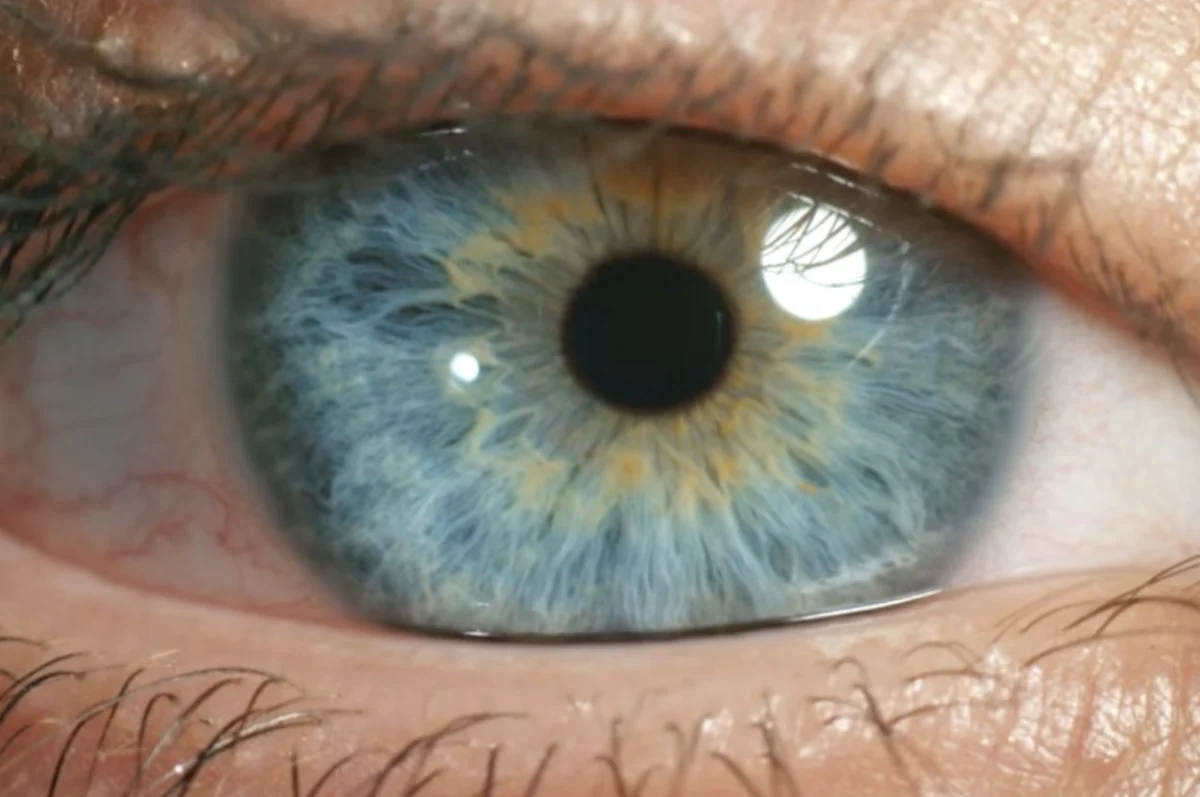
September 28, 2026 — By the Science and Culture Desk
Main Facts
Human vision is often taken for granted as an objective window into the physical world. Yet, a fundamental question continues to puzzle neuroscientists, philosophers, and cognitive psychologists alike: Do we all actually see color the same way?
While modern physics defines light strictly by its electromagnetic wavelength—ranging from approximately 380 to 750 nanometers—the human experience of color is not merely a passive recording of physical data. Rather, it is a complex neural reconstruction generated entirely within the brain.
Recent discussions in perceptual science highlight a fascinating hypothesis: individuals may experience fundamentally different internal representations of identical color stimuli. While one person’s internal experience of "red" might align closely with another’s, philosophical thought experiments like the "Inverted Spectrum" suggest that it is entirely possible for two people to look at the exact same crimson rose, agree completely on its label, yet experience entirely distinct internal qualia.
Furthermore, biological variations in the human eye—such as differences in cone cell density, genetic mutations affecting photopigments, and cortical processing efficiency—mean that certain individuals can distinguish subtle chromatic gradients that are entirely invisible to others. To explore these variations in a playful, interactive context, researchers and digital creators frequently deploy perceptual screening tools. These exercises challenge participants to rapidly identify chromatic words or hues under controlled conditions, offering a window into the nuanced realities of individual visual processing.
Chronology of Color Perception Research
The scientific quest to understand how humans perceive color spans centuries, evolving from philosophical speculation into precise molecular biology and neuroimaging.
- 17th Century: Sir Isaac Newton revolutionizes optics by passing white light through a glass prism, demonstrating that light is composed of a spectrum of distinct colors. Newton posits that color is not a quality inherent to objects, but rather a property of light interacting with matter.
- 19th Century: Thomas Young and later Hermann von Helmholtz propose the trichromatic theory of color vision. They suggest that human color perception relies on three distinct types of photoreceptor mechanisms sensitive to different ranges of wavelengths (short, medium, and long).
- Late 20th Century: The discovery and genetic mapping of human retinal cone photopigments confirm the trichromatic model. Scientists identify three specific classes of cone cells (S-cones for blue, M-cones for green, and L-cones for red) and begin exploring genetic variations, such as anomalous trichromacy and tetrachromacy.
- Early 21st Century: Advances in functional magnetic resonance imaging (fMRI) allow researchers to monitor real-time cortical activity in the visual cortex (V1, V2, and V4 areas), revealing that color is processed across distributed neural networks rather than in a single retinal snapshot.
- Present Day (2026): Modern cognitive research increasingly focuses on the intersection of language, culture, and neurobiology in shaping color categorization. Interdisciplinary studies evaluate how digital displays, ambient lighting, and individual neurodiversity impact everyday chromatic experiences.
Supporting Data and Biological Mechanisms
To understand why color perception may vary from person to person, one must examine the intricate biological machinery of the human visual system.
The Retinal Mosaic
The journey of color begins in the retina, a thin layer of tissue lining the back of the human eye. The retina contains two primary types of photoreceptors: rods (responsible for low-light, monochromatic vision) and cones (responsible for daylight and color vision).
An average human retina contains approximately 6 million cone cells. However, the exact ratio and spatial distribution of L-cones, M-cones, and S-cones vary dramatically from one individual to another. Studies have shown that the ratio of L-cones to M-cones can fluctuate by a factor of ten or more between two people with normal color vision. Despite these staggering discrepancies, both individuals may pass standard clinical color blindness tests with flying colors, demonstrating the brain’s remarkable capacity for neural calibration.
Tetrachromacy: Seeing the Invisible
While most humans are trichromats, possessing three types of functioning cone cells, some individuals—primarily genetic females due to the X-linked inheritance of L and M cone pigments—may possess four distinct types of cone cells.
Known as functional tetrachromats, these individuals have an expanded perceptual color space. While a standard trichromat can distinguish roughly one million distinct hues, a true tetrachromat is theoretically capable of perceiving up to 100 million colors. Research into functional tetrachromacy underscores the reality that human visual capability is not a monolithic standard, but a diverse spectrum of biological potential.
Cortical Processing and the Brain
The eye merely captures light signals; the brain interprets them. Color constancy—the ability of the visual system to recognize the true color of an object despite changes in illumination—proves that perception is heavily mediated by top-down cortical processing. The brain uses contextual cues, memory, and environmental assumptions to construct the colors we consciously experience. Consequently, two people looking at the same digital screen or printed word may experience subtle shifts in hue based on individual neural wiring, cognitive fatigue, and past visual experiences.
Official Responses and Expert Perspectives
The debate surrounding subjective color experience bridges hard science, psychology, and philosophy. Leading researchers in vision science emphasize that while standardized testing can categorize physiological deficiencies (such as protanopia, deuteranopia, or tritanopia), quantifying subjective internal qualia remains one of science’s greatest challenges.
Dr. Aris Thorne, a leading neuroscientist specializing in visual processing, notes:
"We often speak of ‘red’ or ‘blue’ as if they are universal constants anchored firmly in the external world. In truth, they are collaborative creations of the eye and the brain. Because every human brain is wired through a unique combination of genetics and lived experience, it is entirely logical to assume that no two people experience the exact same chromatic palette."
Cognitive psychologists also point to the interplay between linguistic categorization and visual processing. Anthropological studies show that different cultures divide the color spectrum differently. Languages that lack distinct words for "blue" and "green"—instead grouping them under a single term—often show subtle differences in how speakers categorize and remember those visual stimuli, proving that perception is shaped by both biology and culture.
Implications of Subjective Color Diversity
The realization that human color perception is deeply subjective and variable carries profound implications across multiple industries and scientific disciplines.
1. Design, Art, and Digital Media
In fields ranging from graphic design to cinematic color grading, professionals frequently encounter the challenge of cross-media color consistency. Knowing that end-users may perceive subtle color gradients or text-background contrasts differently underscores the importance of universal design principles. Ensuring high contrast and accessible chromatic palettes is critical, particularly for individuals with anomalous trichromacy or mild color vision deficiencies.
2. Clinical Diagnostics and Ophthalmology
Advancements in adaptive optics and genetic screening are transforming how ophthalmologists understand retinal health. Recognizing that normal human vision exists on a wide continuum helps clinicians better diagnose subtle visual neuropathies and tailor corrective interventions or customized visual aids.
3. Artificial Intelligence and Computer Vision
As engineers build advanced artificial intelligence and computer vision systems for autonomous vehicles, robotics, and medical imaging, understanding the nuances of human visual perception is vital. AI models trained on standardized datasets must account for the reality that human operators may interpret visual alerts, warning lights, and diagnostic readouts through slightly different perceptual lenses.
4. Interactive Self-Discovery and Public Engagement
Interactive perceptual tests—such as rapid-fire chromatic word challenges where participants identify sequential text stimuli under time constraints—serve as valuable public science communication tools. While not intended to replace rigorous clinical evaluations, these accessible exercises spark public curiosity, encouraging everyday individuals to ponder the hidden complexities of their own sensory biology.
Conclusion
The question of whether we all see color the same way remains an open, captivating inquiry at the intersection of biology and philosophy. While scientific instruments can measure wavelengths with absolute precision, the internal theater of the human mind transforms those measurements into a deeply personal, subjective masterpiece. Whether exploring the outer limits of human tetrachromacy or simply testing one’s ability to decipher rapid color words on a screen, humanity’s relationship with color is a powerful reminder of the diversity woven into the very fabric of human consciousness.
 Lina Hope
  Azzam Bilal Chamdy
  Asro
Asro 