
 By Asep Darmawan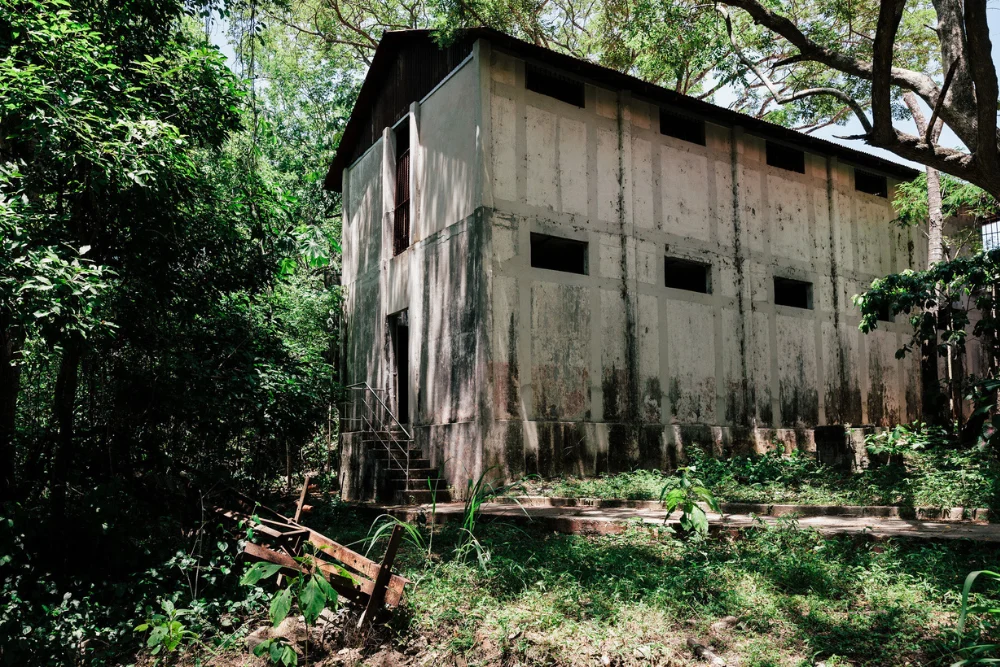
In the global search for the next iconic filming location, producers often find themselves choosing between the well-trodden streets of Europe or the high-tech studio lots of North America. However, tucked away in the heart of Central America, Costa Rica is emerging as a compelling, multifaceted destination that offers far more than its famous reputation for eco-tourism. From the haunting, salt-sprayed remnants of its historical penal colonies to the otherworldly, ash-laden slopes of active volcanoes, the nation is positioning itself as a premier, versatile backlot for the international film industry.
The Haunting Legacy of San Lucas Island
The crystalline waters surrounding San Lucas Island today belie a darker, more visceral past. Between 1873 and 1991, this isolated outcrop served as Costa Rica’s principal penitentiary. Often dubbed the "Alcatraz of Costa Rica," the island was a place of exile for the nation’s most dangerous criminals, who endured short but brutal sentences in an environment defined by isolation and institutional neglect.

Today, the island has been transformed into a national park, a sanctuary where history is carefully curated. A quaint white bridge with cobalt blue poles marks the entrance, leading visitors to a poignant sign: "Ocean and forest protecting history." Yet, the tranquility of the lush surroundings is sharply interrupted upon entering the former infirmary. The structure, a small white and grey wooden building, remains a testament to the past; its tiled floors serve as a chilling contrast to the photographic records of emaciated prisoners who were once treated by a lone veterinarian—the only medical professional available to them.
The prison complex is a haunting architectural timeline. Beyond the infirmary, the site features a chapel, a semi-circular cell block, and the infamous "hole"—a circular concrete underground chamber originally designed for water storage, but later repurposed as a torture cell. In this claustrophobic space, prisoners were left to suffer in the stifling heat, a visceral reminder of the human cost of the island’s history. Etched into the walls of the facilities are drawings—a woman in a bikini, a portrait of Pelé—that reflect the fractured psyches of those who lived and died within these walls.

A New Frontier for Period and Genre Cinema
Despite its haunting atmosphere and well-preserved structures, San Lucas Island remains largely untouched by major fiction film productions. While there was a previous, frustrated attempt to adapt José León Sánchez’s acclaimed novel Island of Lonely Men—a gritty chronicle of the violence and abuse that defined the prison’s era—the location remains a "hidden gem" awaiting the right project.
For film commissions and location scouts, the island is a dream of texture and atmosphere. The heat, the humidity, and the pervasive weight of the past create a naturally cinematic environment. It is an ideal setting for psychological thrillers, period dramas, or survival stories that require a high degree of authenticity and isolation.

Logistical Infrastructure and Regional Networks
Geographically, San Lucas Island sits within the Gulf of Nicoya, a strategic maritime corridor that separates the Nicoya Peninsula from the mainland. This positioning is a massive logistical advantage. The nearby city of Puntarenas, home to over 100,000 residents, serves as the primary support hub. Located just a 30 to 40-minute boat ride from the island, the city offers essential infrastructure: hotels, restaurants, technical suppliers, and financial services.
This proximity ensures that productions can access the "island experience" without the crippling logistical nightmares often associated with remote filming. The Gulf of Nicoya itself is a vast network of islands and estuaries, offering a diverse array of settings, from the traditional fishing village of Isla Venado to the secluded, pristine coves of Isla Jesucita.

Expert Perspectives: The Scout’s View
Lyall Gardiner, a veteran location scout whose resume includes blockbusters like Mission: Impossible – Dead Reckoning Part One, The Mummy, and John Wick: Chapter 3 – Parabellum, recently toured the region. His assessment confirms the potential that industry insiders are beginning to see.
"For me, Costa Rica’s rich and inviting landscape has the potential to transform your imagination and your film," Gardiner remarked following his visit. "There is incredible location diversity here, mixed with an inviting and beautiful culture and amazing people. So much is still to be discovered."

The Biodiversity of Production: Beyond the Gulf
While the Gulf of Nicoya offers the historical weight of the prison, the southern Pacific coast provides an entirely different aesthetic. The Golfo Dulce, or "Sweet Gulf," is one of the world’s few tropical fjords. Here, the rainforest descends directly into the Pacific, creating a rare ecosystem that has become a refuge for humpback whales and dolphins.
Adjacent to the gulf lies Golfito, a town that looks as though it were lifted from a mid-century American storybook. Formerly a hub for the United Fruit Company, Golfito’s architecture—comprised of colonial and Victorian-style wooden buildings—offers a unique, nostalgic aesthetic that has already begun to attract filmmakers. Veteran producer Ana Lucía Arias, who recently shot Love Is the Monster in the town, notes that while remote shooting always presents challenges, the local support is unmatched. "Golfito became more than just a location; it shaped the story and its characters," she says.

The Caribbean Coast and the "Tangible Intangibles"
Costa Rica’s eastern seaboard offers yet another distinct environment. Limón is a multi-ethnic port city defined by its Afro-Caribbean heritage and historic wooden architecture. In a compact 10-mile radius, productions can move between the vibrant streets of Limón to the tropical beaches of Cocles and Punta Uva, where the Bribri indigenous tribe continues to maintain ancient traditions, such as the crafting of traditional cacao beverages.
This region has already played host to international projects, including AppleTV+’s Emmy-winning series Jane and Gordon Ramsay’s Uncharted. As location manager Mickey Ryan observes, "Most of the locations in the Southern Caribbean are within a 10-mile radius, which makes the whole region incredibly convenient for shooting."

Volcanic Landscapes and Hidden Waterfalls
In the highlands, the Turrialba Volcano region provides a stark departure from the tropical greenery. Known for its "Burnt Forest" (Bosque Quemado)—a site decimated by volcanic eruptions—this area offers a post-apocalyptic, alien, and surreal landscape. It is a natural set for fantasy and sci-fi productions that require skeletal, ash-covered terrain.
Further north, the "Land of Waterfalls," Bajos del Toro, offers yet another visual world. With over 30 waterfalls nestled in a valley of misty cloud forests and volcanic terrain, it remains one of the most underutilized assets in the country. As the acclaimed drama Clara Sola proved, these landscapes offer a level of visual poetry that is increasingly rare in modern cinema.

The "Pura Vida" Production Advantage
The implications for the global film industry are clear: Costa Rica is no longer just a holiday destination; it is a serious contender for high-end production. The "tangible intangibles"—a phrase coined by location scout "Zippy" Melissa Downing—refer to the spirit of Pura Vida that permeates the local workforce. This spirit, combined with a deep-seated national commitment to environmental preservation and education, makes the country a sustainable and reliable partner for international studios.
As global productions continue to seek out fresh, untapped environments that can double for a multitude of world locations, Costa Rica’s unique blend of colonial history, untouched nature, and logistical accessibility positions it as a front-runner for the next decade of cinema. Whether it is the haunted, silent halls of San Lucas Island or the roaring, azure falls of the north, the "Rich Coast" is ready for its close-up.
 Nila Kartika Wati
  Siti Muinah
  Ammar Sabilarrohman