
 By Basiran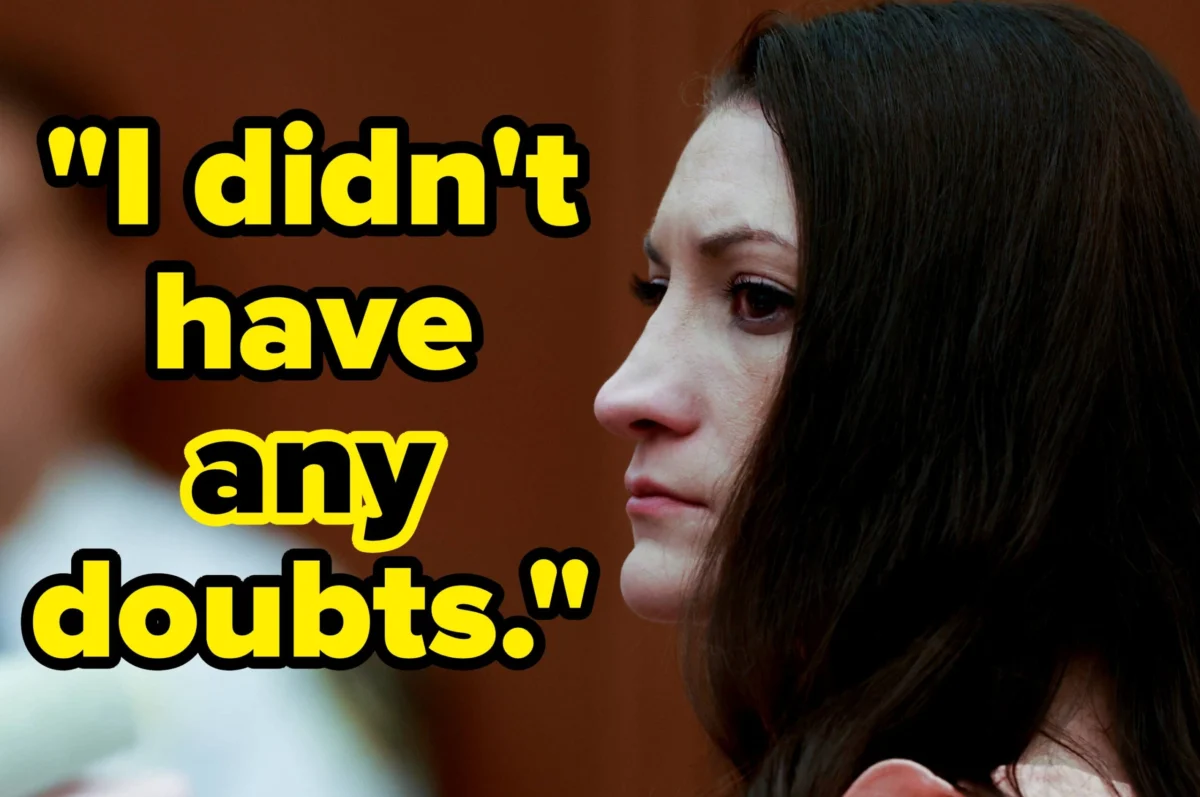
Introduction
More than three years after the tragic deaths of three young children in Duxbury, Massachusetts, the legal proceedings surrounding Lindsay Clancy remain deeply polarized. The high-profile trial, which captured national attention and ignited intense public debate regarding mental health, the justice system, and maternal infanticide, ended in a mistrial following seven grueling days of jury deliberations. For weeks, the identity and motivations of the lone holdout juror who prevented a unanimous verdict remained shrouded in mystery, accompanied by public outcry, intense media scrutiny, and serious security concerns.
Now, that silence has been broken. Michael Desronvil, the juror at the center of the deadlock, has stepped forward through representatives and legal counsel to defend his position. His statements offer a rare glimpse into the volatile atmosphere of the jury room, while his attorney has positioned him as a embattled figure facing severe backlash. As prosecutors, defense attorneys, and the public grapple with the mistrial, the case enters a turbulent new phase marked by impending legal maneuvers, upcoming media appearances by surviving family members, and ongoing debates over accountability, mental illness, and the American justice system.
Main Facts
The core of the legal battle centers on the events of January 24, 2023, when Lindsay Clancy, a labor and delivery nurse, killed her three children—5-year-old Cora, 3-year-old Dawson, and 8-month-old Callan—at their Massachusetts home before attempting to take her own life. Clancy survived the suicide attempt but was left paralyzed from the waist down.
While Clancy readily admitted to the physical acts of taking her children’s lives, her defense team entered a plea of not guilty to first-degree murder. The defense argued strenuously that Clancy was suffering from severe, untreated postpartum psychosis—a catastrophic medical condition characterized by hallucinations, delusions, and a severe detachment from reality—and that she did not receive adequate psychiatric intervention prior to the tragedy.
After a lengthy trial, the case was handed over to a jury. Following seven days of intense deliberations, the jury ultimately failed to reach a unanimous verdict. While the majority of the jurors leaned toward finding Clancy not criminally responsible due to her mental state, one juror—Michael Desronvil—stood firm against acquittal, resulting in a mistrial.
In statements released through his representative, Ray Marcel, and his attorney, Edward Andrew Paltzik, Desronvil maintained that he had firm convictions based on the evidence presented in court.
"I didn’t have any doubts," Desronvil said in his statement. "As I tried to explain different possible theories during deliberation, I kept getting cut off as if I had doubts based on the evidence present. Based on all the physical evidence, key witnesses, and what the prosecution presents, I thought it was enough proof that she knew exactly what she was doing and planned."
These assertions stand in stark contrast to accounts from other members of the jury, who spoke out anonymously or publicly in the weeks following the mistrial. Several fellow jurors accused Desronvil of being entirely closed-minded during discussions, alleging that he dismissed the testimony and arguments presented by his peers and refused to meaningfully engage with the nuances of the medical evidence surrounding postpartum psychosis.
Chronology of Events
To understand the current state of the Lindsay Clancy case, it is necessary to trace the timeline from the initial tragedy through the trial and its chaotic aftermath:
- January 24, 2023: Emergency responders arrive at the Clancy home in Duxbury, Massachusetts, discovering three children mortally wounded and Lindsay Clancy injured from a reported suicide attempt.
- Early 2023 – Late 2025: Clancy is hospitalized, undergoes extensive medical and psychiatric evaluation, and is subsequently charged with multiple counts of first-degree murder. Her defense team builds a case centered on postpartum psychosis and systemic failures in mental health care.
- Early 2026: The high-profile trial begins, drawing intense national scrutiny. Prosecutors argue that Clancy acted with premeditation and clarity, while the defense presents expert testimony detailing the devastating effects of postpartum psychiatric disorders.
- Spring 2026: After hearing weeks of testimony, the jury begins deliberations. The process spans a grueling seven days, characterized by internal friction and deadlock.
- Spring 2026 (Mistrial Declared): The judge officially declares a mistrial after the jury informs the court that it is hopelessly deadlocked and unable to reach a unanimous verdict.
- Post-Trial Weeks: Various jurors speak to media outlets, publicly identifying Desronvil as the lone holdout and criticizing his conduct during deliberations. Simultaneously, investigative reports reveal past domestic violence allegations involving Desronvil, escalating public hostility toward him.
- September 2026: Attorney Edward Andrew Paltzik publicly announces his representation of Desronvil, describing him as safely sequestered in Northern New England while praising his resilience and faith. Meanwhile, defense attorneys and prosecutors prepare for upcoming status hearings, and public figures weigh in on the case’s future.
Supporting Data and Background Context
The fallout from the mistrial has extended far beyond the walls of the courtroom, touching upon issues of personal history, public safety, and intense cultural division.
Following the declaration of the mistrial, investigative reports from outlets such as NBC10 Boston brought Desronvil’s personal background into the public spotlight. Media coverage detailed historical domestic violence allegations against him, including a restraining order filed by his nephew alleging physical assault, as well as a 2021 charge involving an alleged assault against his then-wife. These revelations intensified the vitriol directed at Desronvil on social media and across various public platforms.
In response to mounting threats and intense public condemnation, Desronvil’s legal representation took swift action to ensure his security. His attorney, Edward Andrew Paltzik, confirmed that Desronvil was relocated to a secure, undisclosed location in a rural area of Northern New England.
Paltzik vigorously defended his client in statements released on social media, framing Desronvil not as a controversial figure, but as an embattled defender of the legal system.
"This American Hero and Champion of Justice loves the United States of America as the greatest country in the world; cherishes our sacred Constitution as the pinnacle of human liberty; and supports our amazing leader, President Donald J. Trump, as a fellow defender of common-sense, liberty, and sanity," Paltzik wrote in a widely circulated social media post.
Paltzik added that Desronvil had "persevered and remains utterly unbroken thanks to his devout Catholic Faith," while issuing stern warnings that individuals who engaged in vicious attacks or threats against him would face maximum legal accountability.
Official Responses and Legal Maneuvers
With the first trial ending in a mistrial, both the prosecution and the defense are preparing for the next phase of the legal process. The legal teams are scheduled to meet for a crucial status hearing later this month to determine whether the state will pursue a retrial or explore alternative resolutions.
The defense, led by attorney Kevin Reddington, has pursued aggressive strategies outside the traditional boundaries of state court proceedings. In a notable move, Reddington made a public appeal to President Donald J. Trump, petitioning for a presidential pardon—despite the fact that Clancy is facing state-level, rather than federal, charges. Reddington has also indicated that he intends to file formal motions arguing for the complete dismissal of the case against his client.
Concurrently, the broader family dynamics surrounding the case continue to draw immense public fascination. Patrick Clancy, Lindsay’s ex-husband, along with his new wife, Dr. Rachel Danis, are scheduled to appear in a high-profile 60 Minutes interview conducted by correspondent Ross Douthat. Since the tragedy, Patrick Clancy and those close to him have been subjected to intense scrutiny, online harassment, and baseless conspiracy theories propagated by social media users—some of whom went so far as to baselessly suggest the grieving father bore responsibility for the children’s deaths. The upcoming interview is expected to address these twisted narratives directly and offer insight into the family’s ongoing grief and survival.
Implications of the Mistrial and Holdout Juror Controversy
The Lindsay Clancy mistrial and the subsequent public outing of lone holdout juror Michael Desronvil carry profound implications for the American judicial system and the public discourse surrounding mental health.
First, the case highlights the immense psychological and social pressures placed upon jurors in high-profile, emotionally charged trials. The weaponization of personal backgrounds, coupled with online harassment and threats of violence against a juror for exercising their constitutional prerogative during deliberations, poses a chilling threat to the integrity of the jury system. When jurors fear public reprisal, doxxing, or physical danger for voting their conscience, the fundamental premise of impartial, uncoerced deliberation is severely compromised.
Second, the deadlock underscores society’s deep ideological divide regarding criminal culpability when severe mental illness intersects with violent acts. While mental health advocates and defense experts argue that postpartum psychosis completely destroys a mother’s capacity to understand the nature of her actions, prosecutors and individuals sharing Desronvil’s perspective maintain that meticulous planning and physical evidence point to conscious, rational agency. The inability of twelve citizens to bridge this gap reflects a broader societal struggle to define justice, empathy, and accountability in the wake of unprecedented domestic tragedies.
As the legal teams prepare to return to court, and as the public awaits upcoming media disclosures from the surviving family members, the Lindsay Clancy case remains an open wound in the American consciousness—a sobering reminder of the complex intersections between mental healthcare, criminal jurisprudence, and the fragile mechanics of a trial by jury.
 Layla Zulfa
  Muslim
  Evan Lee Salim