
 By Asep Darmawan
In an era where platforms like Facebook command upwards of three billion monthly active users, social media is no longer a casual digital storefront or a broadcast megaphone. It is a massive, highly fragmented data ecosystem. For modern brands and enterprise-level organizations, collecting social media data at scale is the defining factor that separates guesswork from precision marketing. Yet, gathering, mining, and interpreting this ocean of digital signals is notoriously messy.
Whether tracking real-time consumer sentiment or tying cross-channel engagement directly to bottom-line revenue, modern marketers must master the complex mechanics of data collection. Doing so requires navigating a delicate balance between extracting actionable business intelligence, respecting rigorous global privacy laws, and leveraging artificial intelligence to cut through the digital noise.

Main Facts: The Anatomy of Social Media Data Collection
Social media data collection is the systematic process of gathering information regarding an audience, content performance, and brand presence across digital platforms. Fundamentally, this data falls into two distinct categories, and understanding the boundary between them is critical for both strategic success and legal compliance.
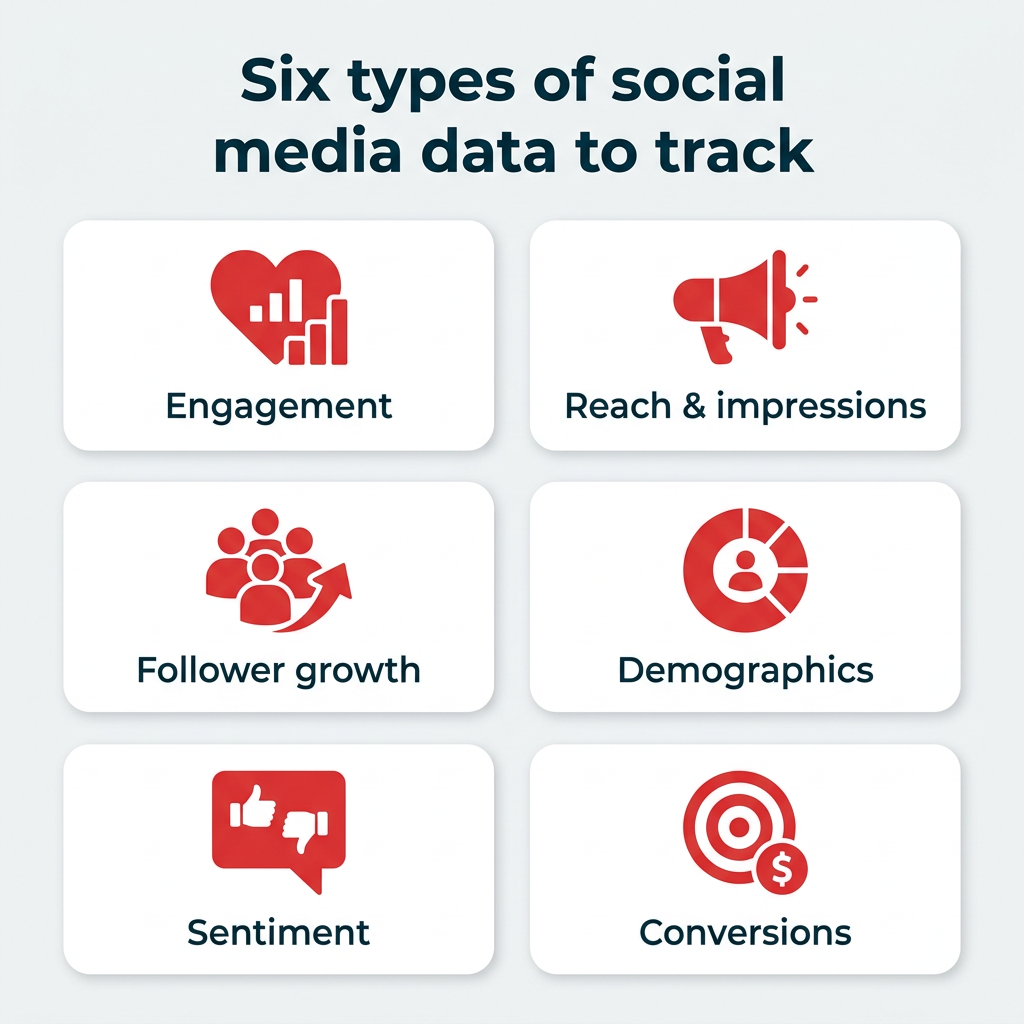
- First-Party Data: This encompasses the information derived directly from accounts owned and managed by an organization. It includes metrics such as impressions, clicks, reach, and follower growth pulled straight from native analytics tools or centralized platforms like Hootsuite, alongside aggregated audience metrics provided to page owners.
- Publicly Available Data: This category captures everything occurring outside an organization’s direct channels: organic posts, user comments, hashtags, industry reviews, and brand mentions scattered across the wider web. Tracked primarily via social listening tools, public data reveals what consumers say when brands are not directly listening, frequently rendering it the most honest signal of public sentiment.
Enterprise teams rely on a fusion of these data types to transition social media from an intuitive, "gut-feeling" marketing channel into a rigorous business discipline backed by hard metrics.

Chronology: The Evolution of Social Data and Enterprise Strategy
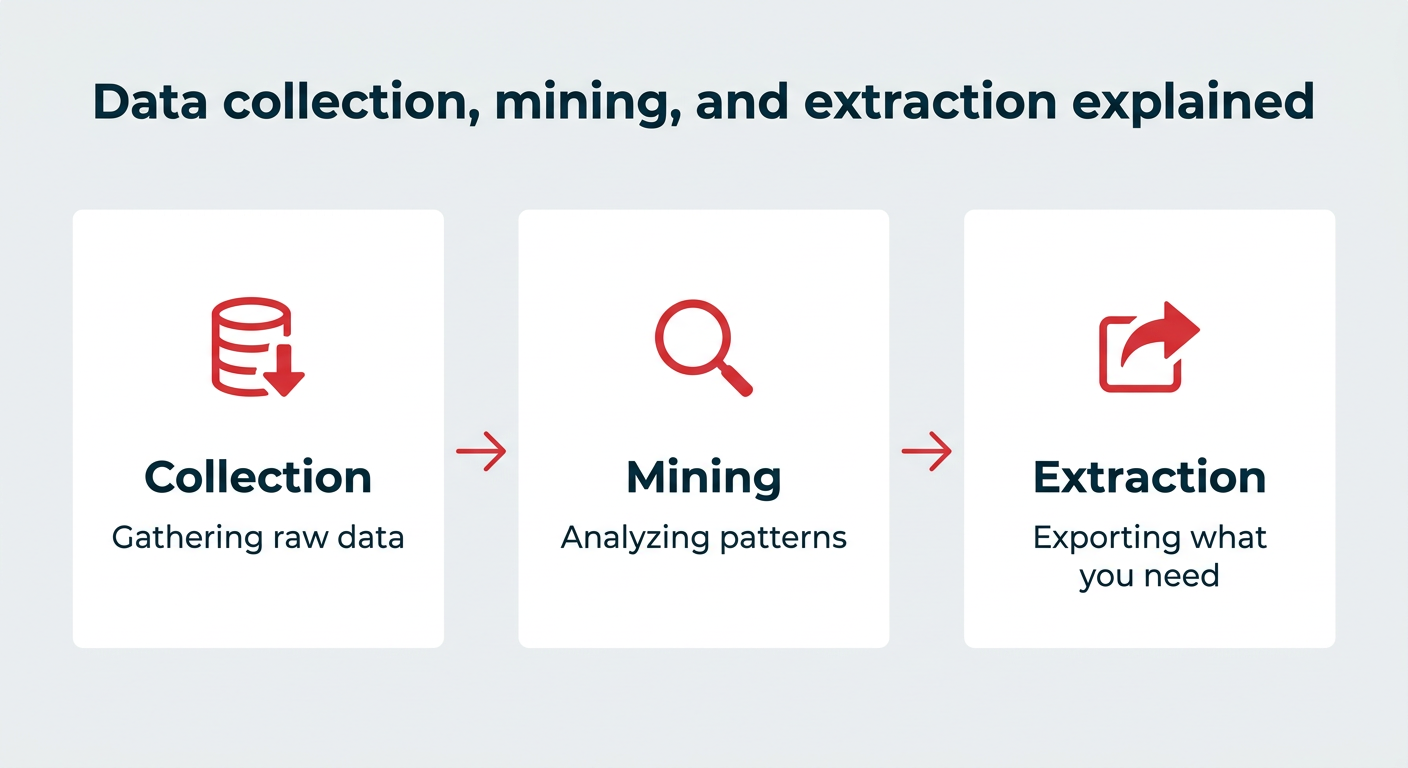
The methodology behind social media data collection has undergone a dramatic transformation over the past decade, shifting from manual monitoring to sophisticated, AI-driven automation.
- Phase 1: The Manual Era (Early 2010s): In the nascent days of brand-owned social media, marketing teams relied heavily on native platform spreadsheets and rudimentary data extraction. Collecting metrics meant logging into individual dashboards—Facebook Insights, Twitter Analytics—and manually copying numbers into Excel sheets.
- Phase 2: The API and Aggregation Boom (Mid-to-Late 2010s): As platforms expanded, application programming interfaces (APIs) opened up. Third-party software tools emerged to unify these disparate feeds into single dashboards, allowing marketers to monitor cross-channel metrics simultaneously without toggling between browser tabs.
- Phase 3: The Privacy Reckoning (2018–2020s): High-profile data privacy scandals and the rollout of sweeping regulations—most notably the European Union’s General Data Protection Regulation (GDPR) in 2018 and the California Consumer Privacy Act (CCPA) in 2020—fundamentally altered what platforms exposed. Granular user tracking was heavily restricted, forcing marketers to pivot toward aggregated, anonymized audience insights and strict consent-based tracking.
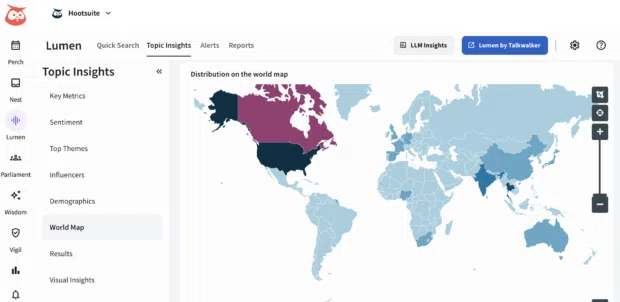
- Phase 4: The AI Integration (Present Day): Today, the primary bottleneck in social media is no longer collection, but interpretation. With the sheer volume of global conversation exceeding human processing capacity, platforms have integrated artificial intelligence engines (such as Hootsuite’s Lumen app) to automatically surface sentiment shifts, anomaly alerts, and emerging market trends in real time.
Supporting Data: Platform-Specific Metrics and Essential Collection Methods
Different social networks serve distinct functional purposes, and their value lies in the specialized data sets they provide to marketers.
What Major Platforms Provide
+--------------------+-----------------------------------------------------+---------------------------------------------------+
| Platform           | Key Data Available to Marketers                     | Signature Advantage                               |
+--------------------+-----------------------------------------------------+---------------------------------------------------+
| Meta (FB & Insta)  | Reach, impressions, saves, Reels performance, ads   | Shortest direct line from post to purchase        |
| LinkedIn           | Professional attributes: industry, seniority, size  | Unmatched B2B audience and firmographic insights  |
| TikTok             | Watch time, completion rate, trending sounds        | Deep insights into attention economy and trends   |
| YouTube            | Retention curves, drop-off points, revenue metrics  | Gold standard for long-form video performance     |
| X & Pinterest      | Real-time keyword volume, outbound clicks, saves    | Captures active search intent and real-time news  |
+--------------------+-----------------------------------------------------+---------------------------------------------------+
The Six Core Collection Methods
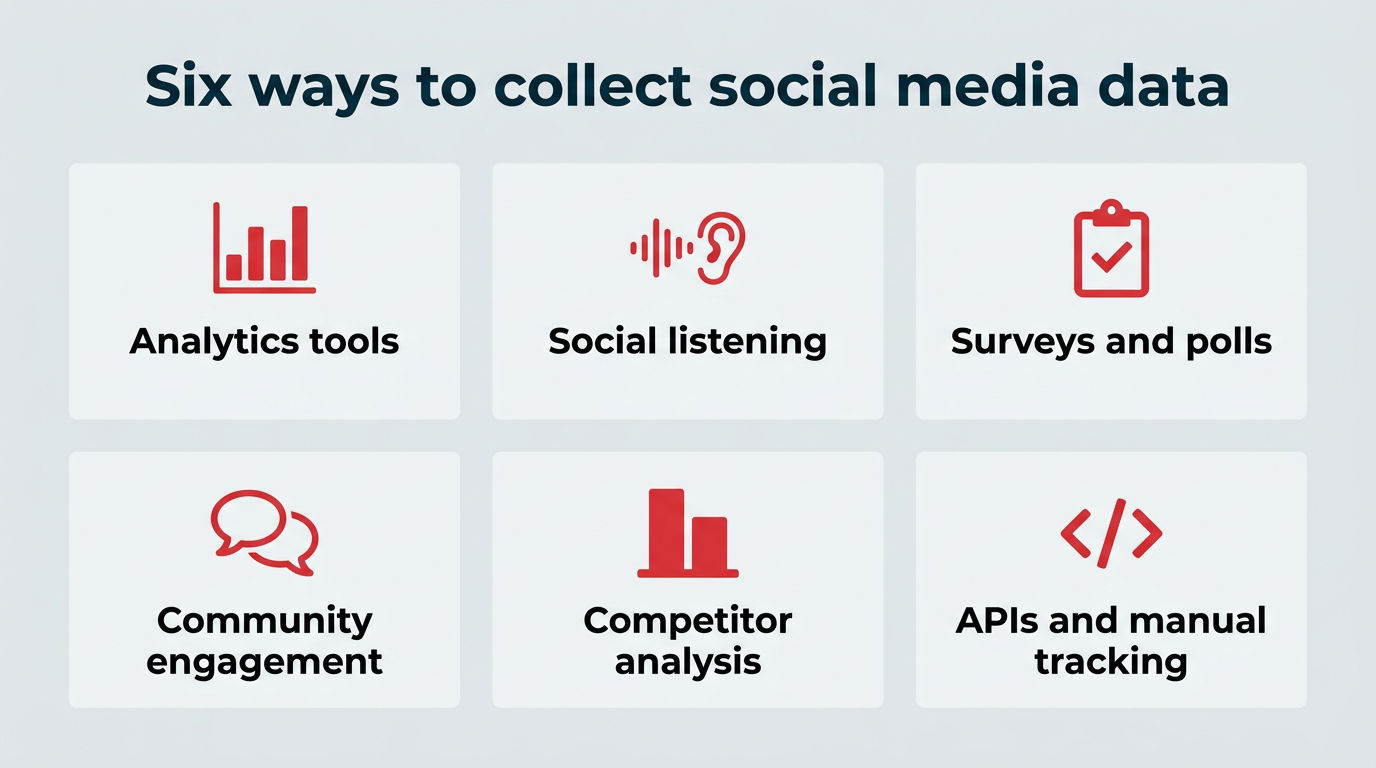
To build a comprehensive intelligence framework, organizations typically deploy a combination of six primary data collection methodologies:
- Analytics Tools: Leveraging native platform dashboards or unified enterprise platforms like Hootsuite to aggregate reach, clicks, and engagement across all active channels.
- Social Listening: Monitoring un-tagged brand mentions, industry keywords, and competitor conversations to gauge real-time public sentiment and emerging market trends.
- Surveys and Polls: Deploying native in-app polling (Instagram Stories, LinkedIn Polls) alongside external platforms (Typeform, Google Forms) to capture qualitative audience feedback and understand the "why" behind numerical trends.
- Community Engagement: Actively mining incoming direct messages, comment sections, and user-generated content (UGC) to uncover recurring customer pain points and shifts in audience language.
- Competitive Benchmarking: Analyzing rival brands’ social strategies to identify industry content gaps, benchmark engagement rates, and discover high-performing content formats.
- APIs and Manual Tracking: Utilizing automated API feeds to pipe raw data directly into internal data warehouses or utilizing structured templates for smaller teams managing bespoke reporting needs.
Official Responses: Compliance, Privacy, and Ethical Governance
As global regulatory frameworks tighten, legal compliance in social media data collection has moved from a back-office consideration to an urgent enterprise priority. Violating consumer privacy laws or platform terms of service carries severe consequences, including multimillion-dollar regulatory fines, revoked API access, and reputational damage.
The Regulatory Landscape
Enterprise marketing teams must account for overlapping layers of regional data protection legislation, which apply based on where the audience resides, not where the corporate headquarters is located:
- GDPR (Europe): Mandates a lawful basis for processing personal data, strict consent protocols, transparency notices, and consumer rights of access and erasure.
- CCPA / CPRA (California): Grants consumers the right to know what data is collected, the right to delete, and the right to opt out of the sale or sharing of personal information.
- US State Laws (Virginia VCDPA, Colorado CPA, Connecticut CTDPA): Require strict handling of sensitive demographic and professional data, opt-outs for targeted advertising, and regular data protection assessments.
Industry Best Practices for Ethical Collection
Legal compliance establishes the baseline floor; ethical data practices preserve long-term audience trust. Industry leaders recommend adhering to four core ethical pillars:
- Transparency: Clearly communicate how audience data is utilized, particularly when leveraging user-generated content or running targeted ad campaigns.
- Data Minimization: Collect only the specific data points required to achieve stated marketing and business goals.
- Secure Storage: Maintain strict role-based access controls and robust retention policies to ensure collected data is safely stored and purged when obsolete.
- Vendor Accountability: Partner exclusively with enterprise tools—such as Hootsuite—that are intentionally engineered to comply with major privacy frameworks like GDPR and CCPA.
Implications: Driving Business ROI and Strategic Action
Ultimately, data collection is a means to an end. The ultimate measure of a successful data strategy is its ability to directly influence business outcomes, optimize marketing spend, and prove return on investment (ROI).
According to industry professionals like Taylor Knight, Social Media Manager at Vessi, successful data collection requires a disciplined framework focused on intent and pattern recognition:
- Align Metrics with Content Purpose: Not every post is designed to go viral. Marketers must evaluate content performance based on the specific job the post was created to do—whether that is building top-of-funnel brand awareness (measured via reach and shares) or driving bottom-funnel conversions (measured via outbound clicks and UTM-tracked traffic).
- Look Beyond Follower Counts: While vanity metrics can be seductive, metrics like average reach per post and organic shares offer far more accurate reflections of true brand momentum and community resonance.
- Zoom Out for Macro Patterns: While daily performance checks are necessary for community management, monthly and quarterly macro reviews are essential for identifying repeatable content patterns, refining audience personas, and aligning cross-departmental marketing goals.
The Future of Social Data: AI as an Interpreter
As artificial intelligence continues to reshape the digital marketing landscape, the role of the social media analyst is evolving. AI-assisted tools can now instantly summarize thousands of unstructured conversation threads, detect sentiment anomalies, and flag emerging cultural trends in real time.
However, technology experts caution that AI outputs remain probabilistic. Human oversight is still essential to verify sentiment classifications and contextualize data insights before they inform public brand responses or executive-level strategies. By combining robust automated collection, strict compliance frameworks, and human strategic oversight, modern enterprises can successfully turn the chaotic tide of social data into a predictable engine for growth.
 Nana
Nana  Pevita Pearce
  Neng Nana