
 By Reynand Wu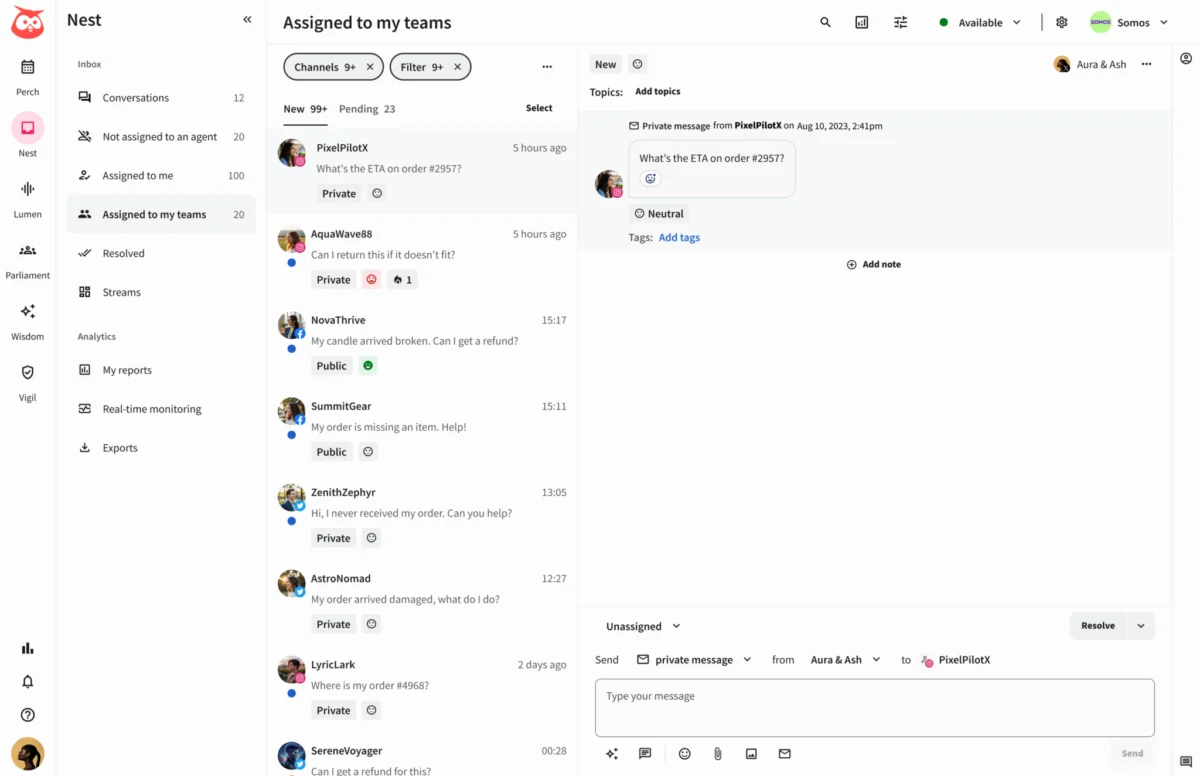
In the fast-paced world of digital marketing, consistency is currency. Whether managing a startup with a lean two-person team or overseeing a multinational enterprise with dozens of stakeholders spread across global time zones, the ability to consistently create, approve, and publish high-impact content is what separates thriving brands from digital noise.
Yet, for many organizations, social media management often devolves into a state of chronic chaos: endless email threads for caption approvals, missed publishing windows, siloed communication, and the ever-present danger of a rogue, non-compliant post sparking a public relations crisis.

The antidote to this operational friction is a robust, repeatable social media workflow. By establishing clear step-by-step processes for content creation, internal review, security, and performance measurement, marketing teams can protect their brand equity, eliminate bottlenecks, and scale their digital footprint efficiently.
Main Facts: What Is a Social Media Workflow and Why Does It Matter?
At its core, a social media workflow is a structured, repeatable system that dictates how a team creates, publishes, and promotes content across various digital platforms. Rather than relying on ad-hoc postings and guesswork, a workflow establishes clear ownership, standardized timelines, and mandatory checkpoints.

Most sophisticated marketing operations do not rely on a single catch-all workflow. Instead, they deploy a suite of specialized workflows tailored to different operational needs:
- Basic Social Media Workflow: The foundational framework covering day-to-day activities from ideation to performance tracking.
- Social Media Posting Workflow: Focused strictly on the daily tactical execution of content creation and platform-specific scheduling.
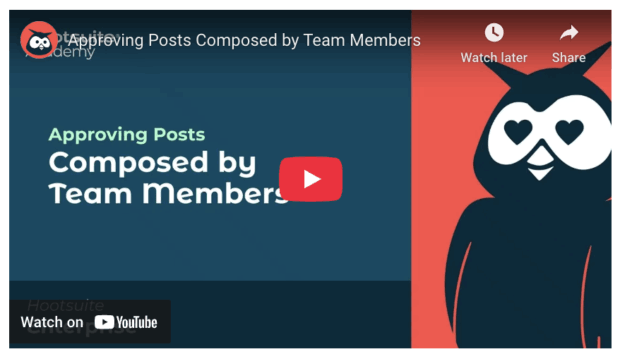
- Social Media Approval Workflow: The internal review mechanism designed to protect brand voice and ensure regulatory compliance.
- Content Batching Workflow: A production-heavy process for creating multiple assets at once to maintain steady cadence without creative burnout.
- Influencer Collaboration Workflow: A structured pipeline for sourcing, negotiating, executing, and measuring creator partnerships.
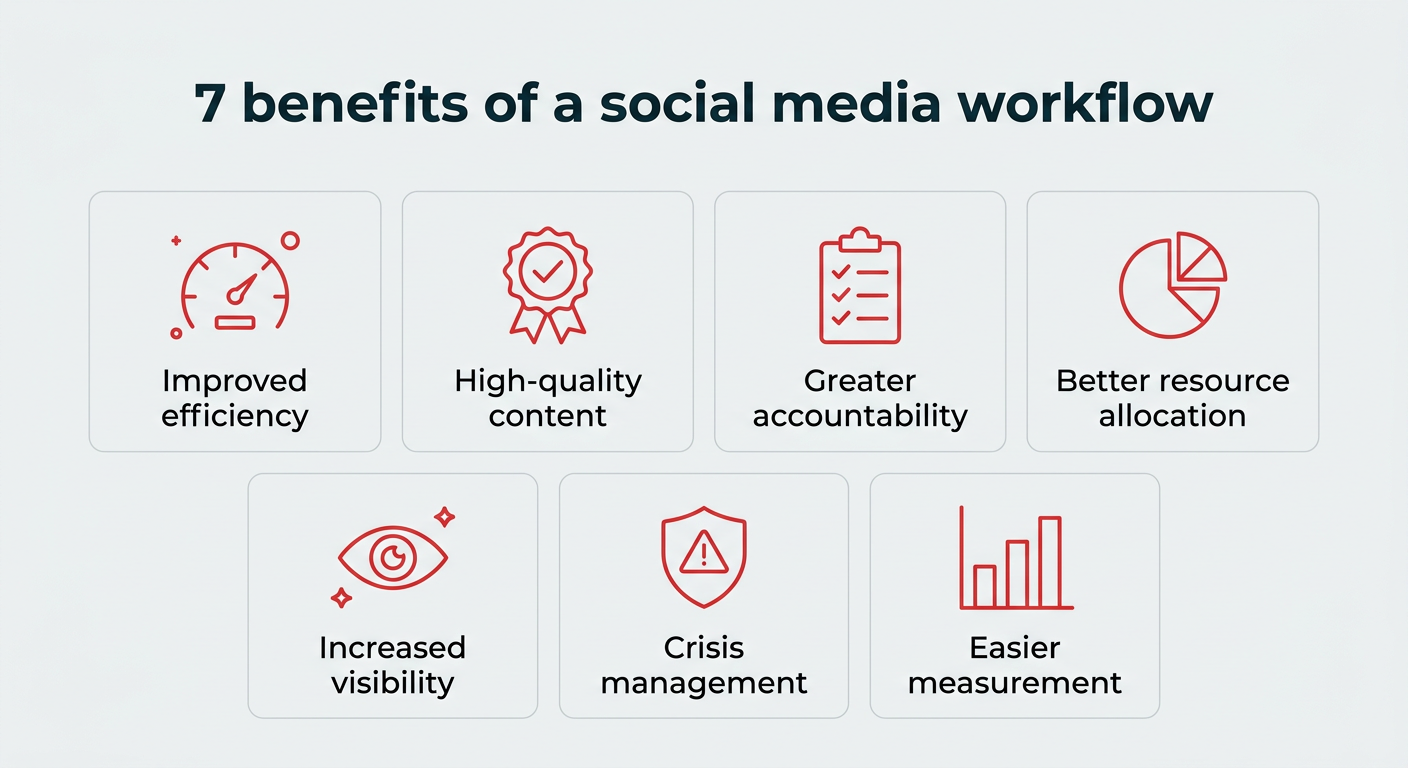
Implementing these systems offers profound organizational benefits. According to industry insights, a well-designed workflow brings predictability to chaotic content calendars, safeguards brand reputation through rigorous compliance checks, and provides clear attribution metrics to prove return on investment (ROI) to executive leadership.
Chronology: The Anatomy of Core Social Media Workflows
To successfully implement these systems, teams must understand the granular steps involved in each workflow type. Below is the chronological progression of the foundational frameworks used by top-tier social media teams.
The 10 Steps of a Basic Social Media Workflow
The basic workflow serves as the architectural blueprint for all other operational processes:
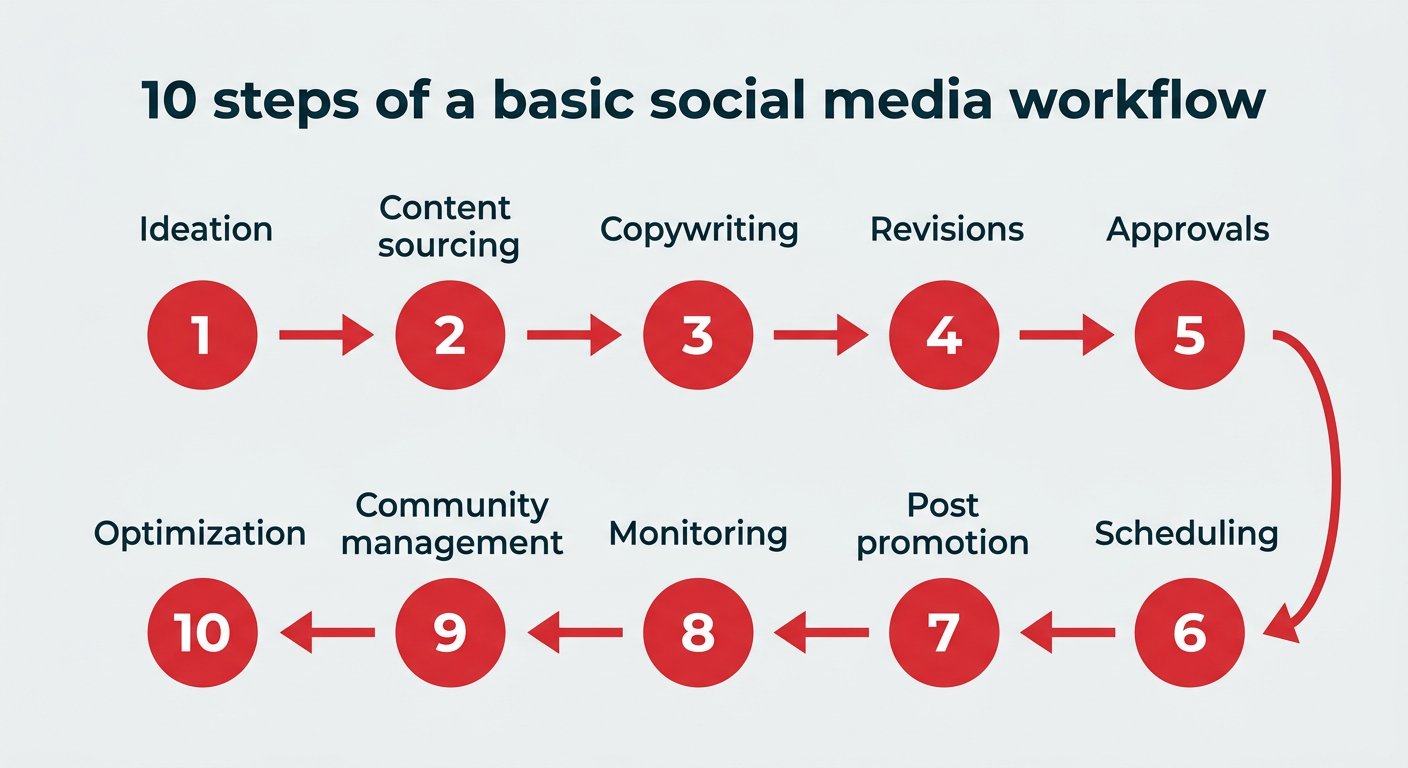
- Brainstorming and ideation
- Content research and competitor analysis
- Drafting copy and asset creation (design/video)
- Initial internal review
- Compliance and legal check (where applicable)
- Final stakeholder sign-off
- Scheduling and platform optimization
- Publishing to live channels
- Community management and inbound engagement
- Post-campaign analytics and reporting
The 8 Steps of a Social Media Posting Workflow
Focused on daily tactical execution, this sequence keeps publishing cadences predictable:
- Reviewing the content calendar for gaps
- Pulling trending topics or real-time opportunities
- Drafting platform-tailored copy (X, LinkedIn, Instagram, TikTok)
- Formatting or designing visual assets
- Inserting trackable links and UTM parameters
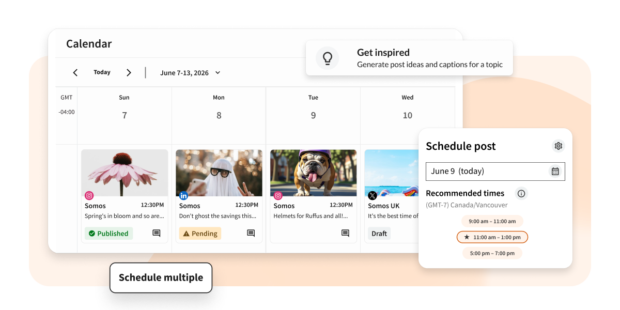
- Scheduling via social media management software
- Monitoring the initial live window for performance anomalies
- Archiving or repurposing top-performing assets
The 4 Steps of a Social Media Approval Workflow
Critical for risk management, this streamlined review sequence prevents costly mistakes:
- Creator submits draft content to the designated repository
- Reviewer or editor checks for brand alignment, tone, and grammar
- Compliance/Legal reviews for regulatory adherence (e.g., FTC guidelines, HIPAA, FINRA)
- Final approver grants green light for publishing
The 8 Steps of a Content Batching Workflow
Designed to maximize creative flow and prevent burnout:
- Setting monthly or quarterly content themes
- Keyword and audience trend research
- Bulk copywriting (writing 10–20 captions in a single sitting)
- Bulk asset creation (shooting photos, recording videos, designing graphics)
- Reviewing and editing the batched asset library
- Uploading assets into a content calendar scheduler
- Organizing by campaign or platform tagging
- Locking the schedule to free up daily bandwidth for community engagement
The 8 Steps of an Influencer Collaboration Workflow
Treating creator partnerships with campaign-level rigor:
- Identifying and vetting potential creators
- Initial outreach and pitching
- Contract negotiation and legal agreements
- Creative briefing and mood board alignment
- Reviewing draft creator content
- Final asset approval and scheduling coordination
- Campaign launch and cross-promotion
- Performance tracking and ROI measurement
Supporting Data: Best Practices, Security, and Tooling
Building a resilient workflow requires balancing structure with agility. Industry experts recommend seven foundational pillars to ensure a workflow actually sticks:
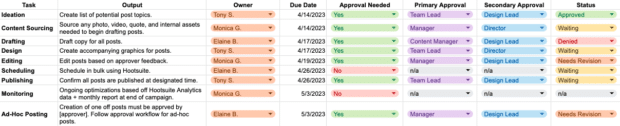
- Establish Clear Roles and Responsibilities: Ambiguity breeds missed deadlines. Clearly define who acts as the Content Creator, Copyeditor, Compliance Officer, Approver, and Community Manager.
- Know Industry Compliance Rules: Regulated sectors—such as healthcare (HIPAA), finance (FINRA), and government agencies—face severe legal and financial penalties for non-compliant posts. Workflows must integrate mandatory legal checkpoints.
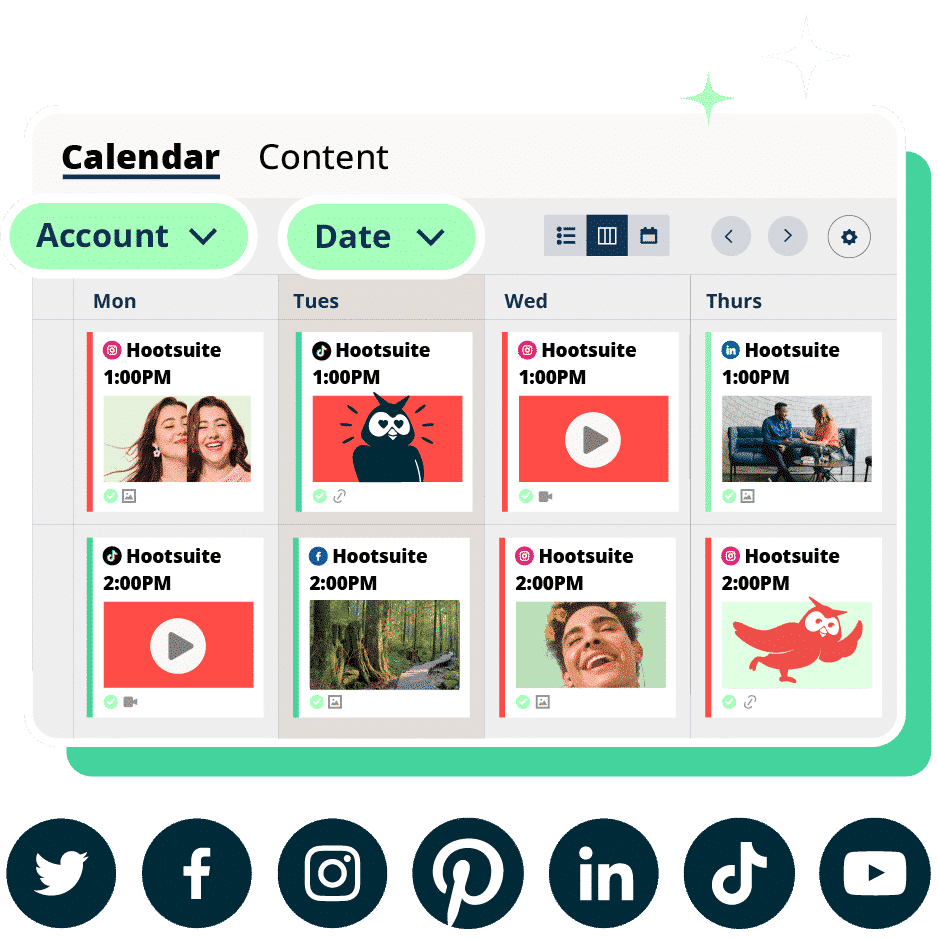
- Utilize a Centralized Content Calendar: Planning ahead eliminates last-minute scrambles and allows teams to strategically mix promotional content, educational material, and agile trends.
- Document Everything via SOPs: Standard Operating Procedures ensure that new hires, freelancers, and cross-functional partners can seamlessly execute campaigns without friction.
- Bake Security into Every Step: Protect brand assets by restricting login credentials, utilizing two-factor authentication (2FA), and implementing strict approval hierarchies to prevent unauthorized or malicious postings.
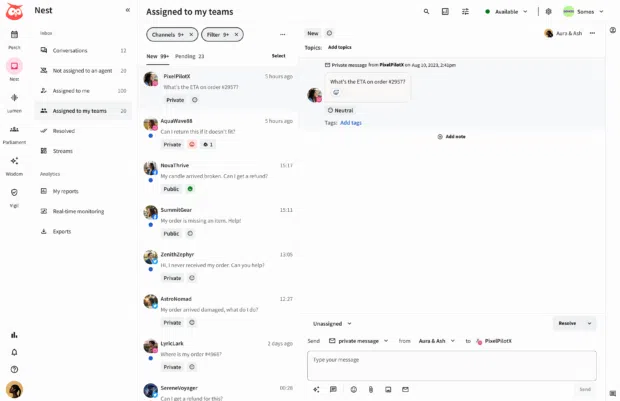
- Deploy a Unified Social Inbox: Managing inbound DMs, comments, and mentions across multiple channels requires a centralized workspace to track response times and resolve customer service inquiries efficiently.
- Strategically Integrate AI: Automate time-consuming administrative tasks—such as first-draft copywriting, data reporting, and initial customer inquiry triaging via AI chatbots—while keeping human review checkpoints mandatory for quality and governance.
Comparing Social Media Workflow Tools
Selecting the right software stack is critical for operational success. Below is a breakdown of top platforms helping teams orchestrate their workflows:
| Tool | Best For | Key Workflow Features | Publishes to Social? | AI Features | Starting Price |
|---|---|---|---|---|---|
| Hootsuite | Teams managing multiple accounts end-to-end | Content calendar, approval workflows, custom permissions, unified inbox, analytics | Yes | AI assistant, DM automations, AI-powered insights & listening | $99/user/month (Standard, billed annually) |
| Google Sheets | Lean teams building a first workflow | Manual trackers, comments, tagging, shared columns | No | Limited | Free with a Google account |
| Asana | Campaign and deadline management | Task assignment, templates, rules-based automations | No | Task and workflow assistance | Free tier available |
| Notion | Storing SOPs, briefs, and calendars in one place | Databases, calendar views, docs, task assignment | No | Notion AI (included with Business plan) | Free tier available |
Official Perspectives and Industry Insights
As marketing technology rapidly evolves, thought leaders emphasize that workflow optimization is no longer just about operational efficiency—it is a matter of enterprise risk management.
Discussing the integration of artificial intelligence into marketing operations, market analysts point out that the proliferation of AI-generated content transforms tooling efficiency into a governance challenge. According to Gartner’s digital marketing frameworks, organizations must view AI spending not merely as a race to adopt new tools, but as a call to establish rigorous internal guardrails.
Enterprise teams are increasingly reminded that while artificial intelligence can drastically compress the time required to draft copy or generate analytics reports, accountability remains strictly human. Automated workflows must always feature designated human reviewers for anything customer-facing to maintain brand integrity and regulatory compliance.
Implications: The Future of Scalable Content Operations
The shift toward structured social media workflows carries significant implications for digital marketing departments moving forward:
- Democratized Creativity with Guardrails: By utilizing content batching and AI-assisted drafting tools, lean teams can punch above their weight, producing enterprise-grade output volumes without inflating headcounts.
- Elevated Customer Experience (CX): Moving away from fragmented app-jumping toward unified social inboxes ensures that customer inquiries, complaints, and compliments are routed and resolved faster, turning social channels into viable revenue and retention engines.
- Data-Driven Agility: Workflows that incorporate regular quarterly reviews and performance tracking metrics allow marketing directors to ruthlessly eliminate redundant steps, pivoting their strategies dynamically as platform algorithms and consumer behaviors shift.
Ultimately, a well-crafted social media workflow acts as an invisible scaffolding supporting a brand’s public voice. By trading chaotic, last-minute posting habits for structured, secure, and repeatable processes, teams can focus less on administrative fires and more on what truly matters: building meaningful connections with their audience.
 Basiran
  Nana Muazin
  Nila Kartika Wati