
 By Nila Kartika Wati
By Ric Mazereeuw
With files from Liz Stanton

Main Facts
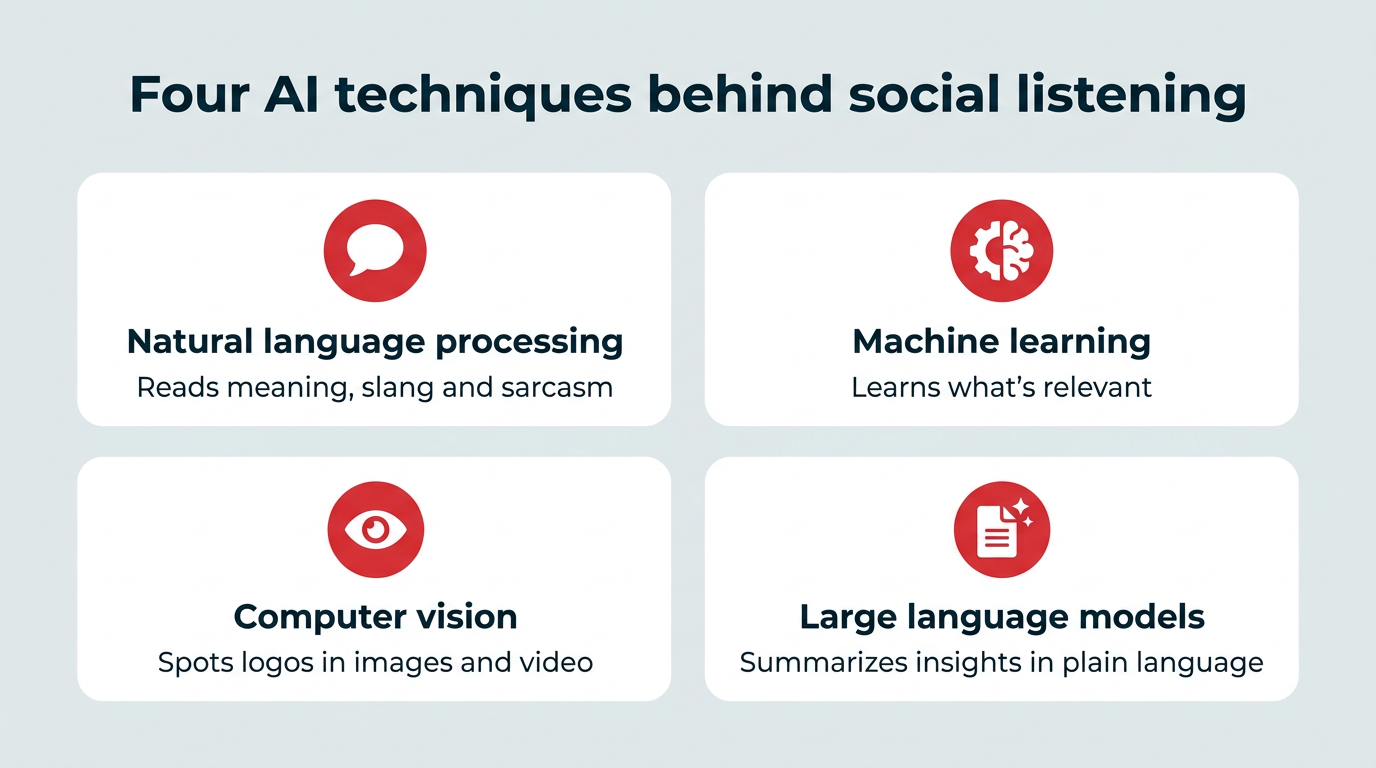
Artificial intelligence has officially redefined how global brands interact with the digital landscape. No longer limited to basic keyword matching and reactive metrics, AI-powered social listening has evolved into a predictive powerhouse. By harnessing Natural Language Processing (NLP), Large Language Models (LLMs), machine learning, and advanced computer vision, modern marketing platforms are scanning millions of unstructured online conversations in real time.

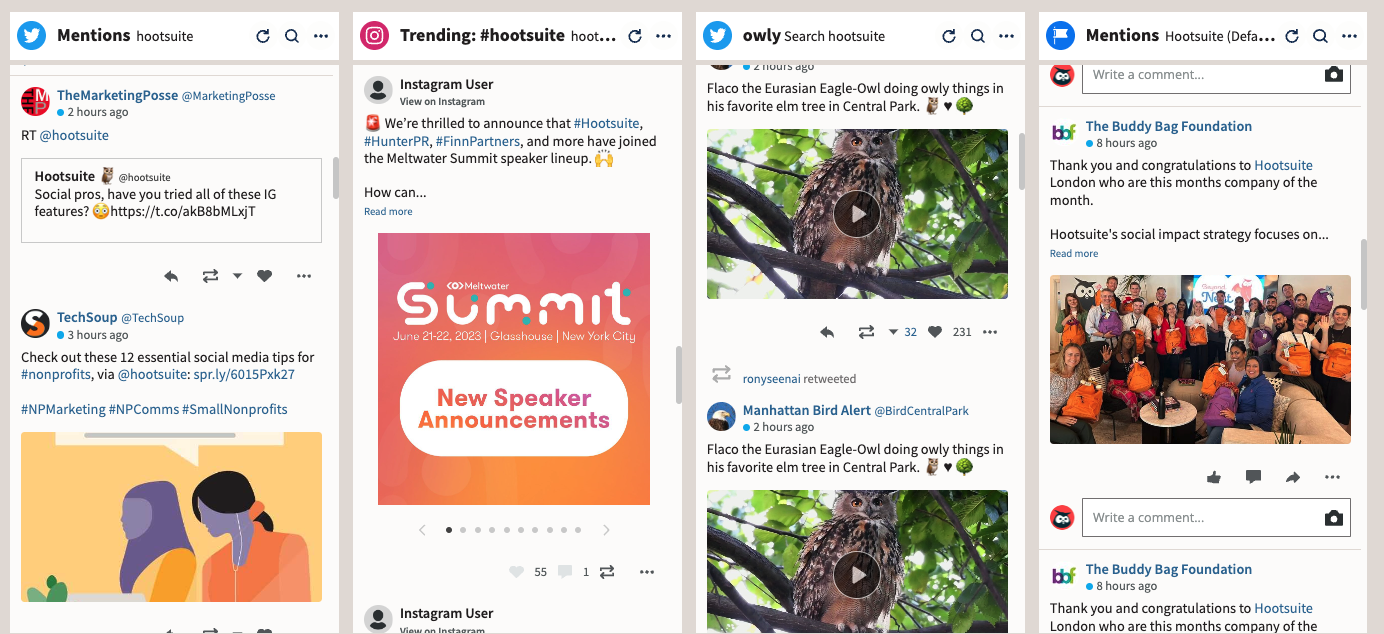
Platforms like Hootsuite Social OS (featuring the Lumen insights application), Brandwatch, and Sprinklr are turning massive online chatter into actionable, precise intelligence. Rather than simply counting direct mentions, these systems interpret sentiment, detect sarcasm, isolate regional slang, and even perform "visual listening"—recognizing logos, objects, and unbranded product appearances across videos, memes, and podcasts.
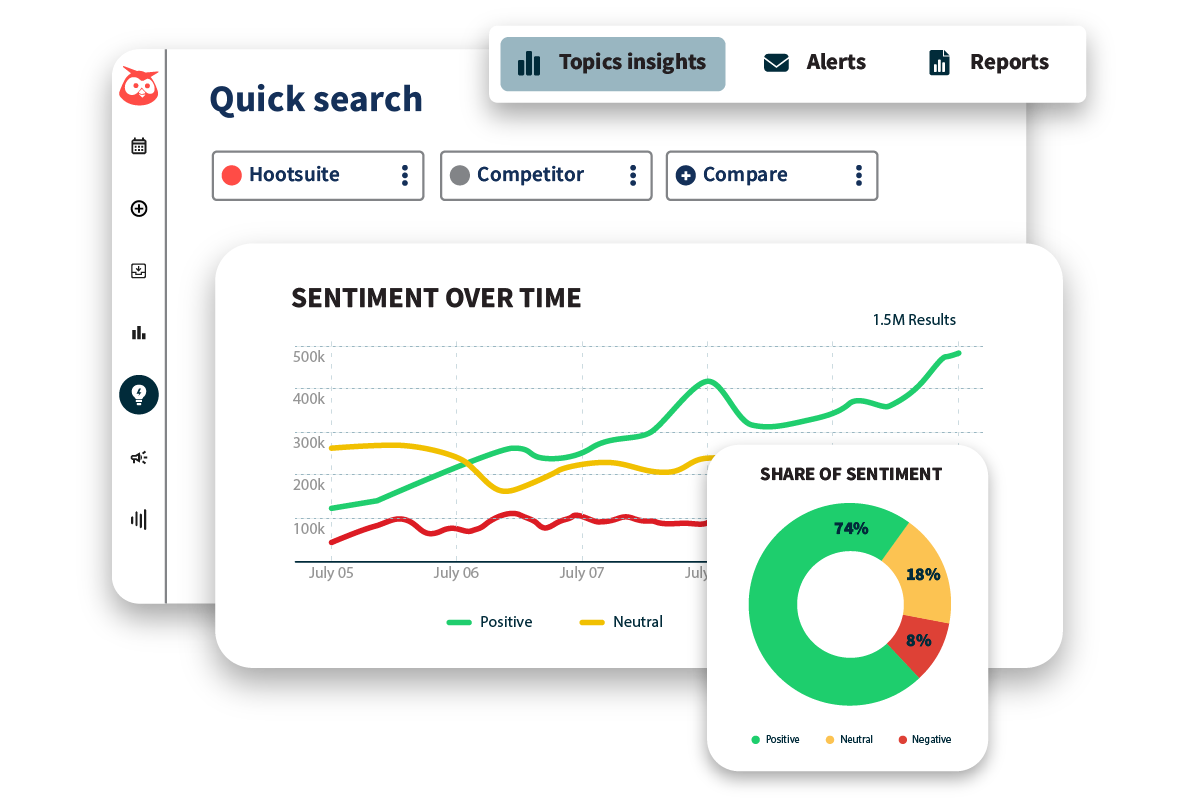
According to recent industry forecasts, 83% of U.S. B2C marketing executives are actively consolidating their social suites into connected workflows, utilizing AI to pivot from manual, reactive reporting to proactive trend forecasting and risk management.
Chronology
The transition from manual monitoring to autonomous AI listening has accelerated rapidly over the past several years:
- The Keyword Era (Pre-2022): Social media tracking relied heavily on exact-phrase Boolean searches. Marketers spent hours drowning in irrelevant data, struggling with rudimentary positive/negative sentiment scores, and manually exporting reports.
- The Rise of Automated Sentiment (2022–2024): Early AI integrations began sorting text-based mentions with basic NLP. However, these systems frequently stumbled over context, slang, and multimedia assets like TikTok videos or unbranded images.
- The Convergence and Visual Shift (2025): Forrester identified a major evolution as consumer intelligence platforms expanded into trend forecasting. Marketing leaders increasingly demanded connected ecosystems where listening, publishing, and analytics lived under one roof. Gartner’s 2025 CMO Spend Survey noted that 49% of CMOs identified improved time efficiency as Generative AI’s top ROI driver.
- The Autonomous Enterprise Standard (2026): Today, AI social listening functions in real time without data sampling. Tools utilize multimodal processing—simultaneously reading text, analyzing audio streams, and interpreting visual frames—while predictive analytics warn teams of market disruptions and PR crises before they peak.
Supporting Data
The integration of artificial intelligence into enterprise marketing stacks is backed by hard quantitative metrics regarding efficiency and performance:

- Adoption Rates: 83% of U.S. B2C marketing executives are actively pursuing unified social suites with advanced AI workflows (Forrester).
- Efficiency Gains: 49% of CMOs cite time efficiency as the primary return on investment for Generative AI in marketing (Gartner 2025 CMO Spend Survey).
- Workforce Automation: Marketing leaders expect the AI automation of marketing tasks to double to 36% by 2028 (Gartner).
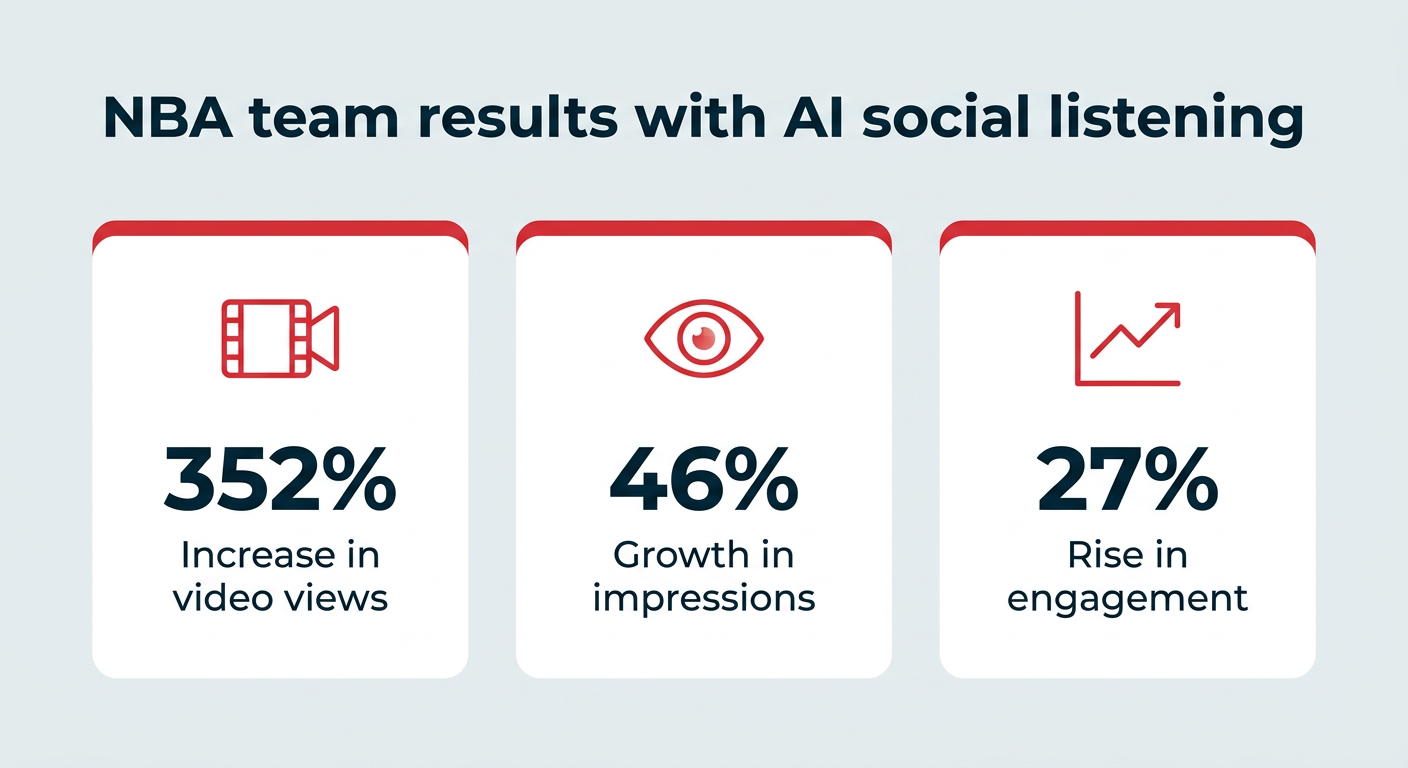
- Real-World Impact (Case Study): An enterprise NBA team utilizing Hootsuite’s AI listening discovered that fans strongly preferred authentic, behind-the-scenes content over repurposed clips. By scaling original content production to 80% on Instagram, the team achieved a 352% average season-over-season increase in video views, a 46% growth in overall impressions, and a 27% rise in total engagement.
- Scale of Data: Modern platforms process billions of interactions daily, with leading applications like Brandwatch indexing over 501 million new conversations every 24 hours across more than 100 million unique digital sites.
Official Responses and Industry Perspectives
Marketing authorities and platform architects emphasize that the true value of AI listening lies in data traceability and integrated workflows.
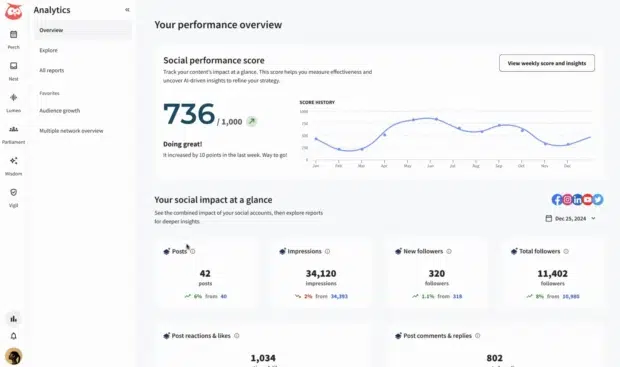
Industry analysts point out that while Large Language Models generate lightning-fast summaries, enterprise buyers must demand verifiable data grounding. Unverified, black-box AI outputs present severe compliance risks in regulated sectors. To combat this, enterprise tools now incorporate strict governance features—such as Hootsuite’s Wisdom (which cites exact source materials for AI-driven answers) and Vigil (which enforces workflow approvals and audit controls).
Furthermore, experts highlight the crucial distinction between social monitoring and social listening. As industry specialists explain: "Monitoring is about listening to one conversation; listening is about understanding the entire room." Modern platforms bridge this gap by unifying these capabilities directly alongside customer care, publishing pipelines, and analytics dashboards.
Implications
The widespread adoption of AI-powered social listening carries profound implications for enterprise strategy, brand protection, and market research:
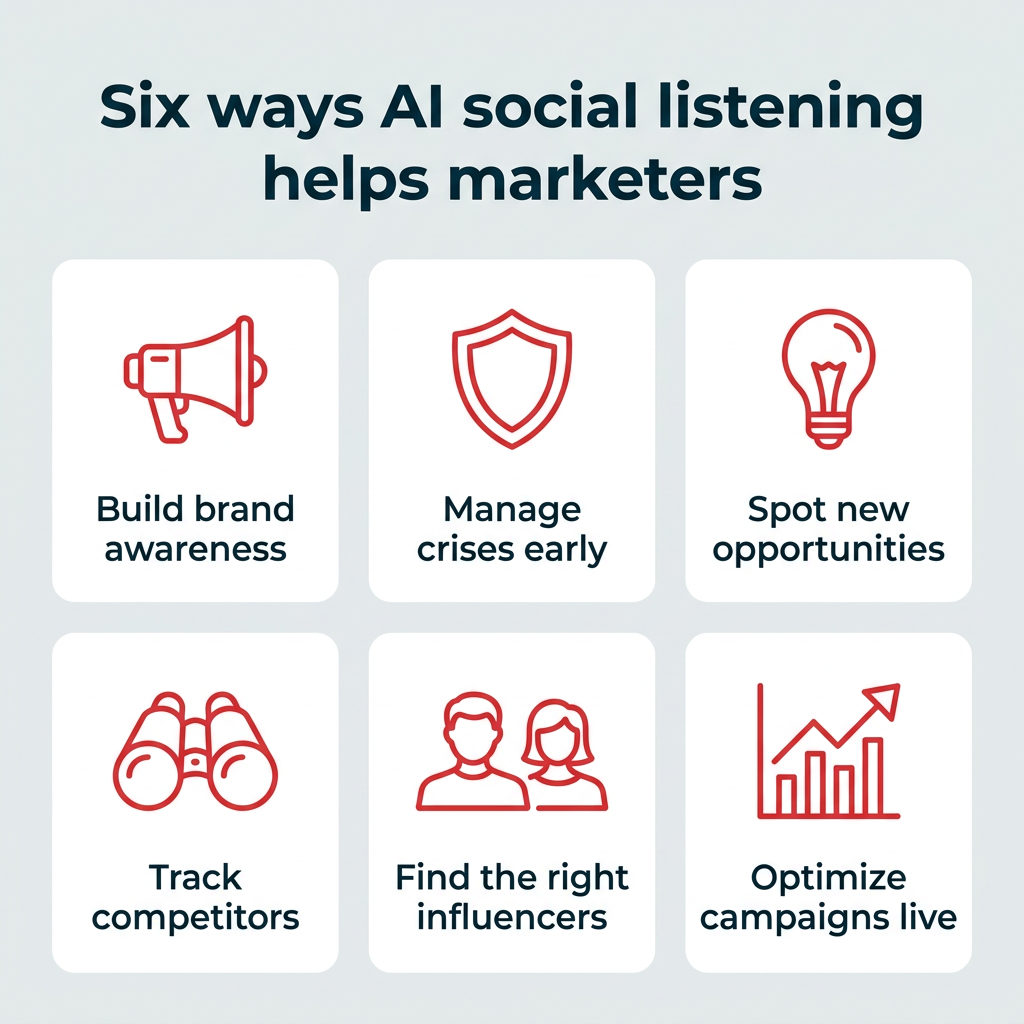
- Proactive Crisis Mitigation: Real-time anomaly detection and predictive analytics allow communications teams to catch sentiment shifts and public relations threats within minutes, shrinking the window between issue emergence and corporate response.
- Democratized Advanced Analytics: Tools like AI Query Builders enable everyday marketers to construct complex Boolean searches using plain, conversational language, eliminating the need for specialized data engineering skills.
- Cross-Functional Synergy: Social intelligence is no longer siloed within marketing departments. Insights gathered via AI listening directly inform product development, customer support operations, public relations, and influencer partnership strategies.
- Proving Financial ROI: By tracking metrics such as Share of Voice, Sentiment Trends, and Time-to-Response, marketing teams can firmly link qualitative social data to hard business outcomes, successfully justifying budgets and headcount to executive leadership and CFOs.
 Nana
Nana  Raul Delapena Setiawan
  Basiran