
 By Muslim
For the modern entrepreneur, the digital storefront is the new main street. As we move further into 2025, the friction between a customer’s intent to purchase and the actual completion of a transaction has become the ultimate metric of success. If your payment system is clunky, slow, or insecure, you aren’t just losing a sale; you are losing the long-term trust of your customer base.
Selecting a payment processor is no longer just about "taking money." It is about integration, global accessibility, fraud mitigation, and user experience. Whether you are launching a startup or migrating your established brand to a more efficient provider, navigating the maze of available financial technology can be daunting. To simplify this, I have evaluated the leading contenders in the market to help you make an informed decision for your business this year.
What Defines a Modern Payment System?
Before diving into the list, it is vital to define the landscape. A payment system is a sophisticated digital ecosystem—a network of protocols and technologies—that facilitates the secure transfer of funds between a buyer and a seller.
In 2025, a robust payment system is more than just a credit card processor. It acts as the bridge that connects your website’s checkout page, your point-of-sale (POS) hardware, and your business bank account. It encompasses payment gateways (the "front-end" that collects customer data), merchant accounts (the "back-end" that receives the funds), and the security layers that keep data encrypted and compliant.
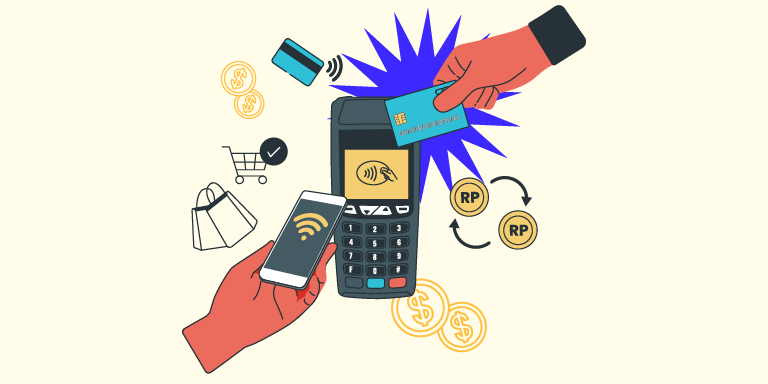
Crucially, modern systems are not simply merchant bank accounts or legacy wire transfer networks; they are agile software-as-a-service (SaaS) platforms designed to be "plug-and-play."
Critical Evaluation Criteria
In narrowing down these recommendations, I focused on five foundational pillars that directly impact your bottom line and operational efficiency:
1. Payout Velocity
Cash flow is the lifeblood of a small business. While traditional banking systems once required days to settle funds, the 2025 standard is near-instant or next-day settlement. I have prioritized platforms that offer rapid access to capital, as delayed payouts can cripple small-scale operations.
2. Frictionless Checkout
The "bounce rate" is the enemy of profit. A payment system that forces a user to navigate away from your site to a third-party portal creates psychological friction. The best systems allow for seamless, embedded checkout experiences that keep the user within your brand environment.
3. Global vs. Local Reach
Are you selling artisan crafts to your neighborhood, or digital products to a global audience? The ability to handle multi-currency transactions and navigate local regulatory frameworks varies wildly between providers.
4. Transparent Price Architecture
The industry is notorious for "hidden" fees. I have scrutinized providers who offer clear, tiered, or flat-rate structures, as unpredictable processing fees can erode margins faster than any other overhead.
5. Rigorous Security (PCI-DSS)
There is no room for compromise here. Every provider listed below adheres to the Payment Card Industry Data Security Standard (PCI-DSS). This ensures that you aren’t just accepting payments, but protecting your customers from data breaches.
The Top 6 Payment Systems for 2025
1. Stripe: The Developer-First Powerhouse
Stripe remains the industry benchmark for flexibility and scalability. It is an infrastructure platform designed for the internet economy.
- Pros: Exceptional API documentation; near-limitless customization; seamless in-site checkout experience.
- Drawbacks: Requires a degree of technical literacy to leverage its most powerful features; minimal support for physical retail.
- Pricing: Generally follows a pay-as-you-go model (roughly 2.9% + 30¢ per successful card charge).
2. PayPal: The Global Trust Leader
If you are a new business, leveraging PayPal’s reputation can be a "trust signal" for customers who are hesitant to enter their credit card details into an unknown site.
- Pros: Massive brand recognition; multi-currency support; incredibly easy to implement for non-technical owners.
- Drawbacks: Redirects users to the PayPal site, which can slightly increase bounce rates; account freezes can occur if the algorithm flags high-volume activity.
- Pricing: Competitive, though fees for international transactions can be steeper than competitors.
3. Authorize.net: The Legacy Security Titan
Owned by Visa, Authorize.net is a battle-tested gateway that offers a level of reliability that younger startups often struggle to match.
- Pros: Industry-leading fraud detection tools; incredible versatility in terms of merchant bank connectivity; excellent for high-volume, enterprise-leaning small businesses.
- Drawbacks: Older interface; setup can be more laborious than "one-click" solutions.
- Pricing: Usually involves a monthly gateway fee plus a per-transaction cost.
4. Amazon Pay: Leveraging the Giant
Amazon Pay allows your customers to use the payment methods already stored in their Amazon accounts. It is the ultimate "low-friction" solution.
- Pros: High conversion rates due to familiarity; built-in fraud protection; integrates seamlessly with major eCommerce platforms like Shopify and BigCommerce.
- Drawbacks: Dependent on the Amazon ecosystem; transaction fees can be slightly higher than direct credit card processors.
- Pricing: Standard competitive rates with no long-term contracts.
5. Square: The Retail Champion
If your business has a physical footprint—a pop-up shop, a cafe, or a brick-and-mortar boutique—Square is the undisputed king.
- Pros: Unbeatable hardware (card readers, registers); virtual terminal for remote payments; integrates perfectly with inventory management.
- Drawbacks: Less "customizable" for complex digital-only enterprise builds compared to Stripe.
- Pricing: Very transparent, flat-rate pricing.
6. SecurePay: The Hidden Alternative
SecurePay is an excellent, often overlooked, solution for businesses that want a balance of simplicity and deep integration.
- Pros: Extremely easy to set up; offers a comprehensive free trial; great for businesses not using "mainstream" platforms.
- Drawbacks: Lack of widespread brand awareness can cause "checkout anxiety" in some customers.
- Pricing: Customizable plans depending on volume.
Chronology of the Digital Payment Evolution
To understand why we are here, we must look at the timeline. In the early 2000s, businesses were forced to open complex "Merchant Accounts" through traditional banks, requiring weeks of underwriting. The mid-2000s brought the rise of PayPal, which democratized access. By 2015, the "API-first" revolution—led by Stripe—allowed any developer to build a global payments infrastructure in hours. Now, in 2025, we are in the era of "Embedded Finance," where payment systems are being woven into the very fabric of social media apps, AI-driven chatbots, and decentralized finance.
Supporting Data and Industry Trends
Recent data from the FinTech sector indicates that businesses offering at least three distinct payment methods (e.g., Credit Card, PayPal, and Apple/Google Pay) see a 25% increase in checkout conversion rates. Furthermore, mobile wallet usage has eclipsed physical card swiping in many urban demographics.
When choosing your provider, consider that the "hidden cost" is often not the transaction fee, but the churn rate caused by a poor mobile checkout experience.
Official Regulatory Outlook
Regulatory bodies globally are increasing pressure on payment processors to implement stronger "Know Your Customer" (KYC) and Anti-Money Laundering (AML) protocols. While this may seem like a burden for you as a merchant, it serves as a critical defense against chargeback fraud. Always ensure your chosen provider offers "3D Secure" authentication, which is becoming the industry standard for reducing fraudulent disputes.
Strategic Implications for Your Business
Selecting a payment system is not a set-and-forget task. It is a strategic decision that affects your cash flow, your security posture, and your customer acquisition cost.
- If you are a local shop: Go with Square.
- If you are a high-growth tech startup: Choose Stripe.
- If you are a service business needing maximum trust: Incorporate PayPal.
Frequently Asked Questions (FAQ)
Q: Is it possible to use multiple payment systems?
A: Absolutely. Many successful eCommerce sites use a "payment orchestrator" or simply enable multiple payment gateways at checkout to give customers choice.
Q: Why do my funds take time to clear?
A: This is due to the "clearing and settlement" process between the issuing bank, the card network (Visa/Mastercard), and the acquiring bank. While technology is speeding this up, risk management protocols still require a "buffer" period.
Q: Should I worry about PCI-DSS compliance?
A: Yes, but if you use the providers listed above, they handle the heavy lifting of compliance for you. As long as you aren’t storing credit card data on your own servers, you are likely in a "low-risk" compliance category.
Unlock Your Business Potential
Choosing the right payment system is just the first step in building a resilient, scalable business. If you are looking to master the complexities of modern entrepreneurship—from marketing funnels to customer retention—consider joining a community of like-minded founders.
For just $1, you can unlock access to over 30 expert-led courses and 1,000+ lessons at Foundr+. Don’t just build a store; build a brand that lasts.
Disclaimer: Pricing information is accurate as of early 2025 based on standard, non-negotiated account rates. Payment processors frequently update their fee structures. Please verify current rates on the official provider websites before finalizing your decision.
 Neng Nana
  Basiran
  Azzam Bilal Chamdy