
 By Lina Hope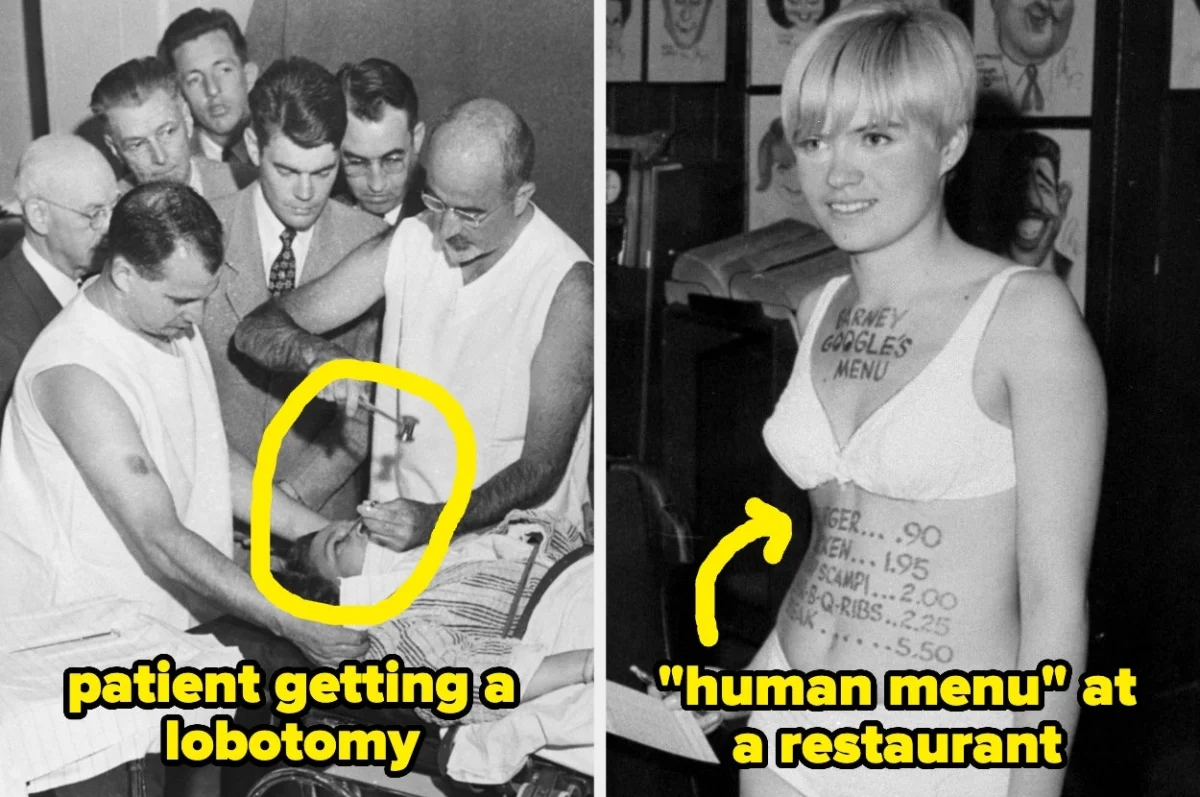
History is frequently presented as a linear narrative of progress—a steady march toward greater enlightenment, safety, and equality. However, a deeper examination of the archival record reveals a more fractured reality. Through the lens of 20th-century photography, we encounter a world that is at once recognizable and profoundly alien. These images, often omitted from standard textbooks, serve as a stark reminder that what society deems "normal" is often a transient construct, shaped by the prevailing prejudices and limited scientific understanding of a specific era.
The Evolution of Social and Cultural Norms
The mid-20th century, often romanticized as a period of domestic tranquility and post-war prosperity, was simultaneously defined by deep-seated systemic inequities and dangerous health practices. When we look at images of "beauty contests" from the 1940s and 50s, we are not merely looking at a vintage photograph; we are witnessing the institutionalized objectification of women. The practice of placing women on display before male panels was not an outlier but a cultural standard, reflecting a power dynamic that prioritized the male gaze above female agency.
Similarly, the professional landscape for women was severely constrained. Advertising from the era, such as the 1956 biscuit advertisement that reinforced regressive stereotypes about the "ideal housewife," reveals how corporate messaging actively worked to codify domestic subservience. These were not just harmless marketing campaigns; they were powerful tools of socialization that defined the limits of a woman’s role in the public and private spheres.
A Chronological Descent into Hazardous Practices
The lack of safety standards in the mid-1900s appears almost reckless to the modern observer. When we analyze the chronology of these cultural shifts, we see a trajectory of "dangerous normalcy":
- The Early Century (1900–1930): This period saw the unchecked exploitation of child labor, a practice that was only slowly curtailed by labor movements and legislative action. It was also an era where medical understanding was in its infancy, leading to advertisements that exploited women’s health insecurities to sell dubious medications.
- The Mid-Century Peak (1940–1960): This era represented the height of "convenience-driven" danger. From the promotion of smoking in hospitals to the use of leaded gasoline and the widespread spraying of DDT, this period prioritized immediate industrial utility over long-term public health. The image of a doctor performing a lobotomy—a procedure now widely viewed as a human rights violation—using a self-invented tool highlights the lack of rigorous ethical oversight in the psychiatric field.
- The Transition (1970s–Present): The 1970s marked a pivotal shift as scientific research began to catch up with industrial excess. The banning of DDT and the phasing out of leaded gasoline were not merely policy changes; they were direct responses to mounting evidence of environmental and neurological damage that had been ignored for decades.
Supporting Data: The Cost of Ignorance
The transition from the 1950s to the modern day is backed by significant empirical data regarding public health. For instance, the transition away from leaded gasoline was one of the most significant public health victories of the 20th century. According to the Our World in Data archives, the phase-out of lead in fuel directly correlated with a measurable drop in blood-lead levels in the general population, which in turn contributed to a decrease in developmental disorders and neurological impairments in children.
Furthermore, the history of aviation safety provides a fascinating contrast. In 1972, airport security was arguably non-existent by today’s standards. Comparing a 1949 image of a flight attendant lighting a passenger’s cigar with the high-security protocols of the post-9/11 era demonstrates how geopolitical volatility has fundamentally altered the experience of travel. The shift was not gradual; it was a violent disruption of the status quo that forced society to trade privacy for systemic security.
The Medical and Scientific Reckoning
Perhaps the most disturbing images are those concerning health and medicine. The 1932 image of a woman tanning in cellophane—a method intended to protect the skin—illustrates the tragic consequences of misguided science. Today, the MD Anderson Cancer Center and other leading health institutions cite such practices as prime examples of how "safety" myths can lead to long-term health catastrophes, specifically skin cancer.
The psychiatric field, too, has undergone a radical transformation. The image of a patient in a straitjacket reflects an era where "treatment" often meant confinement and sensory deprivation rather than rehabilitation. The invention of the transorbital lobotomy by Dr. Walter Freeman is now regarded by the medical community as a dark chapter in the history of neurology, serving as a cautionary tale about the dangers of institutional power when left unchecked by rigorous ethical review boards.
Implications for Modern Historiography
Why do these images feel so "problematic" to a modern audience? The answer lies in the concept of the historical gaze. When we view these photos today, we are applying the ethics of the 21st century to the actions of the 20th. This is not inherently anachronistic; rather, it is a necessary process of identifying how far we have traveled.
The implications for how we view our current societal structures are clear:
- Normalization of Harm: Just as citizens in 1950 did not realize the damage caused by lead or smoking, we must ask ourselves what current behaviors we accept as "normal" that future generations will view with horror.
- The Fragility of Rights: Images of anti-women’s suffrage arguments remind us that equality is not a static achievement but a continuous struggle.
- Institutional Responsibility: The role of corporations and government in regulating public health is underscored by the history of DDT. When industry is left to regulate itself, the cost is often paid by the most vulnerable populations.
Conclusion: Learning from the Past
The discomfort we feel when viewing these images is a productive emotion. It indicates that our societal moral compass has shifted. By cataloging these "disturbing" photographs, we are not just engaging in historical voyeurism; we are conducting an audit of our collective past.
As we move forward, the challenge remains to maintain a critical eye toward the systems and practices that we currently label as "common sense." History has proven that the truth is often buried beneath the surface of what is considered polite or acceptable. By bringing these problematic images to light, we ensure that we do not repeat the oversights of the previous century, and we remain vigilant in the pursuit of a safer, more equitable, and more enlightened future. The lessons contained in these 27 snapshots are clear: science, ethics, and social norms are not fixed, and they require our constant, active, and critical participation to ensure that "progress" remains more than just a word in a textbook.
 Ammar Sabilarrohman
  rifanmuazin
  Suro Senen