The entertainment industry is mourning the loss of a true master of visual storytelling. RodneyCharters, the trailblazing director of photography who famously defined the frantic, high-stakes aesthetic of the groundbreaking television phenomenon 24, passed away suddenly on September 13 in Amsterdam. He was 80 years old.
The American Society of Cinematographers (ASC) confirmed the news, paying tribute to the New Zealand-born artist whose work permanently altered the landscape of modern television production. Charters was widely celebrated for shooting nearly every single episode of the first eight seasons of 24, establishing a hyper-kinetic visual style that translated the breathless urgency of Kiefer Sutherland’s Jack Bauer straight to the viewer’s screen.
Across his illustrious career, Charters captured 184 episodes of 24 between 2001 and 2010—missing only eight episodes across the show’s massive initial run, three of which he personally directed. He also lensed the 2008 feature-length television movie 24: Redemption. His exceptional contributions earned him two prestigious Primetime Emmy Award nominations in 2005 and 2006, cementing his legacy not merely as a technician, but as an essential narrative architect of 2000s television.
Chronology: From the Darkrooms of New Zealand to Hollywood’s A-List
Rodney Charters’ journey to the upper echelons of American cinematography was decades in the making, rooted deeply in an artistic lineage.
Early Life and "The Darkroom" Generation
Born in New Zealand, Charters was immersed in the craft of imagery from the earliest days of his childhood. His father was both a portrait photographer and a filmmaker, cultivating an environment where Charters was, as he frequently described it, “raised in the darkroom.” This early, tactile familiarity with exposure, development, and composition laid the psychological foundation for a lifelong fascination with how light and shadow could manipulate human emotion.
Transition to Television and Early Breakthroughs
Before capturing the frantic halls of the Counter Terrorist Unit (CTU) on 24, Charters steadily built a reputation as a reliable, innovative director of photography across various television landscapes. In the late 1990s, he helmed the camera for 57 episodes of NBC’s hit series The Pretender between 1997 and 2000, showcasing his ability to manage serialized narrative tension. He subsequently lent his cinematic eye to 19 episodes of the second season of the cult-favorite science-fiction drama Roswell.
The 24 Era (2001–2010)
Charters’ career-defining chapter began at the dawn of the millennium when he joined the production team of 24. Created by Joel Surnow and Robert Cochran, the series was an unprecedented gamble: a real-time thriller where each 24-episode season chronicled a single, agonizingly complex day in the life of federal agent Jack Bauer.
Charters didn’t just photograph the series; he co-created its nervous system. Utilizing an “aggressive camera style” characterized by constant movement, whip pans, snap zooms, and unstable handheld frames, Charters made the camera feel like an unseen, breathless operative scrambling to keep up with the crisis. He shot 184 episodes and cemented his status as a titan of television cinematography, eventually stepping behind the camera to direct three episodes himself.
Post-24 Endeavors and Later Years
Far from resting on his laurels after 24 concluded its original run, Charters seamlessly transitioned into new, critically acclaimed television projects. He served as the director of photography for the first three seasons of Showtime’s gritty, chaotic dramedy Shameless from 2011 to 2013, adapting his visual toolkit to a vastly different tonal landscape—one defined by the chaotic, sun-bleached grit of Chicago’s South Side. His career spanned numerous other episodic ventures, maintaining his reputation for industry-leading efficiency and creative daring until his sudden passing in Amsterdam at age 80.
Supporting Data & Technical Craftsmanship
To understand Rodney Charters’ impact, one must examine the mechanics of how 24 was shot. In an era when television production was largely bound by traditional multi-camera setups, predictable coverage, and static lighting, Charters and his directors threw out the rulebook.
The Statistics of an Icon
Episodes of 24 Shot: 184 episodes (spanning seasons 1 through 8).
Episodes Directed: 3 episodes of 24.
Emmy Nominations: 2 Primetime Emmy nominations for Outstanding Cinematography for a Single-Camera Series (2005, 2006).
Other Major Series:The Pretender (57 episodes), Roswell (19 episodes), Shameless (first 3 seasons).
Breaking the Setup Rule
In a February 2004 interview with American Cinematographer magazine, Charters detailed the radical philosophies that governed the set of 24. Rather than breaking scenes down into iterative setups—where actors repeat lines multiple times from varying camera angles—Charters championed an organic, unbroken approach.
“We’ve evolved to the point where we always shoot a scene in its entirety — it’s never broken into setups,” Charters explained to the publication. “We shoot two directions on every scene. We shoot one direction first, after it’s been blocked and staged by the cast privately, without even me present, which is a little uncommon in television.”
This unconventional method required immense trust between the actors, the directors, and the camera crew. Because the actors rehearsed away from the lens, the camera crew had to capture authentic, spontaneous reactions on the fly, reacting to the performances rather than forcing the performances to conform to rigid blocking marks.
Charters also credited executive producer and director Stephen Hopkins with pushing spatial boundaries. Hopkins famously challenged the camera team: "Look at the scene and imagine where the camera would never be, and that’s where I want it." Charters embraced this directive, placing cameras behind pillars, inside vehicles, and utilizing long lenses to compress space and create an atmosphere of inescapable paranoia.
Official Responses and Tributes
The announcement of Charters’ passing sent shockwaves through the American Society of Cinematographers and the broader entertainment community, prompting widespread tributes from colleagues, directors, and actors who worked alongside him.
The American Society of Cinematographers (ASC) issued a formal memorial statement, highlighting his immense contributions to visual grammar:
"Rodney Charters was a visionary who reshaped how the world viewed television drama. His fearless, aggressive camera style brought an unmatched pulse to 24, setting a standard for action cinematography that is still felt today. We mourn the loss of a brilliant artist, a generous mentor, and a cherished member of our community."
Fellow cinematographers, camera operators, and television directors took to social media and professional forums to share memories of Charters’ tireless work ethic, gentle demeanor, and legendary technical wizardry on fast-paced sets. On the set of 24, where actors and crew members routinely endured grueling 14-hour days under intense physical and mental pressure, Charters was widely regarded as a steady, optimistic anchor—a calming presence amidst the simulated chaos of exploding buildings, hostage situations, and ticking nuclear countdowns.
Implications for the Industry and Modern Television
Rodney Charters’ legacy extends far beyond his individual credits; his work fundamentally shifted the stylistic expectations of prestige television.
The Birth of the "Prestige Action" Aesthetic
At the turn of the 21st century, television cinematography was largely divided between slick, brightly lit sitcoms and conventional, stage-bound procedural dramas. 24 shattered these conventions by proving that feature-film-quality action, shaky-cam immediacy, and complex digital-intermediate color grading could be successfully deployed on a weekly episodic television schedule.
Charters proved that handheld camerawork was not merely a stylistic crutch for low-budget productions, but a sophisticated narrative instrument capable of conveying psychological stress, spatial disorientation, and breathless urgency. The visual DNA established by Charters on 24 can be seen directly in countless subsequent action thrillers, spy dramas, and political suspense series over the last two decades.
A Masterclass in Efficiency and Artistry
Furthermore, Charters demonstrated that artistic expression does not have to be sacrificed at the altar of television production speed. Operating under the grueling timelines of a network television order, he managed to innovate constantly, finding new ways to utilize natural lighting, reflective surfaces, and long focal lengths to maximize production value.
As the television industry continues to evolve into the streaming era—frequently borrowing cinematic techniques for serialized storytelling—the foundational work of pioneers like Rodney Charters remains a masterclass in how to marry technical precision with relentless creative energy.
Though the clock has finally stopped for Rodney Charters, the kinetic, living-breathing frames he captured will forever race across screens, keeping generations of viewers on the edge of their seats.

 By Asep Darmawan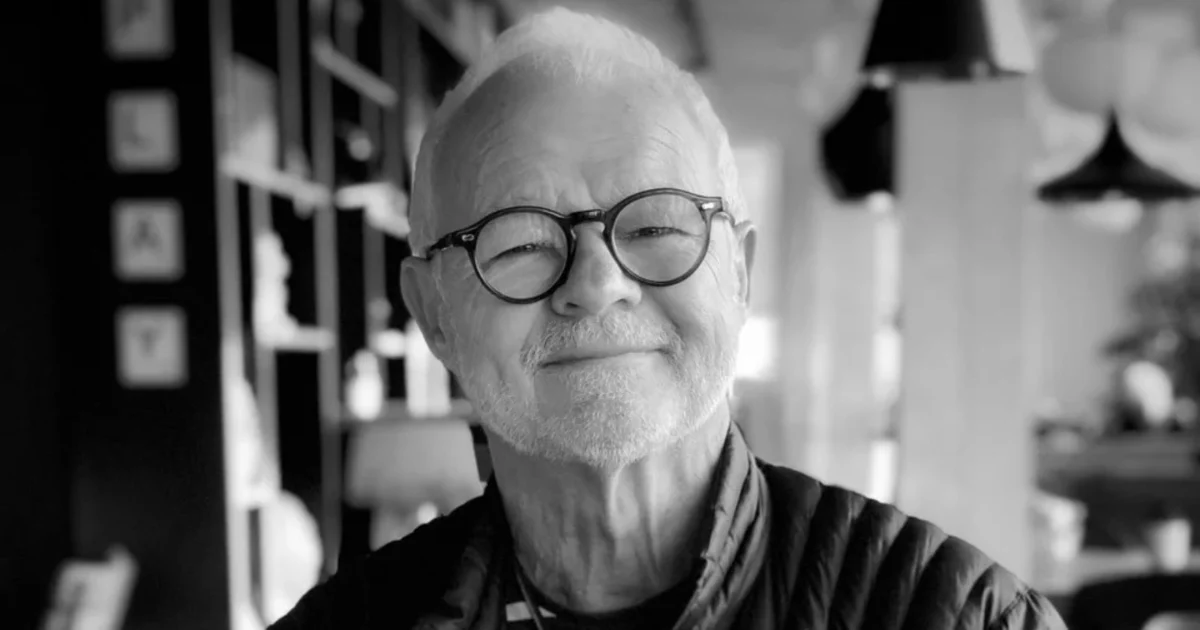
 Siti Muinah
  Lina Irawan