
 By Evan Lee Salim
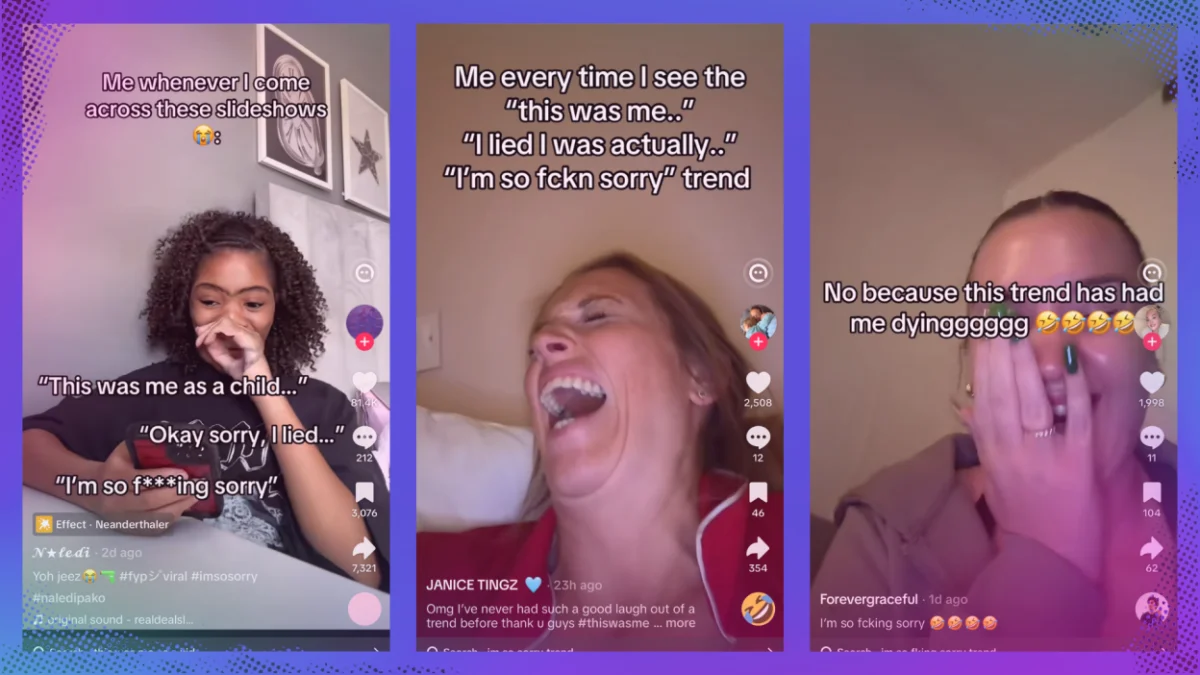
In the rapidly evolving landscape of digital trends, TikTok has become the primary laboratory for generative AI experimentation. From morphing mundane selfies into elaborate caricatures to the viral "80s yearbook portrait" craze, users are constantly finding new ways to manipulate their digital identities. The latest phenomenon sweeping the platform is the "I’m so sorry" trend, a clever, often humorous, and increasingly controversial exercise in self-deprecation.
Participants in this trend dig deep into their personal archives—retrieving baby photos, awkward school portraits, and candid childhood snapshots—and use AI tools to "fix" their past selves. The results are shared in a suspense-filled carousel format, where each slide peels back a layer of digital enhancement until the raw, unfiltered, and often hilariously imperfect original image is revealed. While it has become a viral sensation, the trend has ignited a firestorm of debate regarding privacy, the ethics of AI, and the risks associated with uploading sensitive personal data to the cloud.
The Mechanics of the Reveal: A New Form of Digital Storytelling
The appeal of the "I’m so sorry" trend lies in its mastery of suspense. Unlike typical photo dumps, this trend functions as a narrative arc. A user begins with an AI-generated, hyper-polished version of a childhood photo—often giving the subject flawless skin, modern fashion, or an idealized background.
As the viewer swipes through the carousel, the "magic" is stripped away. The creator adds captions—"I’m so sorry, I lied about the hair," or "I’m so sorry, I needed to change the outfit"—as the image progressively regresses toward its true, unedited state. By the final slide, the "real" photo is unveiled. The dramatic contrast between the polished AI version and the often awkward reality is the comedic engine driving the trend’s virality.
The trend is frequently set to the nostalgic, melancholic swells of Harry Styles’ "Coming Up Roses" or the iconic, cinematic atmosphere of Prince’s "Purple Rain." These tracks heighten the emotional stakes of the "confession," transforming a simple image edit into a dramatic, tongue-in-cheek apology for one’s own appearance.
Chronology: From Viral Spark to Global Phenomenon
The trend officially entered the cultural lexicon on August 22, 2026, when TikTok creator @theywanthunter shared a carousel featuring a photograph of his supposed girlfriend. The slideshow, captioned with a deceptively sweet "Happy 2 years bae," utilized AI to transform the subject into a hyper-idealized version of herself. When the reveal showed the original, unedited photo, the gap between the two versions sparked immediate intrigue.
By late October 2026, the trend had exploded, garnering tens of millions of views. It quickly moved beyond simple pranks about dating to deeper explorations of personal history. Users began applying the format to their own childhoods: revealing that their "cute" Halloween costume was actually a messy, homemade disaster, or exposing that a seemingly perfect baby portrait was hiding a far more chaotic reality.

As the trend matured, it became a communal exercise in vulnerability. People reported that watching others "come clean" about their childhood photos helped them feel more comfortable with their own perceived flaws, turning the trend into a surprising, if unconventional, form of digital body positivity.
Supporting Data: Why We Love the "Big Reveal"
The popularity of the trend can be attributed to the "uncanny valley" effect. Humans are naturally drawn to the juxtaposition of the familiar and the artificial. When we see a familiar childhood photo modified by AI, our brains work overtime to identify the discrepancies. This psychological engagement is exactly why the trend has seen such high levels of interaction.
Furthermore, the data indicates that users are not just passive viewers; they are active participants. According to platforms that track meme evolution, the "I’m so sorry" trend is one of the fastest-growing participatory formats of the year. The community feedback has been largely positive, with users flocking to the comments to share their own "failures" or to offer support to creators who are "exposing" their authentic pasts.
One user summarized the sentiment effectively: "The ‘I’m sorry I lied’ trend on TikTok has to be the funniest trend ever. It’s actually making me feel better about my own childhood photos."
Privacy Concerns: The Hidden Cost of the "Apology"
Despite the humor, a vocal segment of the digital community is raising alarms. The trend relies entirely on the use of third-party AI image editors. To participate, users must upload their private, identifiable photographs to servers—often operated by companies with opaque data-retention policies.
The Risks of Data Uploads
When a user uploads a photo to an AI generator, they are often granting that platform the right to process, store, and potentially use that image to train future models. For childhood photos, this presents a unique long-term risk. Once an image is uploaded to a public server, the user loses control over its future usage.
Ethical Implications and Child Safety
The most significant concerns involve the long-term safety of these images. Privacy advocates and child safety organizations, including UNICEF, have consistently warned about the dangers of feeding images of children into AI pipelines. While the "I’m so sorry" trend is intended as a joke, the technological infrastructure supporting it is the same infrastructure that bad actors use to generate non-consensual content.

Critics have pointed out that normalizing the practice of uploading images of children to public-facing AI tools lowers the barrier for more malicious uses of similar technology. As one concerned user put it: "Why do we keep normalizing uploading pictures of children into a public AI?"
Implications: The Future of Digital Identity
The "I’m so sorry" trend acts as a microcosm for our broader relationship with AI. We are currently in a "Wild West" phase where the allure of the creative tool—the ability to generate, edit, and perfect imagery—frequently overrides the cautious consideration of data ethics.
The Normalization of Altered Reality
As AI tools become more integrated into social media, the baseline for what constitutes a "real" photo is shifting. If we are constantly seeing AI-edited versions of ourselves and others, the societal pressure to maintain a perfectly curated digital existence will only increase. The "I’m so sorry" trend is a unique counter-reaction to this, using AI to eventually return to the real, but it still centers the AI-edited image as the starting point of the conversation.
Recommendations for Creators
For those who wish to participate in future trends safely, experts suggest several precautions:
- Check the Terms of Service: Before uploading a photo, read the fine print. Does the company retain the image? Do they use your data for model training?
- Use Local Processing: Whenever possible, use AI tools that process images locally on your device rather than uploading them to a cloud server.
- Minimize Identifying Information: Avoid using photos that contain clear background details, street signs, or identifying landmarks that could compromise your physical safety.
- Think Long-Term: Remember that the internet is permanent. A "funny" trend today could be used in ways you don’t anticipate in the future.
Conclusion: A Balancing Act
The "I’m so sorry" trend is a testament to human creativity and our collective desire to find humor in our own histories. It has provided a platform for shared laughter and a temporary reprieve from the pressures of perfectionism. However, it also serves as a sharp reminder that every click, upload, and edit in the digital age carries a weight.
As we move forward, the challenge for digital citizens will be to enjoy the playful side of AI innovation without sacrificing the privacy and security of our personal histories. The "I’m so sorry" trend might be a passing phase, but the questions it raises about our digital footprints are here to stay. Before you post your next "apology," take a moment to consider what you are truly sharing—and whether the joke is worth the privacy trade-off.
 Ali Ikhwan
 Azzam Bilal Chamdy
 Ammar Sabilarrohman
