
 By Nana Wu
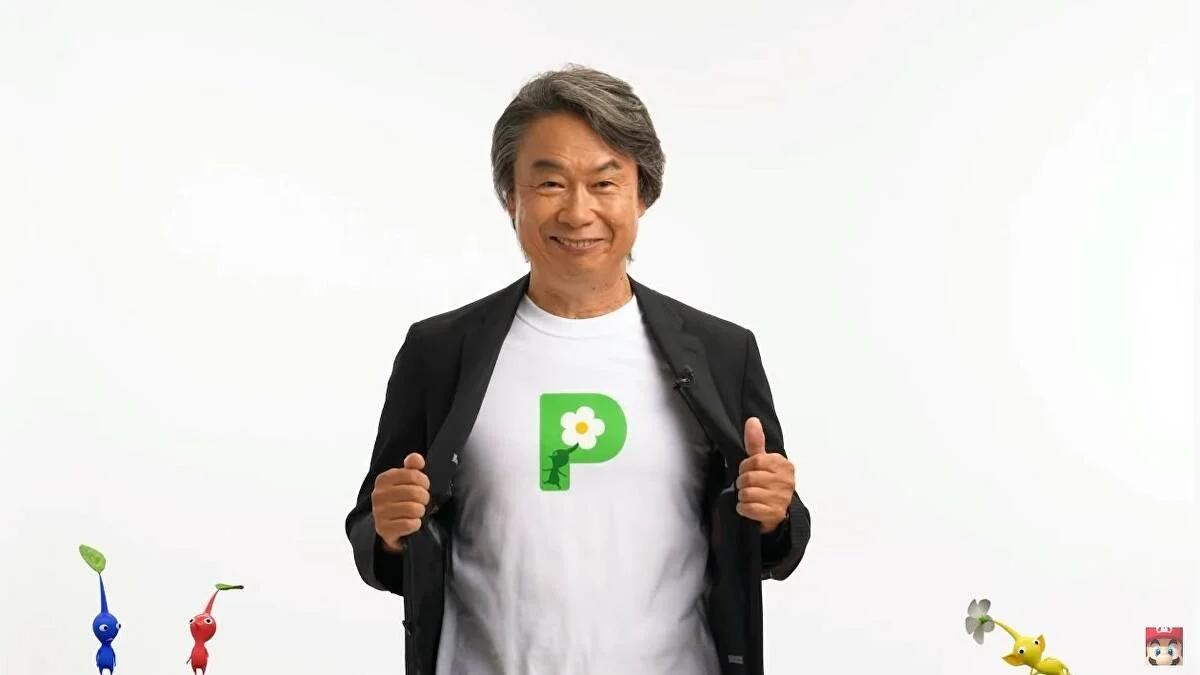
As the gaming industry stands at the precipice of a technological revolution driven by generative artificial intelligence (AI), the voice of one of its most legendary figures has offered a perspective that is both grounded in historical context and optimistic about the future of human ingenuity. Shigeru Miyamoto, the creative force behind Nintendo’s crown jewels like Super Mario and The Legend of Zelda, recently addressed the existential questions surrounding AI’s role in game development. His insights, shared during a press conference celebrating his historic appointment as the first video game developer to receive Japan’s prestigious Order of Culture, provide a rare glimpse into how the industry’s old guard views the shifting landscape of digital creation.
The Context: A Milestone for Interactive Entertainment
The Order of Culture is one of the highest honors bestowed by the Emperor of Japan, traditionally reserved for individuals who have made extraordinary contributions to arts, science, and culture. By awarding this to Shigeru Miyamoto, the Japanese government has officially codified video games as a legitimate, high-level art form.
However, rather than dwelling solely on his past achievements, Miyamoto used the spotlight to address the most pressing conversation in tech: the encroachment of generative AI. His comments serve as a philosophical counterweight to the "automation-at-all-costs" mentality currently gripping much of the broader technology sector. Miyamoto’s stance is nuanced—he does not reject the utility of new tools, but he remains steadfast in his belief that the soul of a game resides exclusively in human intent.
A Chronology of Innovation: From Typewriters to Neural Networks
To understand Miyamoto’s skepticism toward the idea that AI will replace developers, one must look at his long history with technological transitions. Having joined Nintendo in the 1970s, Miyamoto has lived through the transition from analog design to the dawn of the silicon age.
- The Early Days (1970s–1980s): Creativity was heavily constrained by hardware limitations. Every line of code and every pixel had to be meticulously placed, leaving little room for "labor" that didn’t directly translate to design intent.
- The Computer Revolution (1990s): The shift from paper-based drafting to sophisticated word processors and digital design suites allowed developers to iterate faster. Miyamoto notes that this period allowed designers to offload the "laborious" aspects of creation, which, in turn, allowed their true creative capabilities to surface.
- The Modern Era (2010s–Present): The introduction of complex game engines like Unity and Unreal, followed by the rapid rise of Generative AI, represents the next logical step in this evolution.
Miyamoto’s core argument is that the computer has always been an assistant. He views AI not as a replacement for the artist, but as a potential evolution of the "toolset" that, if used correctly, frees the creator to focus on the why of a game rather than the how.
The Danger of "Laborious Satisfaction"
One of Miyamoto’s most profound observations concerns the psychological trap of modern game development. He warns that when technology makes the process of creation easier, developers may mistake the act of "laboring" for the act of "creating."
"While the act of creation is inherently satisfying, there’s a danger: one might find satisfaction in the labor itself and mistakenly believe that a high-quality piece of work has been created," Miyamoto noted. This is a critique of the "copy-paste" culture that AI is currently accelerating. If a designer uses AI to generate assets—environments, code, or character dialogue—without a strong, singular vision driving those choices, the resulting game becomes a hollow shell.
Miyamoto’s assertion is that work that relies on automation without individual design intention rarely stands the test of time. It lacks the "human thumbprint" that audiences intuitively recognize. By offloading the mechanical grunt work to AI, he argues, developers should not become idle; rather, they should use that reclaimed time to deepen their focus on what truly makes a game engaging: the player’s experience and the designer’s vision.
Supporting Perspectives: The Industry Divide
Miyamoto is not the only industry titan grappling with this issue, though he remains one of the most balanced. Masahiro Sakurai, the mastermind behind Super Smash Bros., has offered a more cautionary, perhaps cynical, view. Sakurai has argued that the influx of AI-generated content could lead to a market saturated with "unoriginal and unprofitable" games. For Sakurai, the danger lies in the commoditization of art; when anyone can generate a game, the value of unique, handcrafted experiences may be diluted by a sea of generic, AI-generated noise.
Meanwhile, the industry at large remains deeply split. The debate is no longer theoretical; it is reflected in corporate policy:
- The "Aggressive Adopters": Companies like Square Enix have publicly stated their intention to be "aggressive" in applying AI, aiming to streamline development costs and shorten production cycles. Sega, Capcom, and Ubisoft have also experimented with AI for asset generation and localization.
- The "Human-Centric" Holdouts: Nintendo and several independent studios have maintained a more conservative stance. Former Nintendo of America president Doug Bowser has consistently emphasized that the "human touch"—the developer’s insight into how players think and feel—is the primary value proposition of the Nintendo brand.
- The Infrastructure Builders: Microsoft/Xbox has taken a middle-ground approach, establishing divisions specifically to explore how AI can assist in the technical heavy lifting, such as porting older games to new hardware or managing complex backend code.
The Implications: What Does This Mean for the Future?
The long-term implications of Miyamoto’s philosophy are significant for both the workforce and the player base.
1. The Devaluation of "Generic" Skills
If generative AI can handle basic texture mapping, voice acting for minor NPCs, or boilerplate coding, the value of these entry-level tasks in the job market will likely plummet. Developers who rely solely on these skills may find themselves displaced. The industry will likely shift toward prioritizing "Art Directors" and "Visionaries"—individuals who can curate, edit, and direct AI tools to achieve a specific artistic goal.
2. The Premium on "Human-Crafted" Experiences
Just as vinyl records saw a resurgence in the age of digital streaming, we may see a "human-made" label become a premium selling point in gaming. If the market becomes flooded with AI-generated titles, games that emphasize organic, bespoke design—the kind Nintendo is famous for—will likely command higher loyalty and value.
3. A Shift in Education
Design schools will need to pivot. Instead of teaching students how to manually create every asset, curriculums will need to focus on "creative intent." Students must learn how to define a vision and guide AI tools to execute that vision, rather than acting as mere laborers.
Conclusion: The Role That Will Always Remain
Shigeru Miyamoto’s perspective is ultimately one of resilience. He suggests that even if AI eventually becomes capable of handling 100% of the production labor, the intent will remain a uniquely human domain.
The history of art—from the camera’s invention (which many feared would kill painting) to the birth of digital music—shows that technology rarely kills creativity; it merely changes the medium. Miyamoto believes that the human role in games is not to be a machine, but to be an architect of experience. As long as players crave connection, challenge, and the feeling of a "handcrafted" journey, the role of the human developer will remain secure.
In the face of an AI-driven future, Nintendo’s strategy seems to be one of "selective integration." They are not anti-technology, but they are fiercely pro-human. By prioritizing the developer’s artistic capabilities over the efficiency of the machine, Miyamoto is betting that the market will continue to reward the soul, the intent, and the unmistakable, messy, wonderful human touch that no algorithm can truly replicate.
 Asep Darmawan
 Iffa Jayyana
 Suro Senen
