
 By Laily UPN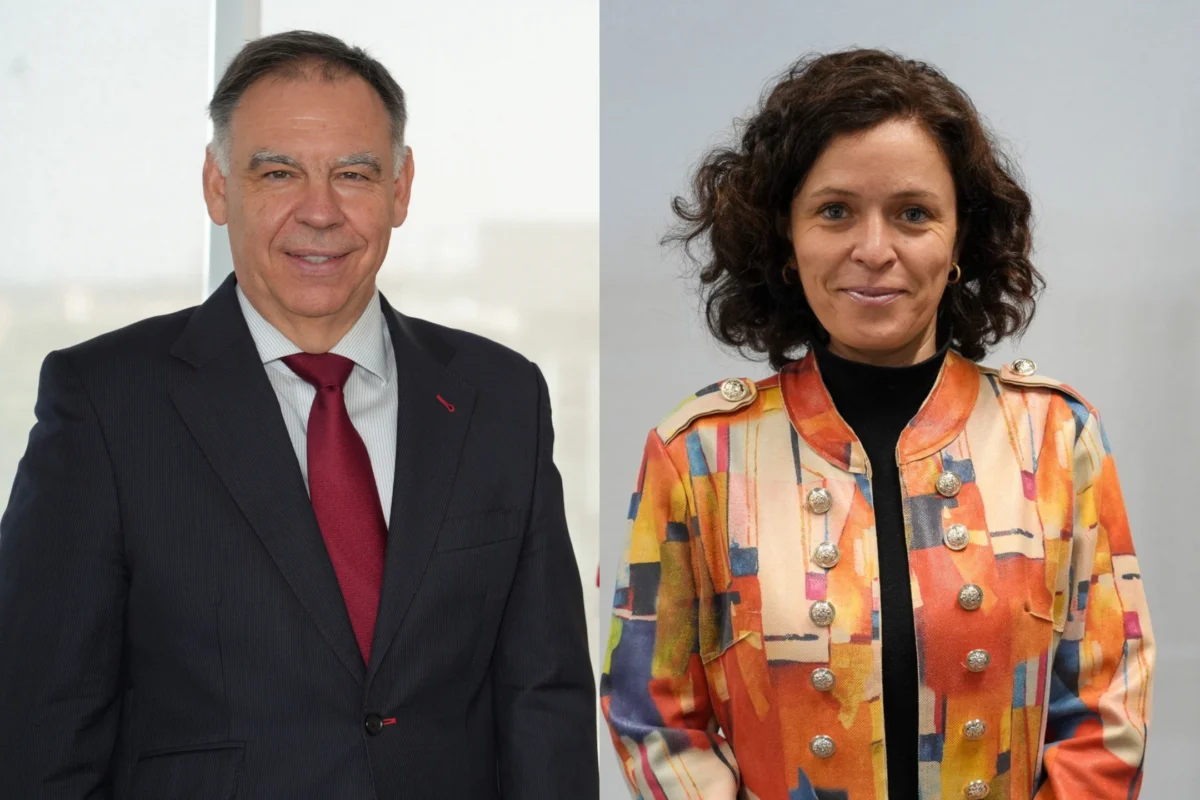
As the 72nd San Sebastián International Film Festival prepares to welcome the global industry from September 18–26, a pivotal narrative is set to dominate the corridors of power and production: the maturation of SETT, the venture capital arm of Spain’s Ministry for Digital Transformation.
Designed to act as a public catalyst for a sector transitioning from a collection of fragmented creative studios into a unified industrial powerhouse, SETT has become the bedrock of the "Spain Audiovisual Hub" strategy. With the industry gathering in San Sebastián, SETT’s leadership—Director General Javier Ponce and Audiovisual Director María Coronado—are presenting a roadmap for the future of Spanish content, moving beyond project-based funding toward a model of corporate scalability and long-term intellectual property (IP) retention.
The Strategic Mandate: What is the Spain Audiovisual Hub?
At its core, SETT (the state-backed investment entity) serves as a bridge between the creative brilliance of Spanish talent and the capital markets. The objective is to foster growth, employment, and innovation by deploying financing and equity investments—either directly into audiovisual companies or through specialized financial intermediaries.
Unlike traditional grants, which are often tied to the completion of a single film or series, SETT’s mission is structural. It focuses on the "Audiovisual Hub Plan," an initiative funded by the European Union’s Next Generation recovery funds. The priority is clear: to ensure that high-impact projects are not just produced, but that the resulting intellectual property remains firmly in the hands of Spanish production houses. By retaining IP, Spanish companies can build long-term value, enabling them to compete on a global scale rather than merely acting as service providers for international streamers.
A Chronology of State-Led Investment
The trajectory of SETT has been defined by a shift from reactive funding to proactive industrial development.
- 2021–2022: The Foundation. Following the COVID-19 pandemic, the Spanish government launched the "Spain Audiovisual Hub," fueled by E.U. recovery funds, aimed at positioning Spain as the "Hollywood of Europe."
- 2023: The Proof of Concept. SETT began deploying capital through a co-investment model, testing the waters with companies in the animation and post-production sectors.
- 2024: The San Sebastián Milestone. As the fund enters a new phase, the focus shifts to institutionalizing these gains. SETT prepares to transition into the "España Crece" (Spain Grows) program, a massive €13.3 billion initiative managed by the Official Credit Institute (ICO), where SETT will continue to play a crucial role in directing capital toward strategic technologies and content sectors.
The Co-Investment Model: Bridging the Risk Gap
A defining feature of the SETT strategy is its pari passu co-investment model. Under this framework, the state does not act as a lone financier; it functions as a partner to private venture capital.
Why the Sovereign Model Matters
"Public-private collaboration is the only way to launch initiatives that involve the high risks inherent in innovation," explains Javier Ponce. "Only large-scale markets with deep-rooted traditions can mobilize enough capital alone. In Spain, we have had to use the public sector to lower the barrier to entry for private investors."
The logic is simple but transformative: by investing alongside private entities under identical terms, the government validates the company’s business plan. This provides the "de-risking" signal required for private venture capitalists to enter the volatile, high-reward world of media production.
Tangible Impact
The results are already visible in the landscape. Recent transactions include:
- The Refinery & Moonlighting: A combined investment of €25 million, signaling a push into high-end post-production and international service capability.
- Amuse Labs & Milo: A total of €32 million directed into the animation sector, bolstering Spain’s capacity to create globally competitive, tech-forward children’s content and digital animation.
Official Perspectives: Addressing Challenges and Future Horizons
Despite the successes, the path has not been without friction. With nearly €250 million deployed out of a potential €1.5 billion pool, critics have pointed to the speed of execution.
The Time Constraint Dilemma
Javier Ponce acknowledges the limitations imposed by the strict deadlines of European recovery funds. "European funds were fundamental, but the strict implementation deadlines made optimal execution challenging," he notes. "Market participants needed time to understand the implications of partnering with a public investor. The biggest challenge now is ensuring these investments continue to thrive and identifying new opportunities."
The Shift to "España Crece"
The transition toward the "España Crece" program represents a maturation of the model. By integrating into a larger budget managed by the ICO, SETT is positioning itself to be a permanent fixture of the Spanish economy rather than a temporary COVID-recovery solution.
"The audiovisual sector remains a strategic priority," says Ponce. "We are currently in discussions with the ICO to define the procedures for this next phase. The goal is to move from the temporary nature of recovery funds to a sustainable, long-term co-investment framework."
Implications: Changing the Mindset of an Industry
María Coronado, Audiovisual Director at SETT, emphasizes that the most significant change brought by this initiative is not monetary, but psychological.
From Project to Enterprise
"The SETT model forces promoters to think in terms of business strategy rather than just project cycles," Coronado observes. By strengthening a company’s capital base, production houses are gaining the capacity to:
- Diversify Revenue: Reducing reliance on a single project or client.
- Scale Infrastructure: Investing in technical training and state-of-the-art facilities.
- International Expansion: Moving from local players to companies with a global footprint.
"When you are properly capitalized," Coronado adds, "you can hold onto your rights, you can negotiate better distribution deals, and you can build a library of content that serves as a long-term asset."
The Road Ahead: Infrastructure and Talent
As SETT looks toward the future, its leadership has identified three critical pillars for the next five years of the Spanish audiovisual sector:
- Scaling Infrastructure: Spain must accommodate the increasing volume of medium- and large-scale productions. This requires physical studio space, but more importantly, digital and technical infrastructure.
- Talent and Technical Training: Content is only as good as the workforce. The focus must shift toward training a new generation of technical artists, data analysts, and producers capable of managing complex co-productions.
- Legal and Regulatory Stability: To remain competitive, Spain must continue to refine its tax frameworks. The goal is to create an environment where international companies feel secure in establishing their European operations within Spanish borders.
Conclusion: The San Sebastián Presence
The upcoming events at the San Sebastián Festival serve as a bellwether for this strategy. From hosting exclusive roundtables with international investment funds to participating in the "Spanish Screenings Investment & Tech" panel, SETT is moving to the front of the stage.
The message is clear: The Spanish audiovisual industry is no longer a collection of independent creators seeking grants. With the institutional backing of SETT, it is evolving into a professionalized, high-growth industrial sector. As the industry gathers this September, the question is no longer whether Spain has the creative talent to succeed, but whether the infrastructure and the capital are now in place to ensure that the global success of Spanish content is matched by the profitability of the companies that create it.
For investors, producers, and policy makers, the lesson of the last two years is evident: the sovereign venture capital model has moved from a theory to a proven tool. As SETT prepares for its next chapter, it is not just funding films; it is building a foundation for a modern, digital-first economy.
 Basiran
  Lina Hope
  Evan Lee Salim