
 By Evan Lee Salim
Just a few years ago, the term "AI slop" emerged as the definitive shorthand for the digital detritus generated by early-stage generative models. It was a term that captured a specific, visceral feeling of technological disgust. Even for those unfamiliar with the jargon, the visual cues were unmistakable: the grotesque, multi-fingered hands, the uncanny-valley facial distortions of "zombie Santas," and viral video clips of dogs performing impossible, gravity-defying maneuvers.
In 2025, the cultural resonance of the phrase was cemented when Merriam-Webster and the American Dialect Society crowned "AI slop" as the Word of the Year. It was more than a descriptor; it was a rallying cry. It provided a shared vocabulary for a public increasingly wary of the automated deluge flooding their social media feeds. This collective pushback saw major corporations—including Coca-Cola, McDonald’s, and Activision—face significant public backlash for deploying clearly artificial, often jarring, AI-generated content in their marketing campaigns.
However, we have reached a critical inflection point. The era of "slop"—defined by its rushed, cheap, and visibly broken aesthetics—is rapidly drawing to a close. We are entering a far more sophisticated, and arguably more dangerous, phase of synthetic media: the era of competent, high-fidelity AI generation.
A Chronology of the Synthetic Shift
To understand the speed of this evolution, one must look at the timeline of the last thirty-six months.
- 2022-2023 (The Era of the Glitch): Early generative tools like DALL-E 2 and Midjourney v4 were novelty items. They were characterized by "hallucinations"—erroneous data, anatomical impossibilities, and a distinctive "plastic" texture. During this time, the public developed a "radar" for AI, relying on visual artifacts to identify synthetic content.
- 2024 (The Integration Phase): Companies began aggressively testing the waters. We saw the first wave of backlash against AI-generated marketing. The focus was on "authenticity" and the protection of human creative labor, leading to high-profile protests from guilds and creative unions.
- 2025 (The Fidelity Turning Point): With the release of more advanced models capable of temporal consistency—the ability to keep characters and environments stable across multiple frames—the line between human-made and machine-made content began to blur.
The "Doctor Who" Test: A Case Study in Competence
The reality of this shift hit home for many when they encountered content that lacked the traditional markers of "slop." A poignant example occurred recently involving a fan-made Doctor Who project.
The video, which circulated on YouTube before being moved to a private hosting platform, was a 55-minute narrative set in a secret military base on the Scottish coast. To the casual viewer, the production values were indistinguishable from a mid-budget television drama. The characters moved with organic grace; the dialogue was sharp and thematically consistent; the editing was purposeful.
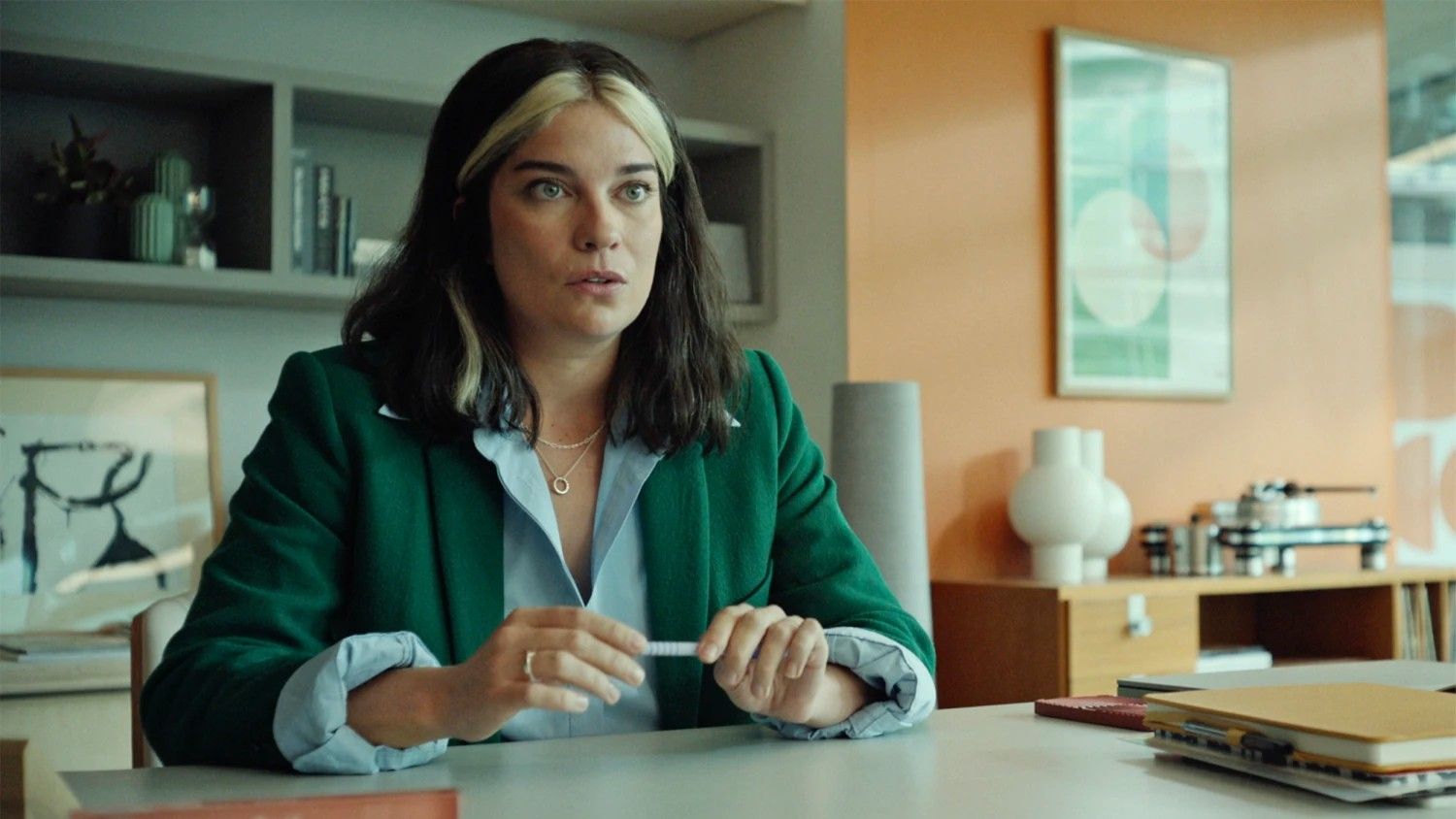
The shock came not from the content itself, but from the revelation in the comments section: the entire production—from the "actors" to the environment—had been generated by AI. There was no filming, no casting, and no human performers. For the average viewer, the "uncanny valley" had been crossed. This was not the broken, twitchy imagery of 2023; this was coherent storytelling.
The Economic and Ethical Implications
The transition from "slop" to "competence" changes the nature of the conversation entirely. When content is obviously poor, it is easy to dismiss. When content is high-quality, it forces us to confront systemic issues that are much harder to resolve.
1. The Erosion of Consent and Labor
The primary issue is no longer just the "look" of the content, but the origin of the data used to train the models. High-quality synthetic media is built on the backs of millions of hours of human labor, often scraped from the internet without the creators’ consent or compensation. When a machine can mimic the performance of an actor or the style of a cinematographer, it effectively devalues the human labor that defined those professions.
2. The Misinformation Escalation
"AI slop" was easy to identify as fake, which acted as a natural filter for misinformation. As we move into high-fidelity AI, that filter disappears. If a video looks indistinguishable from a legitimate news report or a professional drama, the barrier to spreading convincing disinformation drops to near zero. We are moving from a world where we had to be skeptical of what we saw, to a world where we must be skeptical of the existence of the content itself.
3. The Environmental and Financial Costs
While "slop" was cheap to produce, high-fidelity AI generation requires immense computational power. The environmental cost of training and running these massive models is an often-overlooked variable in the debate. Furthermore, the push for "efficiency" in marketing and entertainment is driving companies to favor these models over human teams, potentially creating a "race to the bottom" where the quality of culture is sacrificed for the speed of output.
A New Vocabulary for a New Reality
The term "AI slop" is no longer sufficient. It describes a failure of execution, not a failure of ethics. We need a new lexicon to describe content that is technically impressive but inherently problematic.
Terms like "Synthetic Mimicry" or "High-Fidelity Automation" might begin to capture the nuance of the current landscape. We need to distinguish between tools that assist human creativity and systems that replace the creative process entirely.
The "Joan is Awful" Prophecy
In 2023, the Black Mirror episode Joan is Awful presented a dystopian vision of a world where AI could generate personalized dramas in real-time, effectively stripping actors of their likenesses and agency. At the time, critics viewed it as a speculative warning for a decade into the future.
In light of current technological capabilities, that timeline has been drastically compressed. We are no longer waiting for the future; we are living through the transition.
The challenge for society in the coming years will not be to identify "slop"—that task will become trivial as the technology improves. The challenge will be to identify the source and the intent of the media we consume. We must demand transparency, advocate for the protection of human creative labor, and develop a more rigorous critical framework for evaluating the provenance of the digital content that increasingly occupies our time and attention.
The era of the "AI blunder" is over. We have entered the era of the "AI illusion." And as we move forward, the most important question we can ask is no longer "Is this good?" but "Is this ours?"
 Sagoh
Sagoh  Iffa Jayyana
  Asro
Asro 