
 By Sagoh
The landscape of 3D modeling and animation is on the cusp of a significant transformation. Blender, the industry-leading open-source powerhouse, is set to release its next major iteration, version 5.3, this coming November. While the update promises a suite of general performance improvements and workflow refinements, one specific feature has sent shockwaves through the digital art community: the integration of native 3D Gaussian Splatting support.
This development marks a departure from traditional polygonal modeling, signaling a future where photorealistic, environment-scale 3D capture becomes as accessible as importing a texture map. As Blender continues to cement its status as the go-to tool for independent creators and professional studios alike, the addition of this technology represents a pivotal bridge between real-world capture and virtual production.
The Core Innovation: What is Gaussian Splatting?
To understand the magnitude of this update, one must first look at the limitation of the current industry standard. For decades, 3D assets have been built using meshes—geometric structures composed of thousands or millions of triangles (polygons). While incredibly powerful, creating photorealistic meshes from real-world objects is a laborious process involving complex photogrammetry, high-end scanning equipment, and extensive manual cleanup.
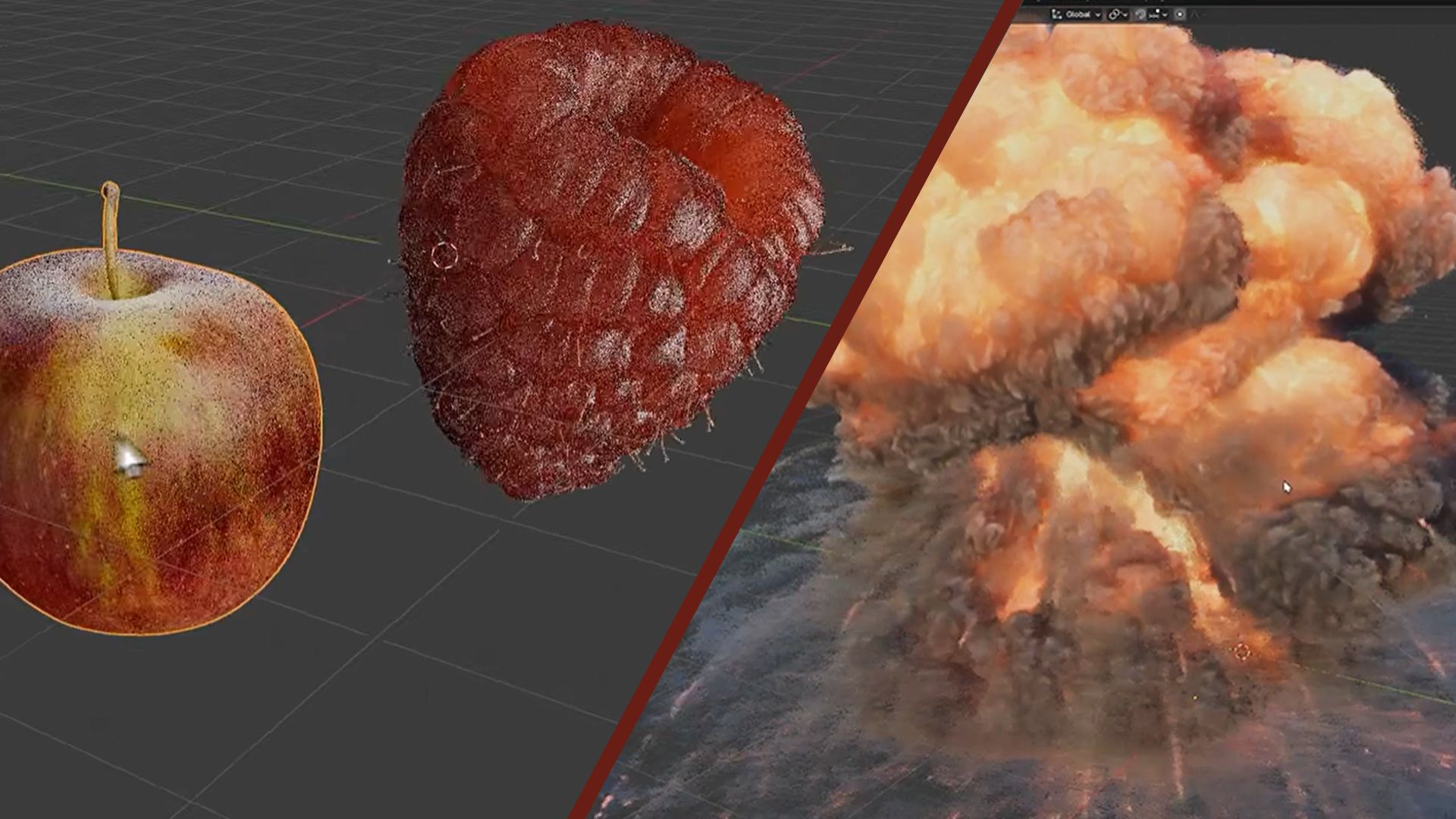
Gaussian splatting offers an alternative paradigm. Instead of building a rigid mesh, Gaussian splatting uses a collection of millions of tiny, semi-transparent 3D "blobs" (the Gaussians). Each of these blobs stores precise data regarding its position, rotation, scale, color, and opacity. When rendered collectively, they create a scene that is remarkably photorealistic and view-dependent, often capturing fine details like reflections, hair, and complex lighting that traditional meshes struggle to replicate.
By bringing this technology into the native Blender environment, the developers are removing the friction that has historically separated "splat" enthusiasts from traditional 3D animators.
Chronology: The Path to Integration
The journey to this integration has been rapid. Gaussian splatting only emerged as a viable research field in the last few years, with its mainstream breakthrough occurring around 2023. Initially, the technique was confined to specialized research labs and niche repositories on GitHub.
The Early Adopter Phase
For the past 18 months, Blender users wanting to experiment with splats were forced to rely on a fragmented ecosystem. Artists had to utilize external software—such as the popular COLMAP for processing images into point clouds or specialized tools like Brush—to generate the necessary PLY files. Even then, importing these into Blender required complex community-made add-ons that often lacked stability or full rendering support.
The Alpha Development
In early 2024, rumors began to circulate within the Blender developer forums regarding an official implementation. By the summer, the alpha builds of Blender 5.3 began to feature early branches of the code. This was a clear signal that the Blender Foundation viewed splatting not as a temporary trend, but as a long-term pillar of the software’s future.
The November Release
The anticipation for the November launch is currently at an all-time high. With the feature now in the final stages of the alpha cycle, developers are shifting their focus from basic functionality to refining the user experience, ensuring that importing a splat is as intuitive as dragging and dropping a file into the viewport.
Supporting Data and Technical Implementation
Blender 5.3 will allow users to import Gaussian Splats directly from standard PLY and SPZ files. Once imported, these assets are rendered natively, allowing users to leverage Blender’s existing engines: Workbench, EEVEE, and the path-tracing powerhouse, Cycles.
The Workflow Benefits
- Direct Rendering: Previously, splats often looked disjointed or lacked proper shading when ported into 3D software. Native support ensures that the splats interact correctly with Blender’s lighting, shadow, and camera settings.
- Performance: While native, the current implementation is still in its infancy. The software manages the millions of points by optimizing the way they are loaded into the viewport, though users are advised that high-density splats require significant VRAM.
- Versatility: By supporting both PLY (the standard format for point clouds) and the more modern, efficient SPZ format, Blender is ensuring compatibility with a wide array of existing capture tools.
Current Technical Limitations
It is important to note that the implementation is not yet perfect. The developers have been transparent about the current constraints:
- Performance overhead: Real-time playback of high-resolution splats in the viewport can still be taxing on mid-range hardware.
- Color Space issues: The current pipeline assumes an sRGB color space. Because Cycles and EEVEE operate in a linear color space, discrepancies can occur, particularly in areas of high radiance or low opacity.
- Transformation Limitations: The "Apply Transform" command is currently problematic. Because splats are not standard meshes, the software does not yet fully calculate the math required to handle scale, rotation, and spherical harmonics when an object is manipulated at the object level.
Implications for the Creative Industry
The introduction of native splatting is not just a "neat trick"—it changes the economic and creative calculus for digital artists.
Democratizing Photorealism
For independent creators, the cost of high-quality 3D assets has always been a barrier. With Gaussian splatting, an artist can film a location with their smartphone, process the images, and bring that environment into Blender in a matter of hours. This democratizes the creation of complex, real-world assets, making them accessible to solo developers, indie filmmakers, and small studios.
The Evolution of VFX
In the world of visual effects, "digital doubles" and environment extensions are standard. Gaussian splatting offers a significantly faster way to create background plates that react to lighting. As the technology matures—and as companies like Chaos continue to solve issues like relighting—the industry may see a shift away from traditional background modeling toward a hybrid approach of captured "splat" environments supplemented by CGI elements.
Hardware Considerations
As this technology becomes standard, the "best laptop for 3D modeling" criteria is shifting. While CPU power remains important, the reliance on real-time rendering and the processing of massive point-cloud data makes high-end GPUs with substantial VRAM more critical than ever. Professionals looking to capitalize on this feature will need to ensure their workstations are equipped to handle the intensive memory requirements of rendering millions of individual Gaussians.
Official Stance and Future Outlook
The Blender Foundation has not yet released a detailed roadmap for the post-5.3 lifecycle, but the community is already pushing for more features. Top of the list is export functionality. Currently, users can import and render, but they cannot bake or export modified splats back out of Blender. Closing this loop will be the next major hurdle for the development team.
Furthermore, integration with tools like the recently updated Chaos relighting solutions suggests a broader industry trend toward interoperability. As developers and companies like Chaos, Epic Games (with Unreal Engine), and the Blender Foundation continue to iterate, we are moving toward a future where the distinction between "real" video and "rendered" 3D becomes effectively invisible.
Conclusion
Blender 5.3 is shaping up to be one of the most consequential releases in the software’s history. By embracing Gaussian splatting, the Blender Foundation has reaffirmed its commitment to keeping the platform at the bleeding edge of computer graphics. While there are technical hurdles to overcome—namely in performance and transformation math—the foundation is set.
For the user, the message is clear: the time to start learning the workflow of Gaussian splatting is now. Whether you are an architect, a game developer, or a visual effects artist, the ability to integrate real-world captures directly into your 3D pipeline will soon be a mandatory skill. As November approaches, the 3D community waits with bated breath, ready to see how this powerful new tool will change the art we create.
 Evan Lee Salim
  Iffa Jayyana
  Asro
Asro 