
 By Ammar Sabilarrohman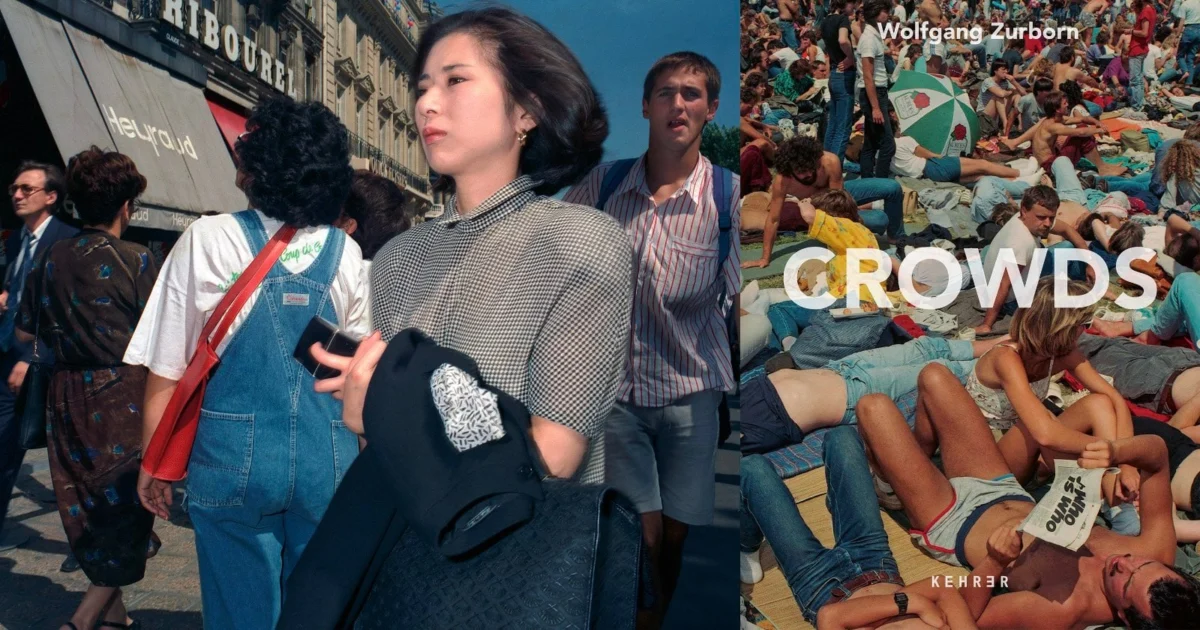
By Cultural & Arts Desk
Published: September 2026
Main Facts: Unearthing a Lost Era of Public Life
For more than four decades, renowned German photographer Wolfgang Zurborn has trained his lens on the unpredictable choreography of public life. Now, in a sweeping new monograph titled Crowds, published by Kehrer Verlag, Zurborn invites viewers on a vivid journey back to the 1980s and 1990s. The book brings together hundreds of digitized analog color negatives drawn deep from the photographer’s personal archive—many of which have never before been published or exhibited.
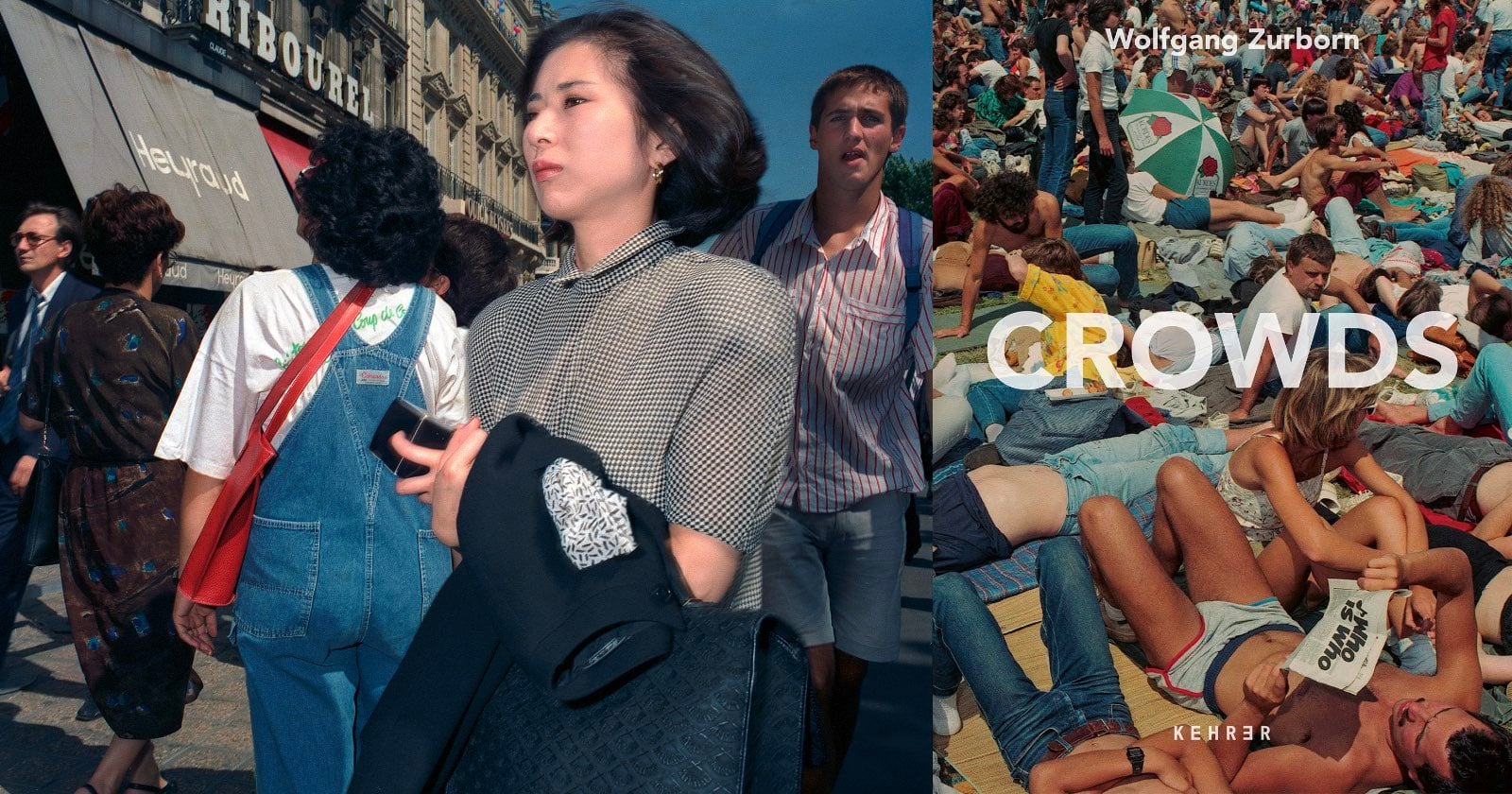
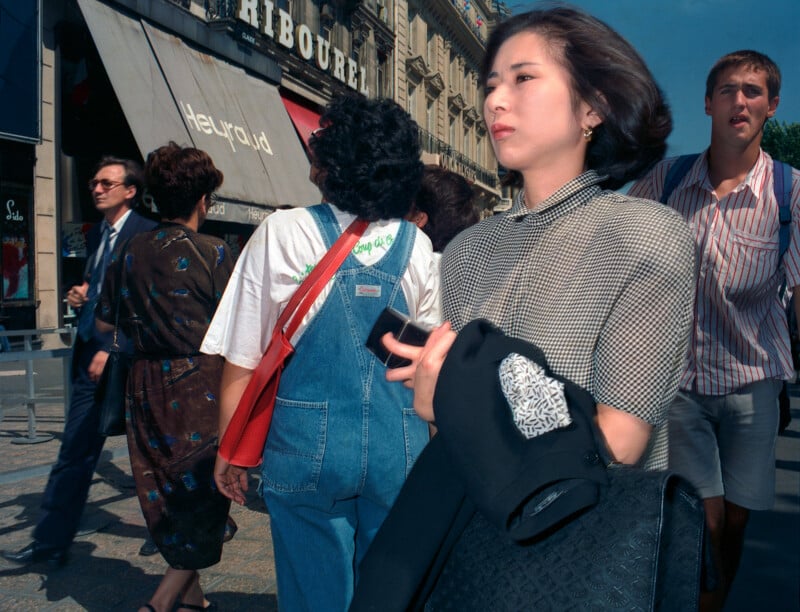
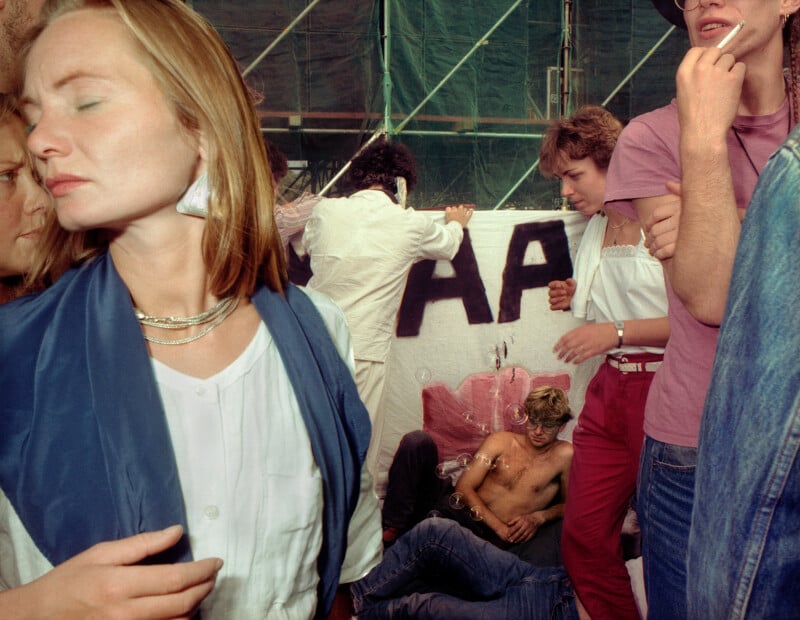
Spanning major European cultural hubs like Paris, Cologne, and the politically charged landscapes of Wackersdorf, Crowds serves as a profound visual archive of a society caught in rapid transition. The collection meticulously documents how individuals navigated mass culture, social conditioning, and the burgeoning influence of mass media during the final decades of the 20th century. Rather than treating crowds as mere blurry backdrops or reducing his subjects to isolated portraits, Zurborn captures the intricate web of human interaction, spontaneous gestures, and social friction that defines collective human behavior.
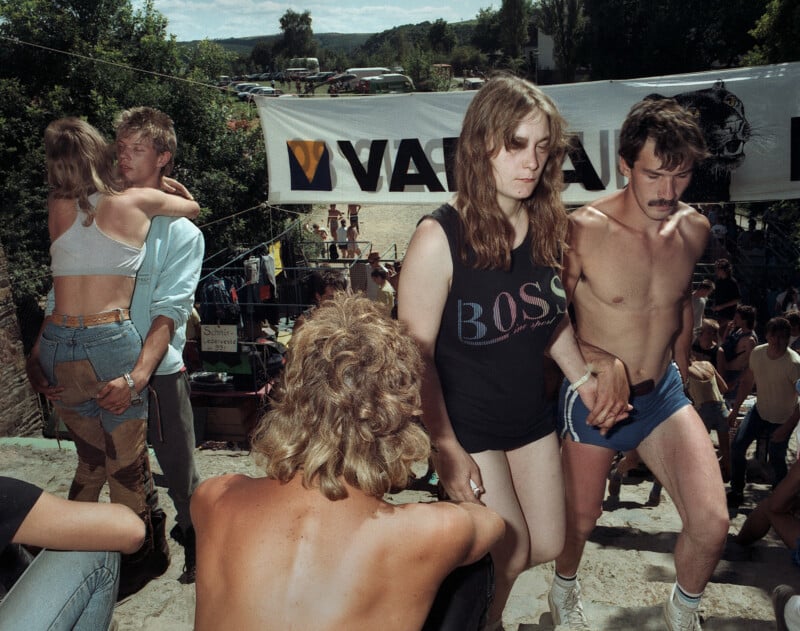
The project encompasses a wide array of public gatherings—from political protests and religious processions to sporting events, tourist hotspots, and raucous entertainment fairs. In doing so, it provides a panoramic examination of how people act when melded into a larger collective body, bridging the gap between fleeting individual actions and overarching sociological patterns.
Chronology: From Pandemic Lockdowns to Archival Discovery
The Genesis in Isolation (2020–2021)
The origin story of Crowds is deeply rooted in the paradoxical reality of the global COVID-19 pandemic. As international lockdowns brought public gatherings, street life, and social congregations to an abrupt, eerie standstill, the world experienced a sudden vacuum of collective human presence.
Stripped of the ability to photograph new street scenes, Wolfgang Zurborn turned inward, retreating to his extensive physical archive. Confined to his studio, he embarked on the painstaking process of scanning hundreds of long-neglected analog color negatives shot decades prior.
Connecting Decades Across Film Strips
This forced isolation provided Zurborn with the unique distance needed to evaluate his life’s work. As the analog negatives were transformed into high-resolution digital files, visual threads began to emerge across decades. Images captured in the mid-1980s dialogued seamlessly with frames shot in the early 1990s. The quietude of the pandemic served as a catalyst, prompting Zurborn to reconsider how deeply humanity is shaped—and often overstimulated—by social environments and media ecosystems. This reflective period birthed the thematic framework of Crowds, transforming a retrospective scan into a cohesive statement on freedom, collective psychology, and modern life.
Supporting Data & Artistic Methodology: The Complex Visuals of Color Street Photography
Embracing Visual Density
Zurborn’s artistic methodology is firmly rooted in the rich tradition of color street photography, yet it distinguishes itself through its embrace of visual complexity. Where some photographers strive for minimalist compositions or isolate a single subject from its environment, Zurborn does the exact opposite. He intentionally embraces the overwhelming density of information found within public spaces.
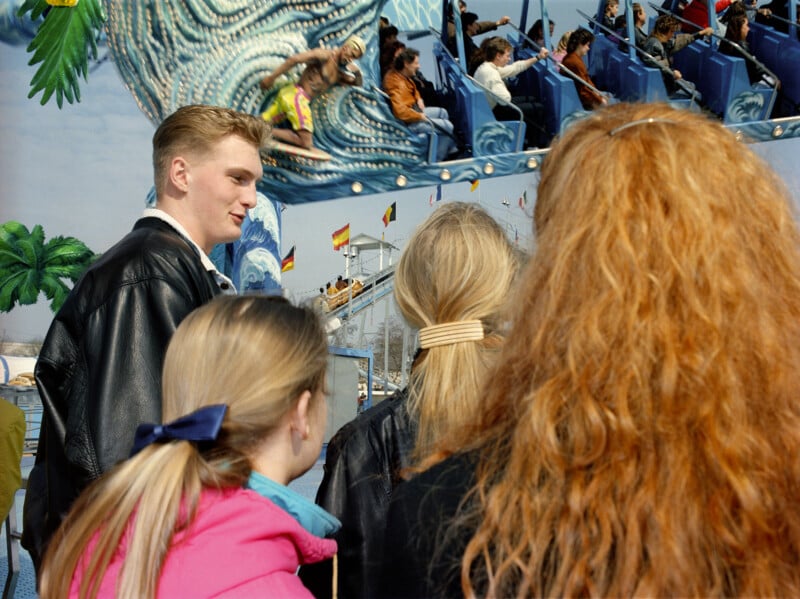
In his compositions, clarity is rarely granted to just one focal point. Foreground actions compete with background narratives, and minute, eccentric details exist simultaneously with grand geometric patterns. At first glance, many of Zurborn’s frames appear chaotic, bordering on overwhelming. However, as the viewer lingers, a distinct visual order begins to materialize out of the visual noise—all while preserving the organic unpredictability inherent to everyday public life.
Key Historic Settings Documented in Crowds:
- Wackersdorf (1986): Capturing the intense socio-political friction, protests, and religious gatherings during a period of fierce anti-nuclear movements in Germany.
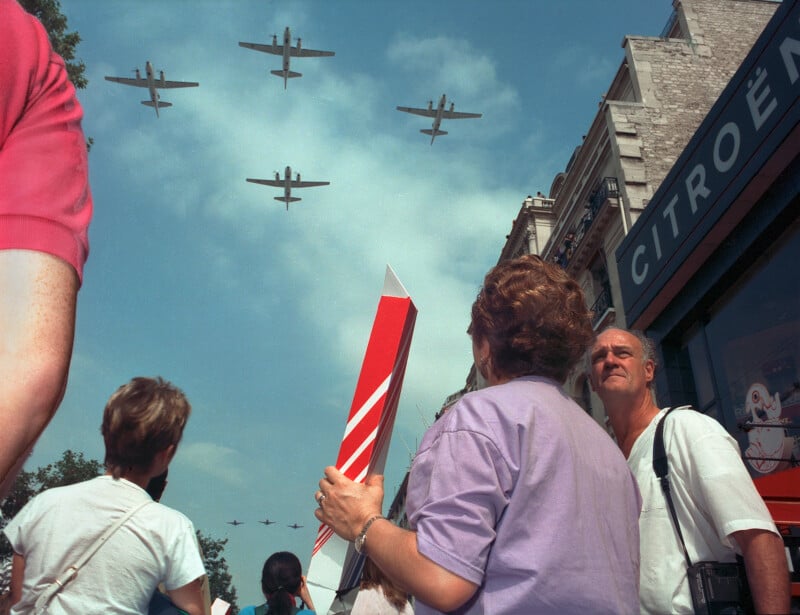
- Paris (1989): Documenting metropolitan life, historic street formations, and public spectacles against the backdrop of changing urban architecture.
- Cologne (1987–1991): Showcasing daily urban encounters, leisure spaces, amusement parks, and everyday moments of post-industrial European life.
- Loreley (1988): Freezing youthful camaraderie, outdoor counter-culture, and festival gatherings in natural landscapes.
Official Responses and Critical Reception
The impending release of Crowds has generated significant buzz within European photography and contemporary art circles. Critics and curators have lauded the monograph for its refusal to romanticize or oversimplify the eras it depicts.
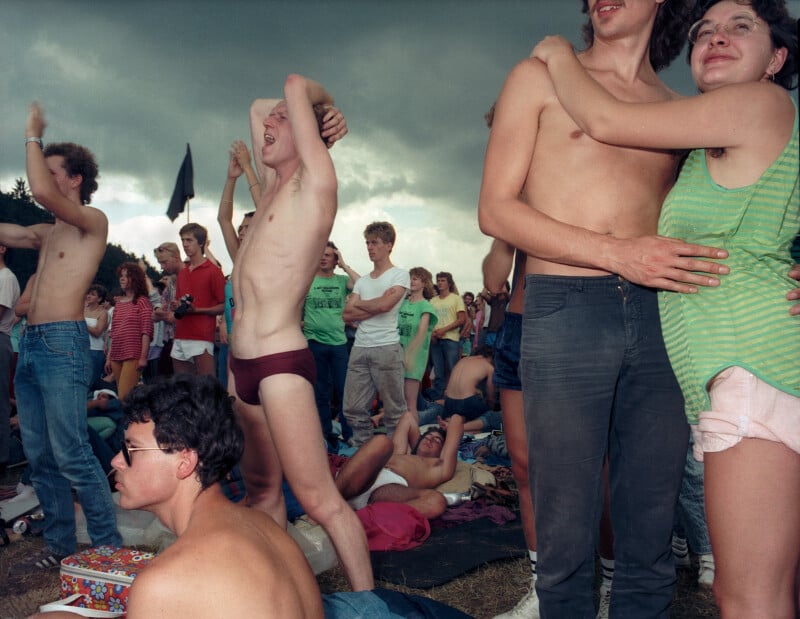
Publishing house Kehrer Verlag has highlighted the book’s timely relevance, noting that Zurborn’s historical lens offers critical insights into modern anxieties surrounding media saturation and social conformity. Rather than forcing a singular, didactic narrative onto the viewer, the book intentionally leaves room for interpretation.
Art historians have praised Zurborn’s unique ability to capture the psychological undertones of public assembly. "Zurborn does not judge his subjects; he observes them," noted one contemporary photo critic. "He maps out the invisible architecture of human connection in spaces that threaten to swallow the individual whole." By presenting contemporary life in all its messy, contradictory, and multifaceted glory, the reception underscores Crowds not merely as a nostalgic time capsule, but as a living mirror for modern society.
Implications: What Crowds Tells Us About Modern Freedom and Media Saturation
The Quest for Self-Determination
Beyond its artistic and historical value, Crowds forces a philosophical reckoning with what it means to live a self-determined life in an increasingly mass-marketed world. By examining the photographs taken between the mid-1980s and the dawn of the digital age, viewers are confronted with the foundations of today’s hyper-connected, media-driven reality.
The 1980s and 1990s represented a critical threshold: an era where traditional social structures, local communities, and religious traditions began to intersect aggressively with globalized mass media, television culture, and consumer capitalism. Zurborn’s lens captures the psychological tension of this shift. Individuals in his photographs are simultaneously liberated by public space and subsumed by it—caught between the desire to express individuality and the gravitational pull of collective conformity.
A Lesson for the Post-Pandemic Future
As contemporary society grapples with the permanent impacts of digital isolation, remote work, and algorithmic echo chambers, Zurborn’s Crowds arrives as a potent reminder of the raw, unpredictable beauty of physical coexistence. The book challenges us to look closer at the chaotic crowds we navigate daily, urging a renewed appreciation for the accidental encounters, shared public spaces, and complex social textures that define human civilization.
Wolfgang Zurborn’s Crowds is officially published by Kehrer Verlag and is available for acquisition through major fine art book distributors and the publisher’s official website.
 Raul Delapena Setiawan
  Jia Lissa