
 By Raul Delapena Setiawan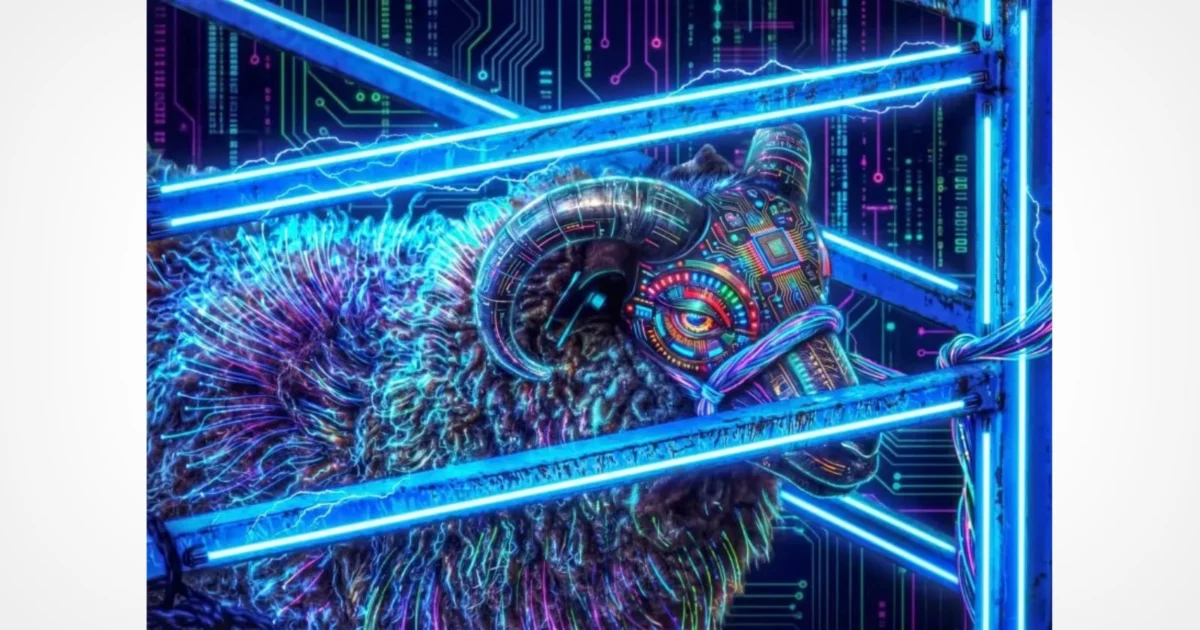
By Global Photography & Technology Desk
Published: September 2026
Main Facts
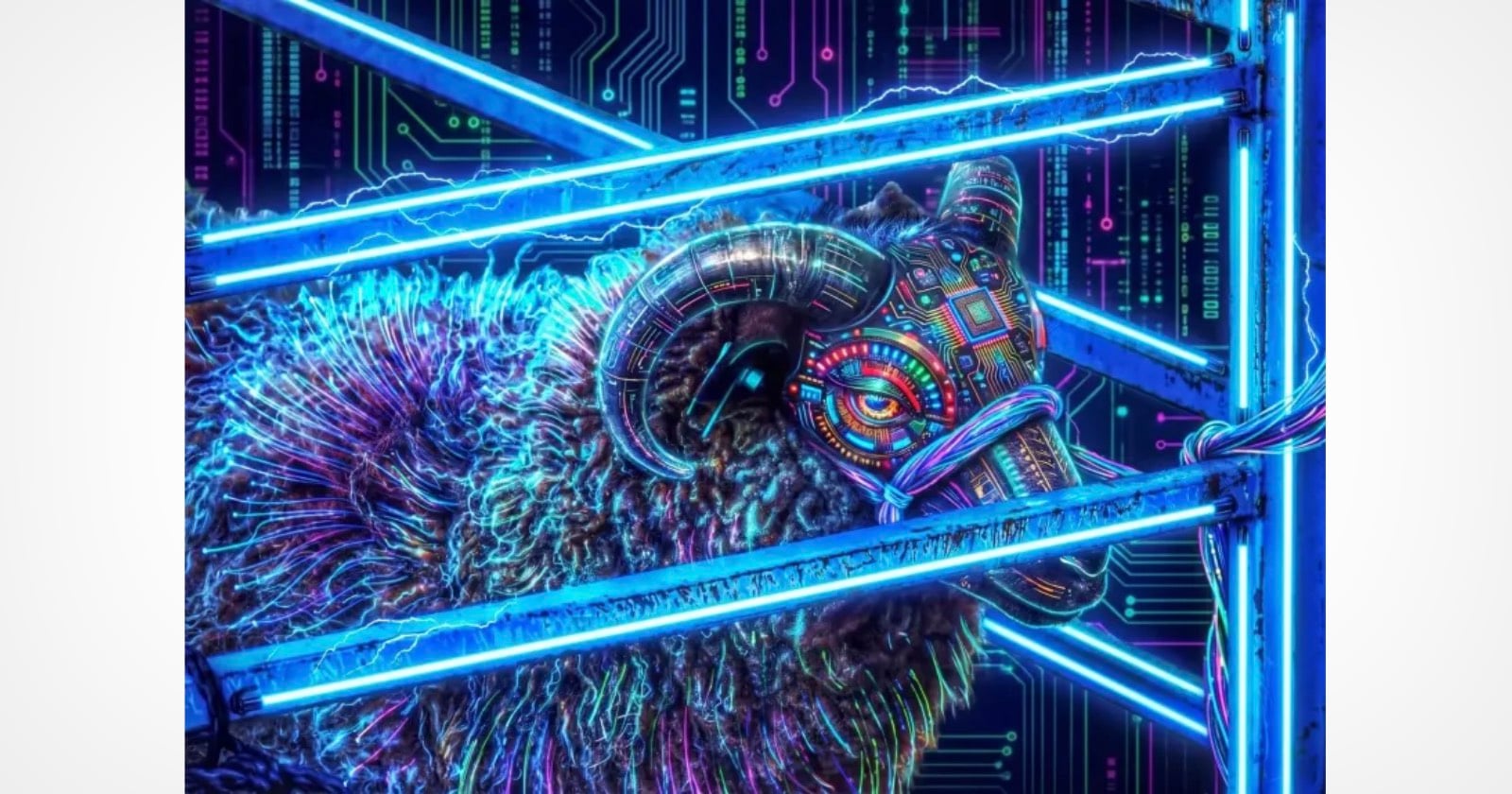
The annual Maryland State Fair found itself at the center of a nationwide debate regarding artistic integrity and technological advancement after an AI-assisted image captured first place in a photography competition. Photographer Guy Alston secured the top prize in the Open Class Home Arts “Neon Lights” category at the Lutherville-based fair with his visually striking submission: a cybernetic ram featuring glowing circuit board patterns, posed behind a neon-blue metal fence against a high-tech digital backdrop.
While the entry was legal under the relaxed, interpretation-heavy rules of the specific special category, the announcement triggered immediate online outrage. Critics across social media platforms, most notably a viral Reddit thread on the r/maryland community that amassed over 3,400 upvotes and hundreds of polarized comments, expressed deep frustration. Many argued that allowing an image heavily dependent on generative artificial intelligence to win a photography competition undermines the skill, patience, and traditional labor of human photographers.
In response to the public backlash, fair organizers have announced a definitive policy shift: future photography competitions will strictly prohibit AI-modified and AI-generated submissions. Sam Chamelin, superintendent of the Maryland State Fair’s photography competition, confirmed the upcoming rule changes to local media outlets, clarifying that while digital creativity and human-driven enhancements remain welcome, the line must be drawn to ensure that images are crafted by human hands rather than machine algorithms.
Chronology of Events
The controversy surrounding the Maryland State Fair’s photography division unfolded over a series of weeks, moving from local exhibition boards to viral internet forums and ultimately forcing administrative policy revisions.
- Pre-Fair Submissions (Summer 2026): Local photographer Guy Alston submitted a digitally manipulated image to the Open Class Home Arts competition. The piece was entered into the “Neon Lights” category, one of two shifting special classifications that traditionally permitted heavier digital alterations.
- Judging and Exhibition (Late August – Early September 2026): A panel of judges evaluated the 850 photographs submitted to the competition. Operating under the existing rules which permitted embellishments and failed to explicitly ban AI tools, the judges awarded Alston’s cybernetic ram image first place.
- The Public Outcry (Mid-September 2026): Once the winning images were displayed and shared online, observers quickly identified telltale signs of generative AI manipulation. The Baltimore Sun published a detailed report on the controversy, which was simultaneously amplified on Reddit within the r/maryland forum, drawing intense criticism from local artists and photography enthusiasts.
- Official Response and Policy Revision (September 12, 2026): Facing mounting pressure and public scrutiny, competition organizers addressed the loophole. Sam Chamelin announced that while the 2026 rules permitted such edits due to the ambiguous nature of the "Neon Lights" guidelines, the fair would explicitly ban AI modifications for all future contests.
Supporting Data and Fair Logistics
Running a state-level agricultural and cultural fair is a massive logistical undertaking, particularly when managing diverse creative competitions with limited staffing resources.
According to competition organizers, the Maryland State Fair’s photography contest features an expansive structure consisting of 40 standard categories alongside two rotating special categories that change annually to encourage creative experimentation. The "Neon Lights" category was designed precisely to test the boundaries of digital enhancement, a sub-genre that fair administrators note has permitted varying levels of heavy post-processing and digital illustration for at least a decade.
However, the sheer volume of entries creates significant oversight challenges:
- Total Submissions: Approximately 850 photographs were submitted to the photography division for the 2026 event.
- Vetting Limitations: The judging and curation processes rely heavily on a dedicated team of volunteers. Due to the rapid evolution of editing technology, volunteers and judges often lack the forensic tools or the explicit training required to differentiate between advanced traditional Photoshop techniques and generative AI manipulation.
- The AI Landscape: Alston himself defended his victory by noting the ubiquity of AI across modern digital imaging, pointing out that mainstream suites like Adobe Photoshop and Lightroom increasingly integrate machine learning models for standard tasks like noise reduction, content-aware fill, and masking.
Official Responses and Perspectives
The debate over Alston’s victory has drawn sharp contrasts between the creator’s intent, the public’s expectations of traditional art, and the fair administration’s operational realities.
The Photographer’s Defense
Guy Alston, based in Randallstown, defended his creative process in interviews with local journalists, pushing back against critics who claimed he contributed no artistic effort to the final piece. Alston clarified that the winning image was not generated from a blank text prompt, but rather built upon an original photograph he had captured years prior. He utilized Google-based AI software integrated via Nano Banana within Photoshop, alongside other digital tools, to transform his foundational photography.
"I don’t do an image from nothing, which is what I think a lot of people were saying," Alston told the Baltimore Sun. "If you think that photo is the only photo that was in the whole contest that had some AI in it, then you haven’t been paying attention over the past five years. Even if you use a little Photoshop or Lightroom, you’re benefiting from improved tools because they’re using AI engines."
The Organizer’s Dilemma
Sam Chamelin acknowledged the public’s frustration while defending the integrity of the volunteer staff. He admitted that he was unaware AI tools were used to construct Alston’s entry when it was initially reviewed. Chamelin emphasized that the fair administration values digital artistry and creative exploration, but recognizes that public trust hinges on maintaining a clear distinction between human craftsmanship and machine generation.
"We want to lean into a kind of digital artistry, be creative with it, emphasize different parts of the photographs — we still want that very much to occur; those are fun photographs," Chamelin explained to the press. "We want to make sure that it’s humans and not machines that do it."
Implications for Photography Competitions Worldwide
The Maryland State Fair incident is far from an isolated occurrence; rather, it represents the latest flashpoint in an ongoing cultural reckoning across the arts and entertainment industries.
As generative artificial intelligence tools—such as text-to-image models and advanced neural upscalers—become democratized, traditional creative domains face existential questions regarding authenticity. Similar controversies have previously disrupted other major events, most notably when an AI-generated artwork secured first place in the digital arts/digitally manipulated photography division at the Colorado State Fair, sparking immediate fury among traditional fine artists.
Key Takeaways for Future Competitions:
- Redefining Rulebooks: State fairs, local galleries, and international photography contests are rapidly rewriting their rulebooks to explicitly define permitted versus prohibited software tools. Terms like "digital enhancement" are being replaced with precise clauses regarding generative fill, text-to-image prompts, and neural rendering.
- The Burden of Verification: Organizers are forced to consider how they can fairly and accurately vet hundreds—or thousands—of submissions. Without standardized verification software or raw file (RAW) submission mandates, volunteers will continue to struggle with policing modern editing pipelines.
- The Spectrum of AI Integration: The debate underscores a fundamental gray area in contemporary media: because nearly all modern editing software incorporates machine learning algorithms to assist with basic tasks (such as sharpening, automatic exposure adjustment, and object removal), drawing a rigid line between "traditional" editing and "AI-generated" art remains exceptionally difficult for judges and regulators alike.
As the artistic community navigates this technological paradigm shift, events like the Maryland State Fair serve as critical testing grounds for how society will value human labor and creativity in an era where machines can render imagination into reality in mere seconds.
 Jia Lissa
  Basiran