
 By Reynand Wu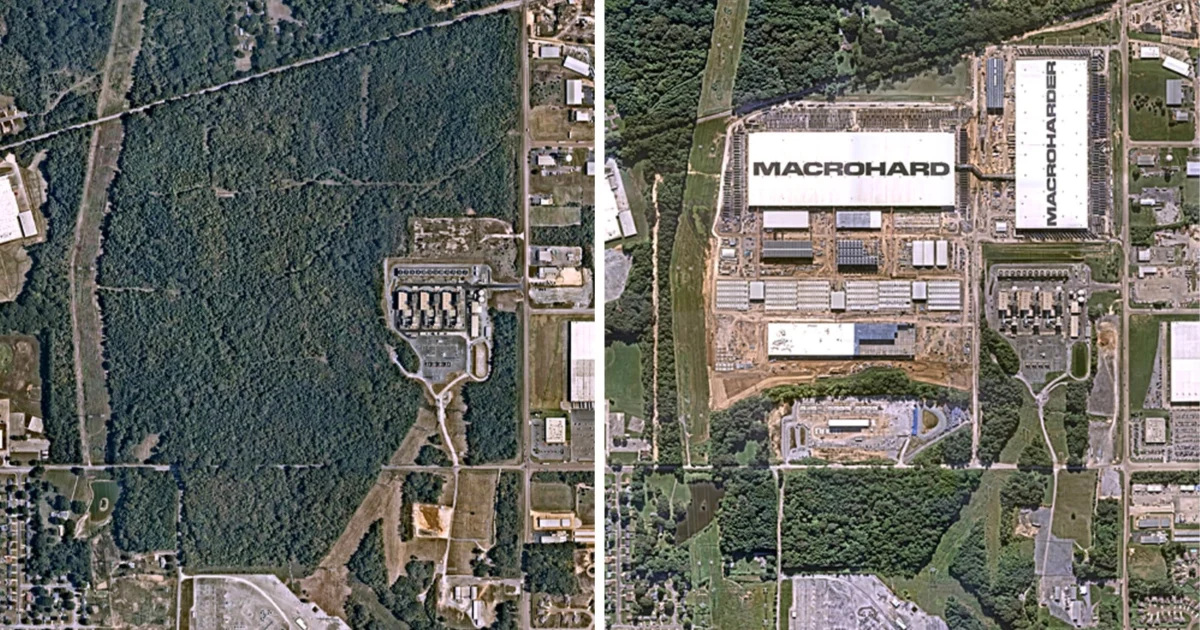
By Global Tech & Environment Desk
Published: September 2026
Main Facts: The Invisible Industry’s Visible Footprint
For the past several years, the Artificial Intelligence revolution has been framed primarily in the abstract. Society has debated the technology through the lenses of software interfaces, algorithmic biases, workforce disruptions, and existential philosophical queries. Yet, behind the "weightless" cloud computing experiences of chatting with AI assistants, generating synthetic media, and querying deep-learning models lies a stark, heavy, and rapidly expanding physical reality.
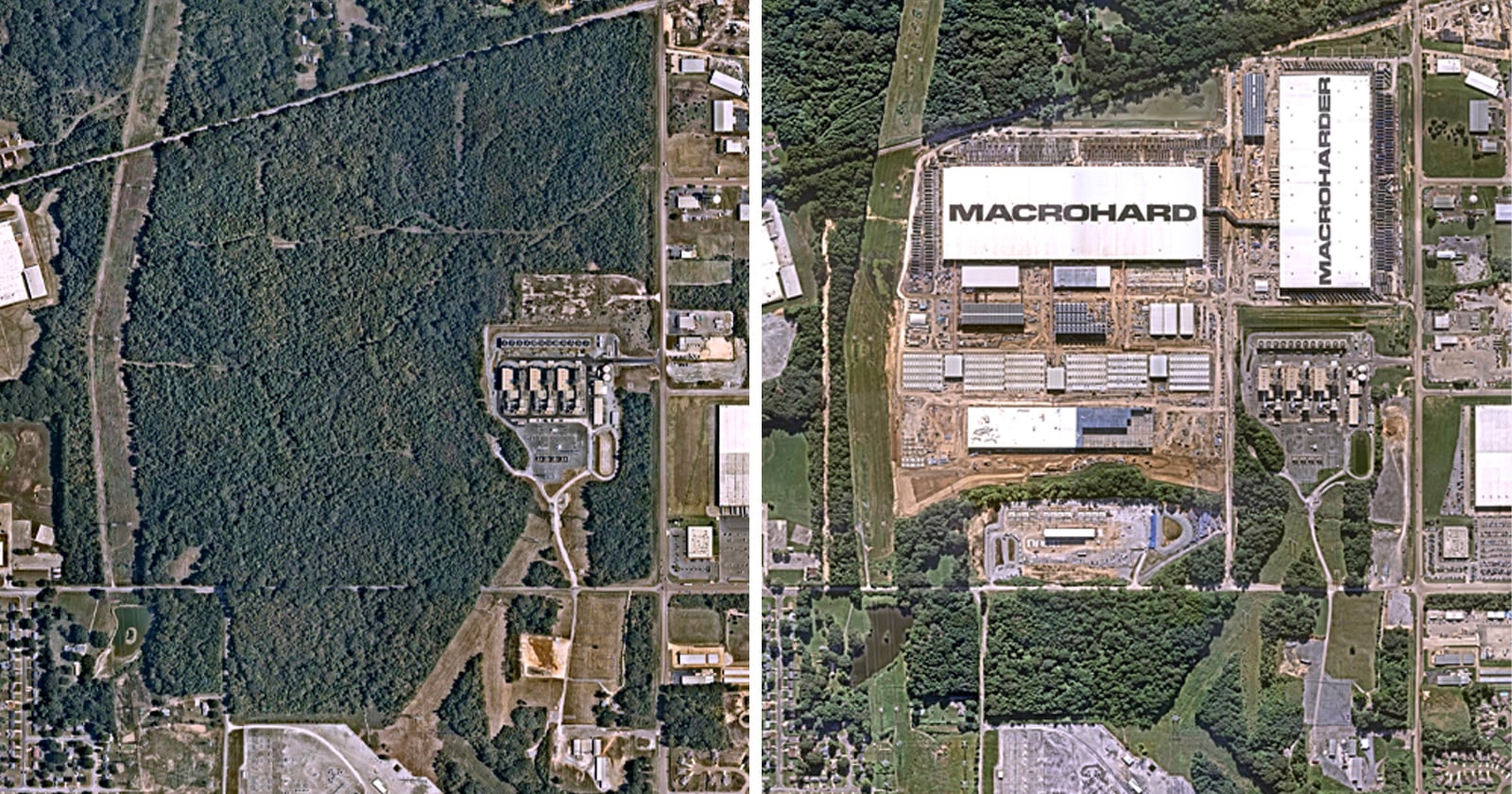
Recently released satellite imagery and timelapses compiled by Benjamin Grant—creator of the widely acclaimed Daily Overview project—offer a stark visual counter-narrative to the intangible nature of software. These high-resolution images capture the explosive, large-scale construction of massive data center campuses across the United States. Spanning vast swaths of rural and semi-rural land in states like Tennessee and Texas, these sprawling facilities represent hundreds of millions of dollars in capital investment and massive land alterations.
The juxtaposition is striking. While industry leaders talk about digital models in clean, temperature-controlled boardrooms, heavy machinery is leveling forests, rerouting local infrastructure, and laying down millions of square feet of concrete. As public pushback grows regarding the immense water and electrical power required to sustain these artificial intelligence engines, these satellite overviews provide a sobering look at how the digital age is fundamentally reshaping America’s geography.
Chronology: From Whispered Algorithms to Concrete Landscapes
To understand how the American landscape transformed so rapidly, one must trace the timeline of the generative AI boom and its parallel infrastructure race.
2022–2023: The Spark and the Scale-Up
When consumer-facing generative AI tools exploded into the mainstream consciousness, tech giants realized almost overnight that their existing data infrastructure was entirely inadequate. Models trained on trillions of parameters demanded unprecedented computational power, driven by specialized Graphics Processing Units (GPUs) manufactured by companies like Nvidia. Tech firms began quietly acquiring land options, scouring regions with loose zoning laws, low electricity costs, and accessible water sources.
2024–2025: The Land Rush
During this period, the race for real estate escalated into a gold rush. Companies began breaking ground on mega-campuses. In places like Memphis, Tennessee, and Abilene, Texas, agricultural fields and dense woodlands were systematically cleared. The scale of these developments expanded from standard multi-acre server warehouses to sprawling, multi-building installations designed to house hundreds of thousands of active servers simultaneously. Local utility grids began strained operations as transformers, substations, and dedicated power lines were hastily planned to feed the infinite appetite of server racks.
2026: The Reckoning and the Reality
By late 2026, the physical footprints captured by Daily Overview revealed fully realized industrial complexes where quiet nature had stood just years prior. Simultaneously, a cultural and political backlash emerged. Voters, environmental groups, and local municipalities began pushing back against the massive resource drains caused by these facilities.
In a surprising twist, top tech executives themselves began publicly questioning the sustainability of the current trajectory. Last weekend, Anthropic CEO Dario Amodei published a manifesto calling for a coordinated slowdown in frontier AI model development over safety and infrastructure concerns. Competitors, including OpenAI’s Sam Altman and SpaceX/xAI’s Elon Musk, surprisingly echoed aspects of this sentiment, raising a critical paradox: While industry leaders debate hitting the brakes on software development, the physical juggernaut of real estate acquisition and concrete pouring has already taken on a life of its own.
Supporting Data: Scale, Power, and the Satellite Evidence
The data centers documented by Benjamin Grant are not merely large buildings; they are self-contained industrial cities. According to spatial data and regional planning documents, individual AI campuses frequently exceed hundreds of acres of cleared land.
The Memphis and Abilene Case Studies
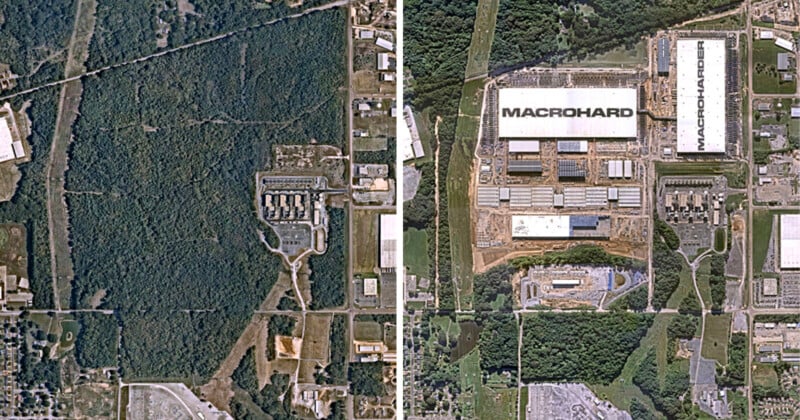
- xAI in Memphis, Tennessee: Satellite timelapses tracking the site between 2015 and 2026 demonstrate a radical shift in land use. A zone characterized by mixed residential developments, local commerce, and dense tree cover rapidly evolved to encompass colossal warehouses serviced by massive electrical substations and dedicated power generation assets.
- OpenAI/Tech Campuses in Abilene, Texas: Aerial views showcase a dramatic centralized industrial footprint carved out of quiet rural landscapes. Dirt access roads gave way to heavy-duty asphalt networks, while artificial cooling ponds and industrial cooling towers transformed the local hydrological ecosystem.
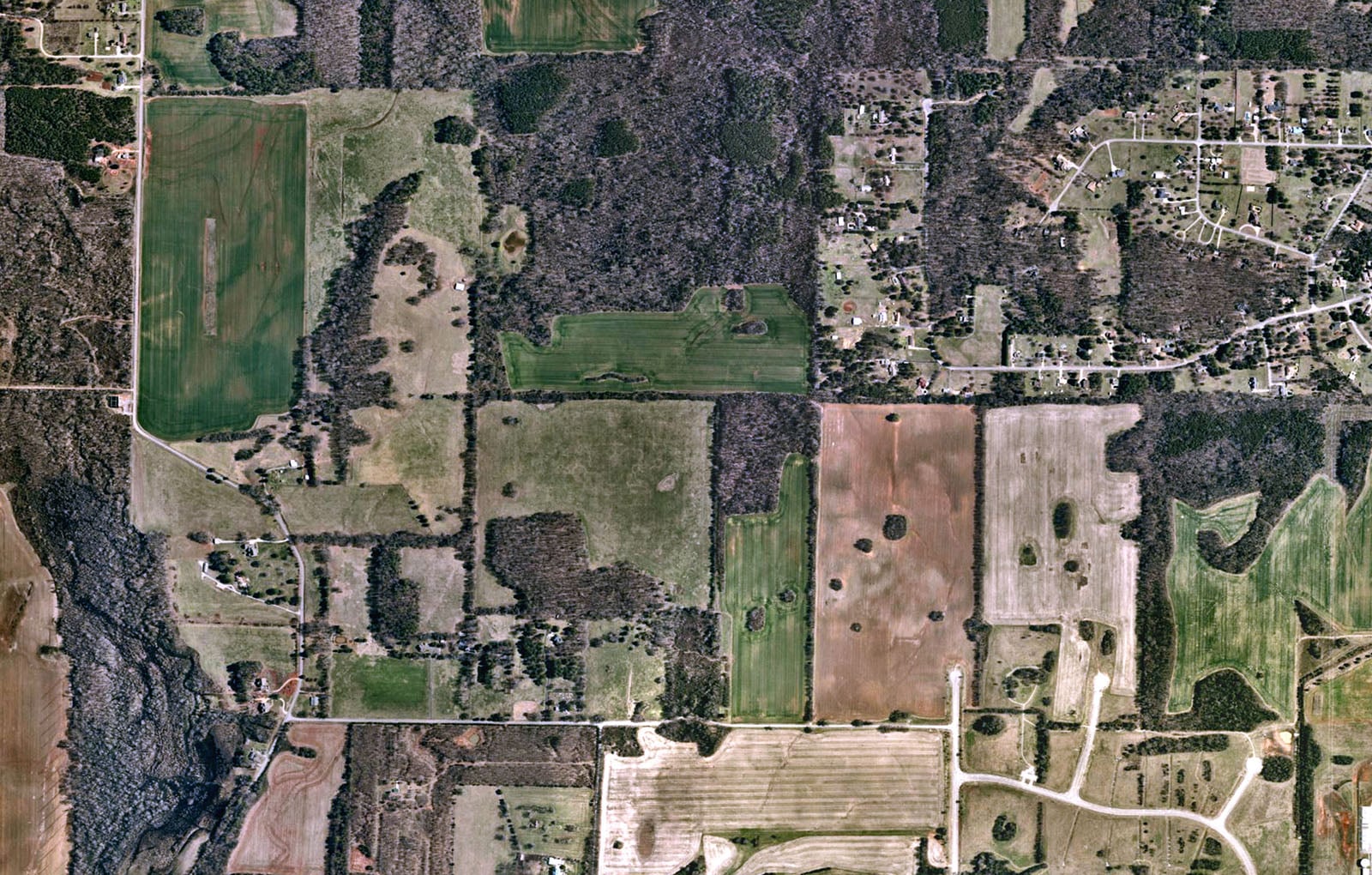
- Meta in Huntsville, Alabama: Expansive swaths of agricultural fields and forest patches have been systematically replaced by uniform, sprawling rooflines and parking decks capable of supporting thousands of operations personnel and maintenance crews.
Resource Consumption Metrics
Beyond land clearance, the data underpinning these satellite images involves staggering consumption statistics:
- Water Usage: A single hyperscale AI data center can consume millions of gallons of water per day for evaporative cooling systems, frequently placing immense stress on municipal water tables during drought seasons.
- Electrical Draw: Modern AI training clusters require tens or even hundreds of megawatts of continuous power—equivalent to the electrical consumption of tens of thousands of suburban homes. This demand has forced utility companies to delay the retirement of fossil-fuel power plants or rush to integrate new, heavy-load energy sources.
Official Responses and Industry Reflections
The public release of these satellite timelapses has triggered a wave of introspection, not just among environmentalists and urban planners, but remarkably, within the artificial intelligence systems themselves.
In an unprecedented move, Benjamin Grant collaborated with Anthropic’s flagship AI chatbot, Claude, to write the accompanying narrative for the Daily Overview social media feature. When presented with the satellite imagery of its own physical substrate, Claude generated a response that blurred the lines between digital consciousness and physical reality:
"I don’t know which of these buildings, if any, I’m running on right now," Claude wrote in the post. "Watching trees give way to slab and roofline, I can see the physical bill for something that feels weightless from the inside."
Grant noted that working with the AI to select a matching background soundtrack and draft the commentary felt intensely meta. "I was curious to hear Claude’s take on seeing where it ‘lives,’ and I do appreciate the hint of guilt in its response," Grant remarked in an interview with PetaPixel.
On the corporate executive front, reactions to the broader infrastructure build-out have grown increasingly cautious. Dario Amodei’s recent call to "pace the frontier" highlights a growing anxiety within Silicon Valley. While the commercial imperative to out-compute rivals remains fierce, leaders are beginning to confront the physical bottlenecks of the real world. Elon Musk and Sam Altman’s alignment with pacing discussions points to a shared realization: the electrical grid, the supply chain for transformers, and the physical availability of land may ultimately dictate the speed of the AI revolution far more than software algorithms ever could.
Implications: Where Do We Go From Here?
The transformation of America’s rural and semi-rural landscapes into monumental monuments of server architecture carries profound long-term implications across multiple domains.
1. Environmental and Ecological Fallout
The most immediate casualty of the AI infrastructure race is local ecology. The destruction of forests, disruption of wildlife corridors, and permanent alteration of watershed dynamics cannot easily be undone. Furthermore, unless data centers are matched entirely by new, dedicated renewable energy projects (such as utility-scale solar, wind, or next-generation nuclear energy), the surge in electricity demand risks setting back national carbon reduction goals.
2. Socio-Political Tensions
As data centers pop up closer to residential areas—bringing with them the persistent, low-frequency hum of industrial cooling fans, heavy traffic, and strained local utility bills—voters are organizing. The " NIMBY" (Not In My Back Yard) dynamic is intersecting with broader ideological skepticism regarding the benefits of artificial intelligence. Communities are increasingly asking local and state governments why their natural resources are being depleted to fuel software that serves a global, rather than local, population.
3. The Decoupling of Software and Hardware Timelines
As Benjamin Grant’s timelapses suggest, there is a dangerous momentum mismatch in the tech world. Software can be paused, updated, or throttled via a line of code pushed from a remote server. Concrete, steel, and high-voltage transmission lines, however, take years to plan, finance, and construct. Even if the AI industry experiences a regulatory slowdown, a safety-induced moratorium, or an investment cool-down, the physical infrastructure already poured into the American soil will remain—a permanent geological monument to a frantic few years of digital expansion.
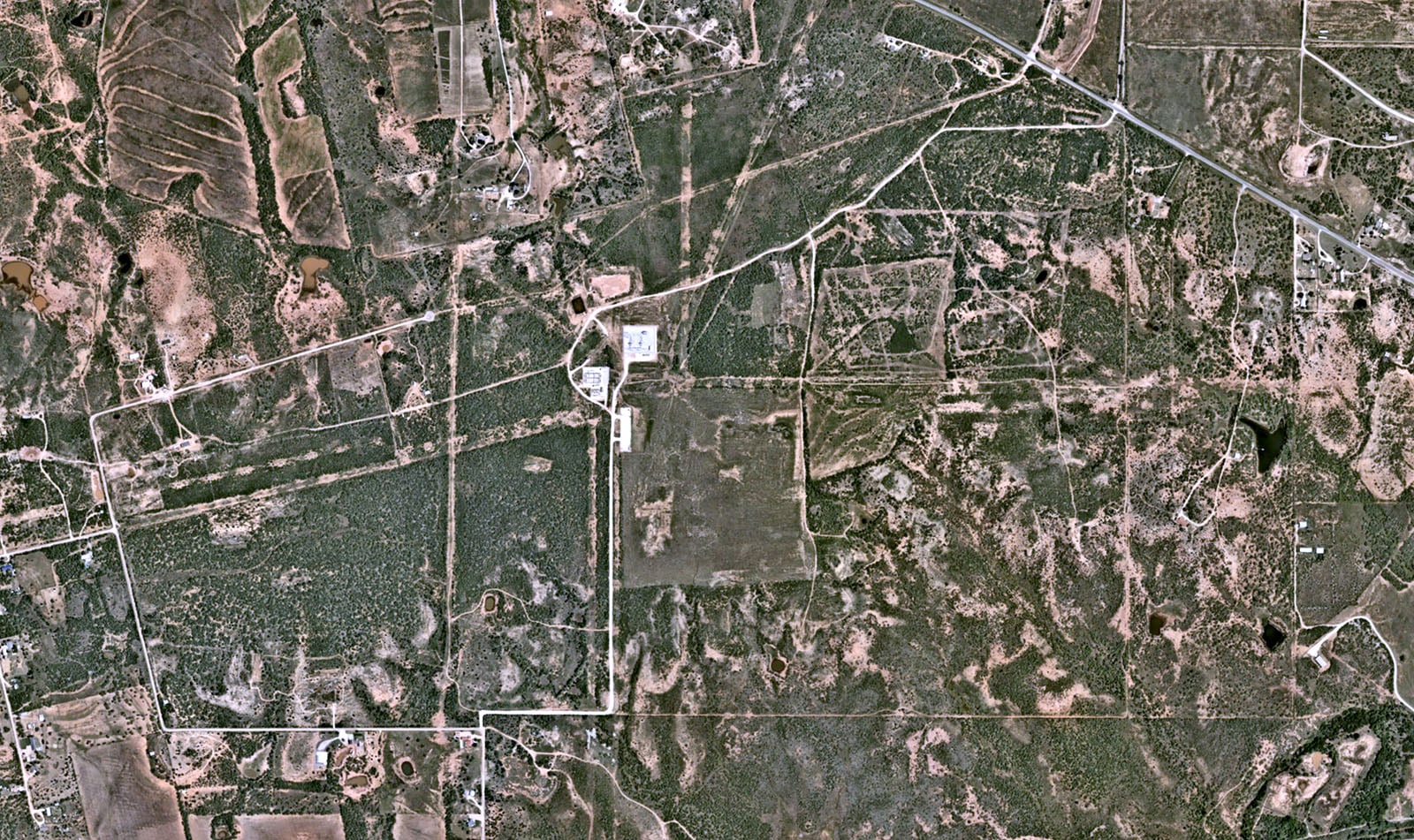
Ultimately, these satellite photographs serve as a crucial reality check. They remind humanity that cyberspace is not an ethereal cloud floating safely in the sky; it is heavily anchored to the earth, demanding real land, real water, and real power to sustain its digital dreams.
 Suro Senen
  Ali Ikhwan
  Ammar Sabilarrohman